
State model review
Map run, stop, hold, manual, fault, permissive, and recovery states so operator screens match the real machine.
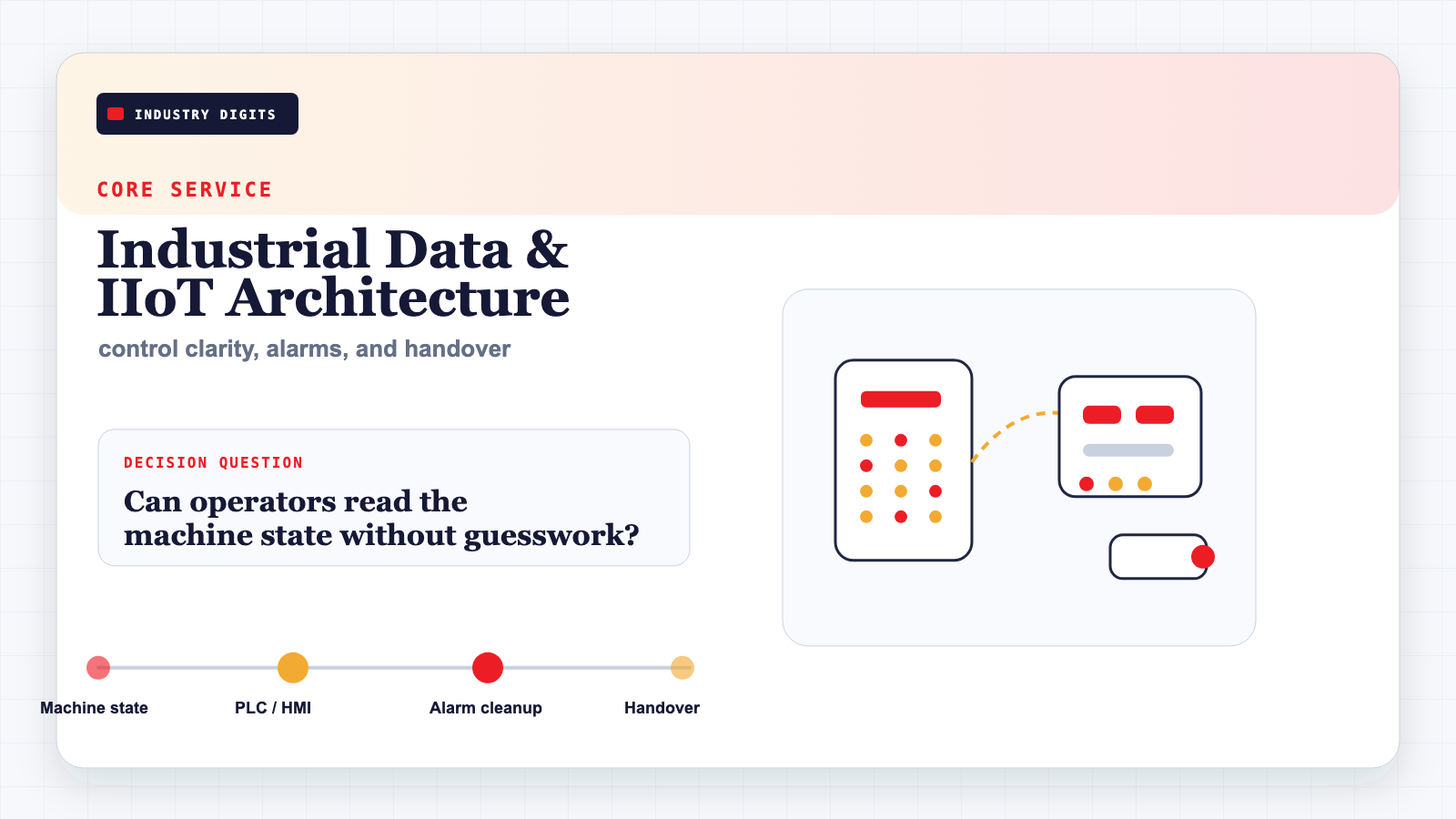
Each service starts from a bounded operating decision, then defines the technical path needed to support it.
Map run, stop, hold, manual, fault, permissive, and recovery states so operator screens match the real machine.
Review PLC/HMI behavior, alarm priority, interlocks, cause text, reset behavior, and nuisance patterns as one operating system.
Check panels, I/O lists, backups, network notes, drawings, vendor constraints, and change records needed for safe maintenance.
Create test cases, rollback plan, owner sign-off, and handover notes that make future modifications less fragile.
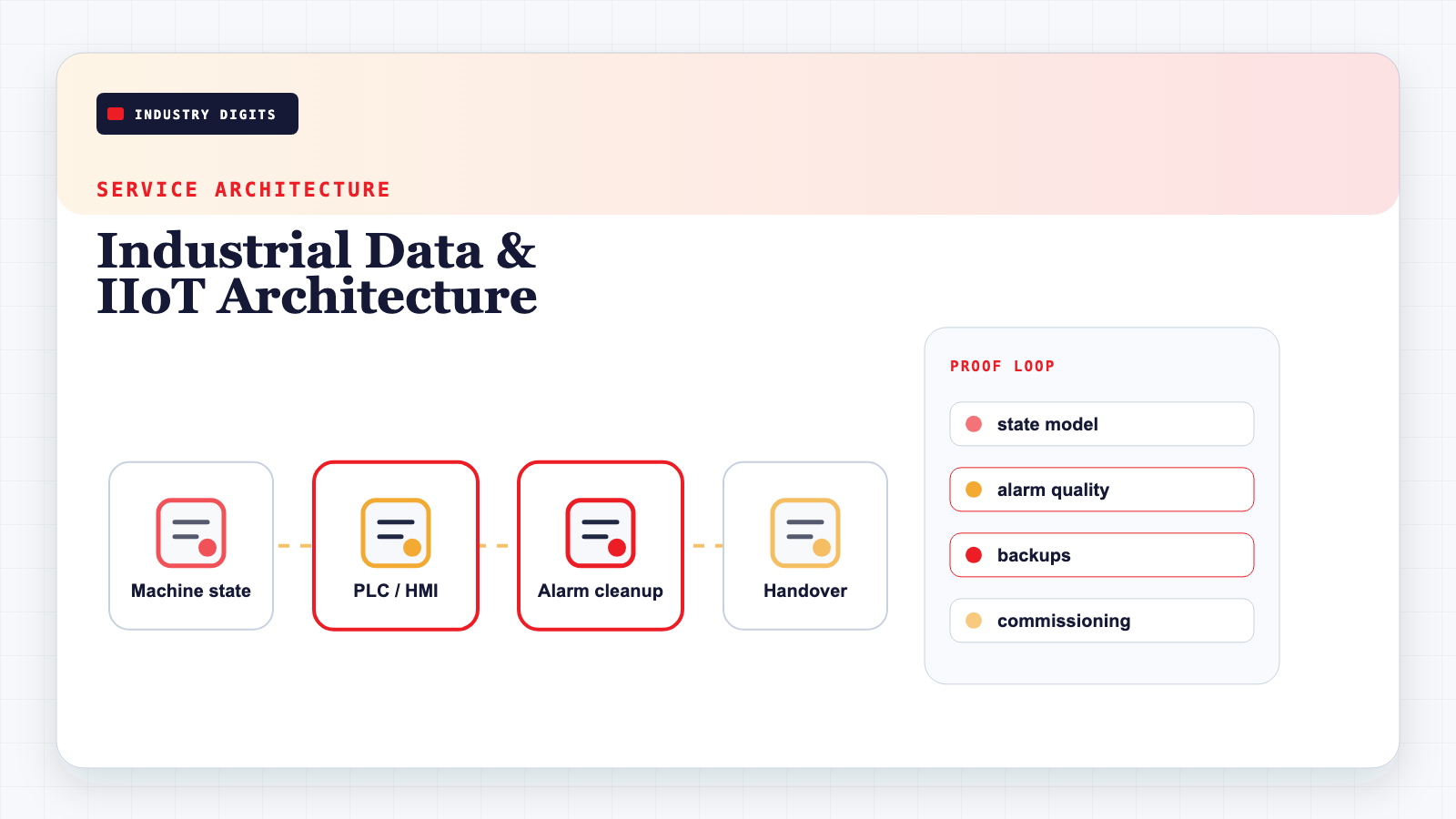
Start with one machine, line, panel, or control cell where reliability and handover matter.
Explain how stable automation starts with readable machine states, alarm quality, backups, documentation, and commissioning proof.
Reliability suffers when the control layer is hard to read.
Clean state logic reduces recovery confusion.
Documentation is reliability infrastructure.
A control change is complete only when the team can own it.
Standards-anchored articles on the methods this service uses — signal selection, thresholds, data paths, and the review workflows that turn evidence into action.
 Industrial Automation
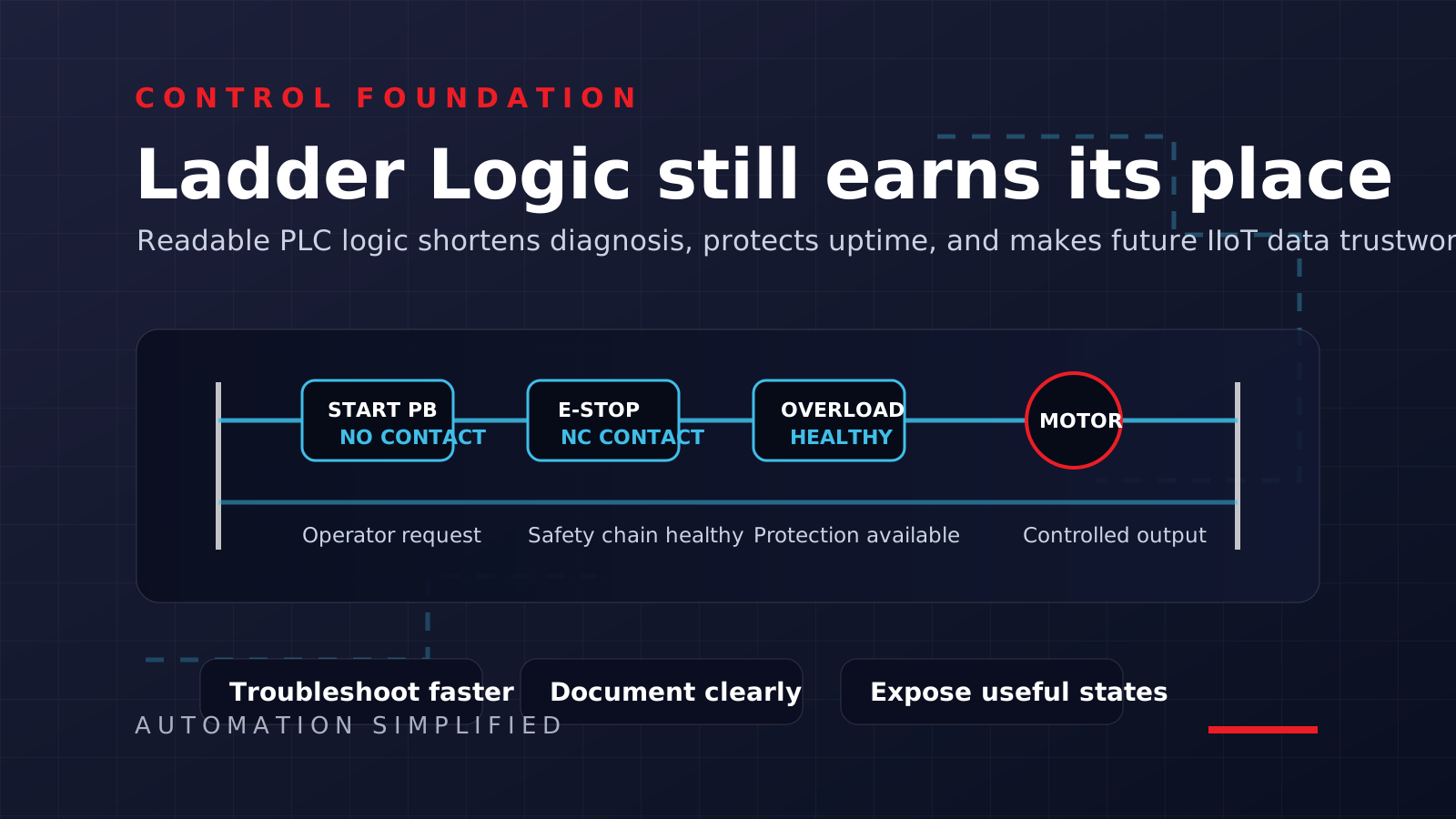
 A practical automation guide for leaders who need PLC logic, machine sequences, safety discipline, and future IIoT data to work as one operating system.
 Industrial Automation
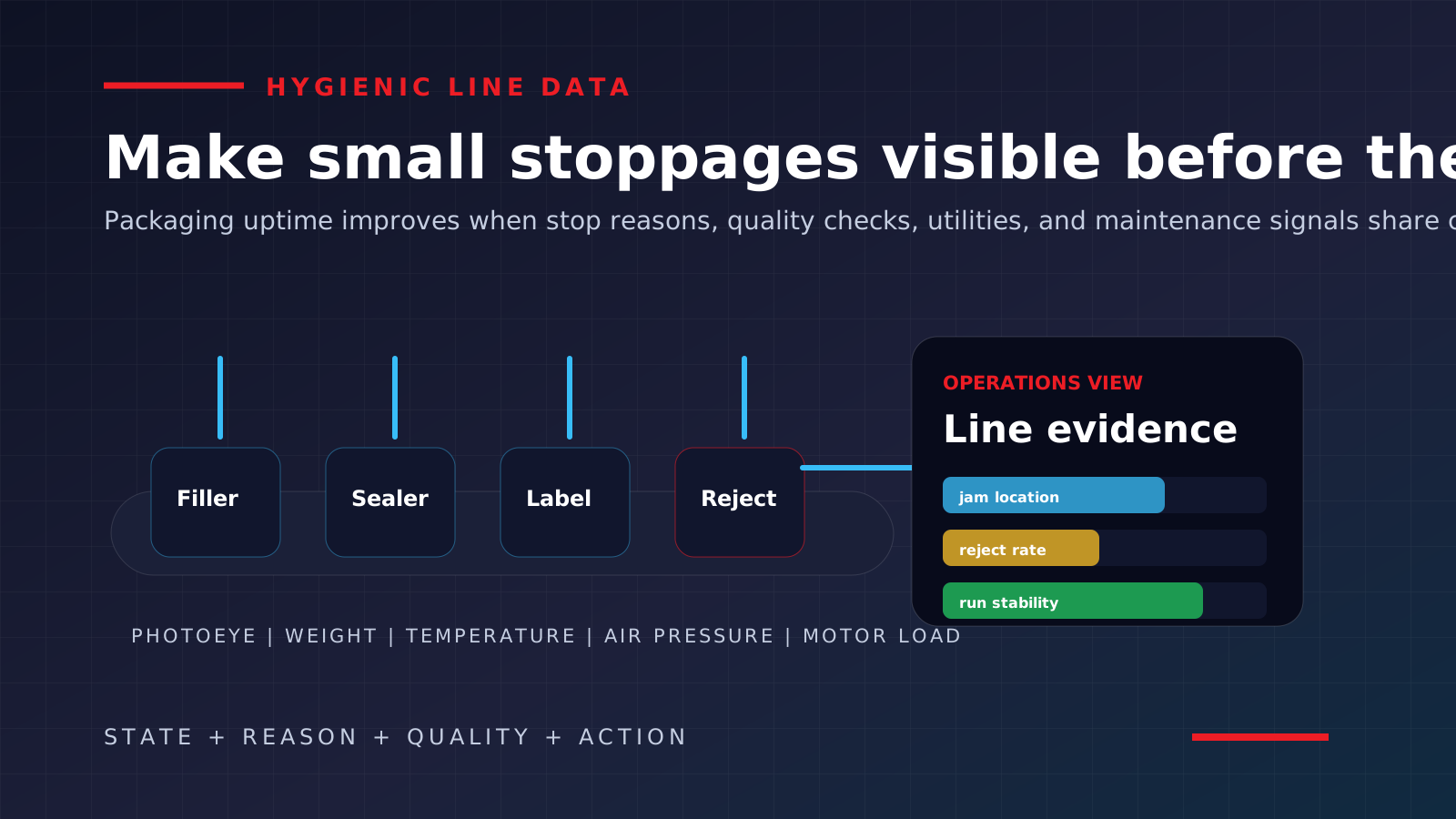
 How food and beverage plants can use automation, IIoT, and condition monitoring to improve uptime, hygiene, quality, and packaging reliability without overcomplicating operations.
 Industrial Automation
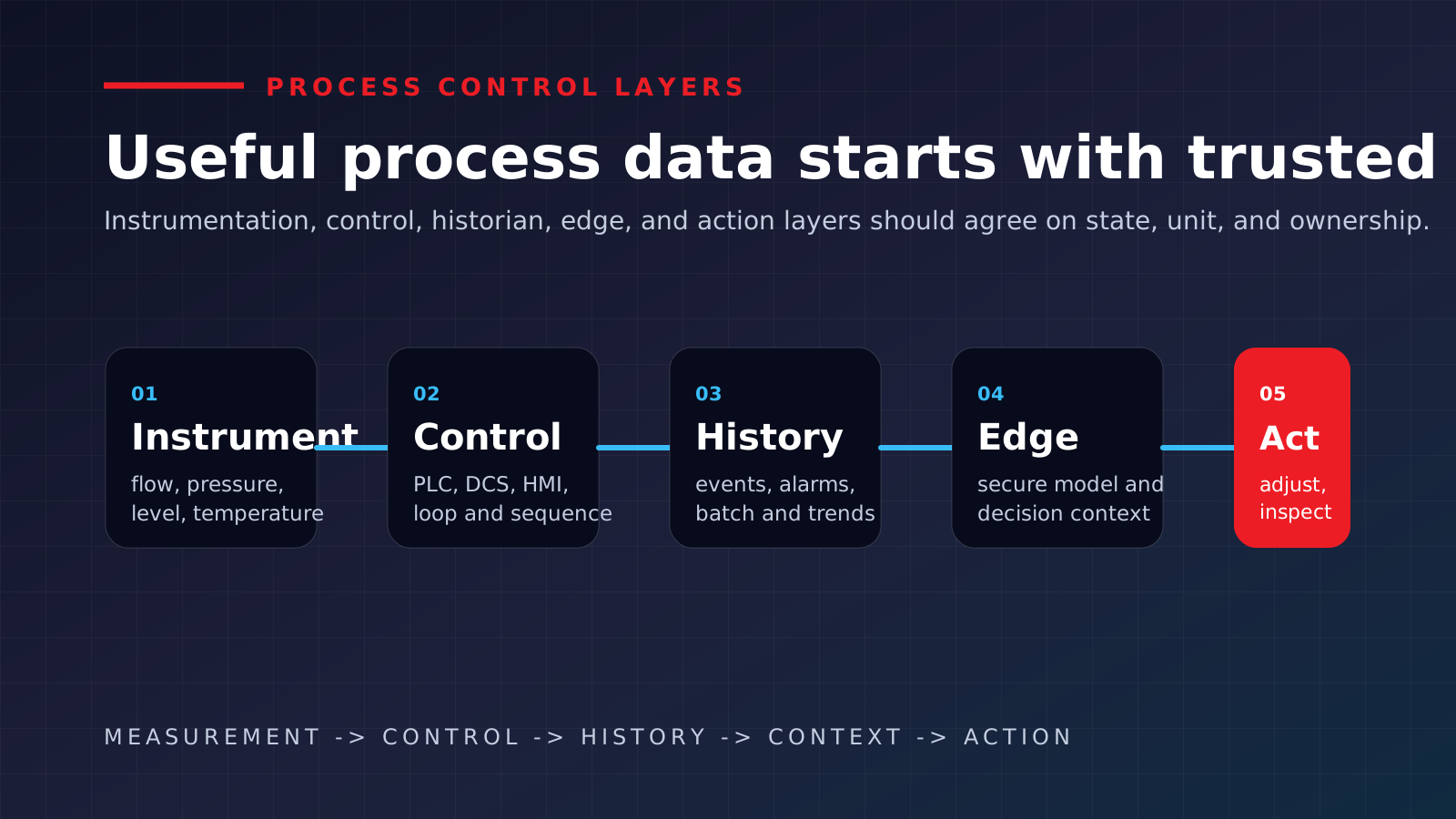
 A practical guide to automation and IIoT for process and chemical plants, focused on control reliability, alarms, instrumentation, maintenance, and operational visibility.
 Industrial Automation
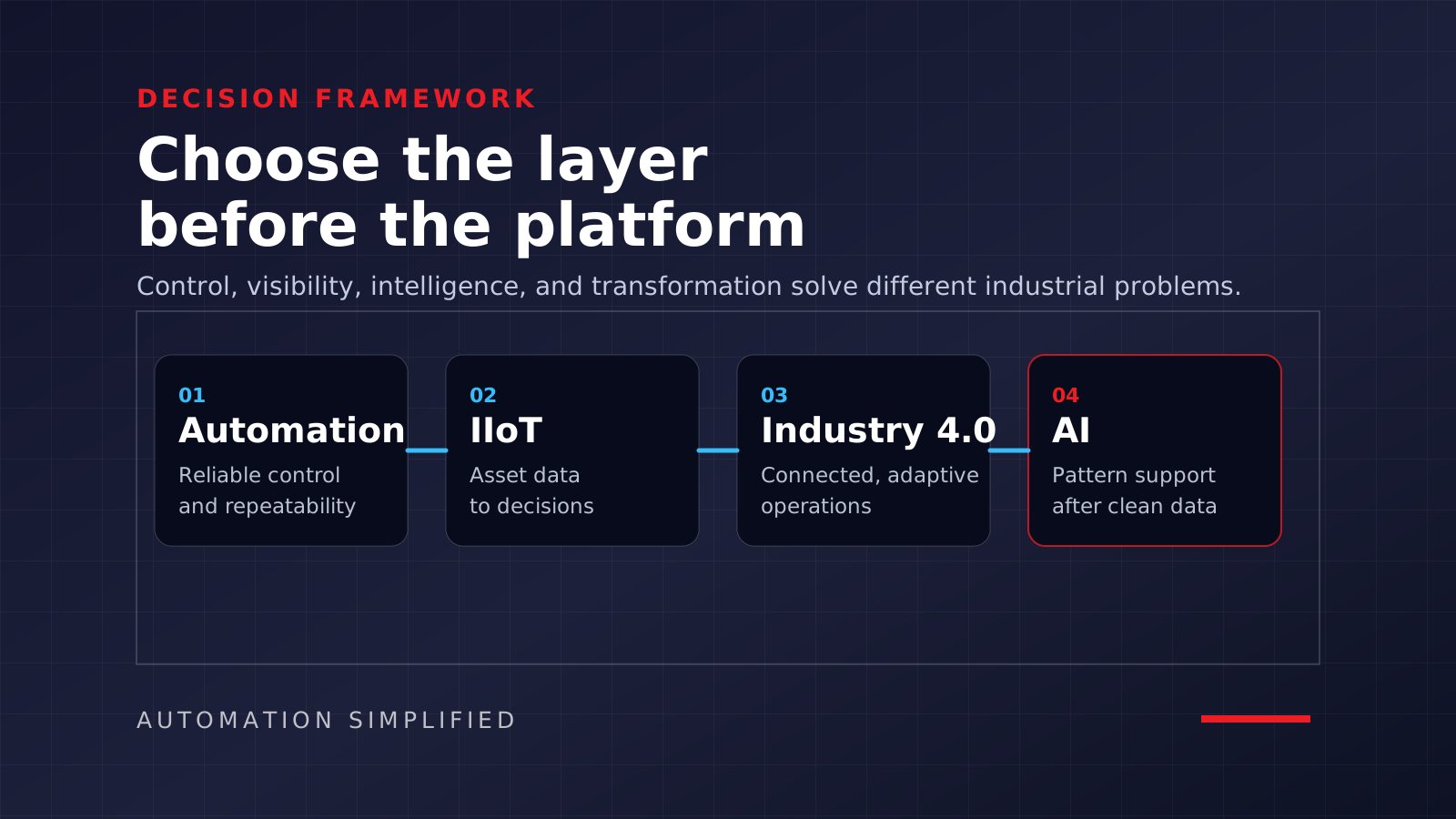
 A decision framework for industrial leaders who need to separate control, visibility, data, and transformation before committing capital.