
Ladder Logic Foundations: Why PLC Thinking Still Matters In Modern Automation
A practical automation guide for leaders who need PLC logic, machine sequences, safety discipline, and future IIoT data to work as one operating system.

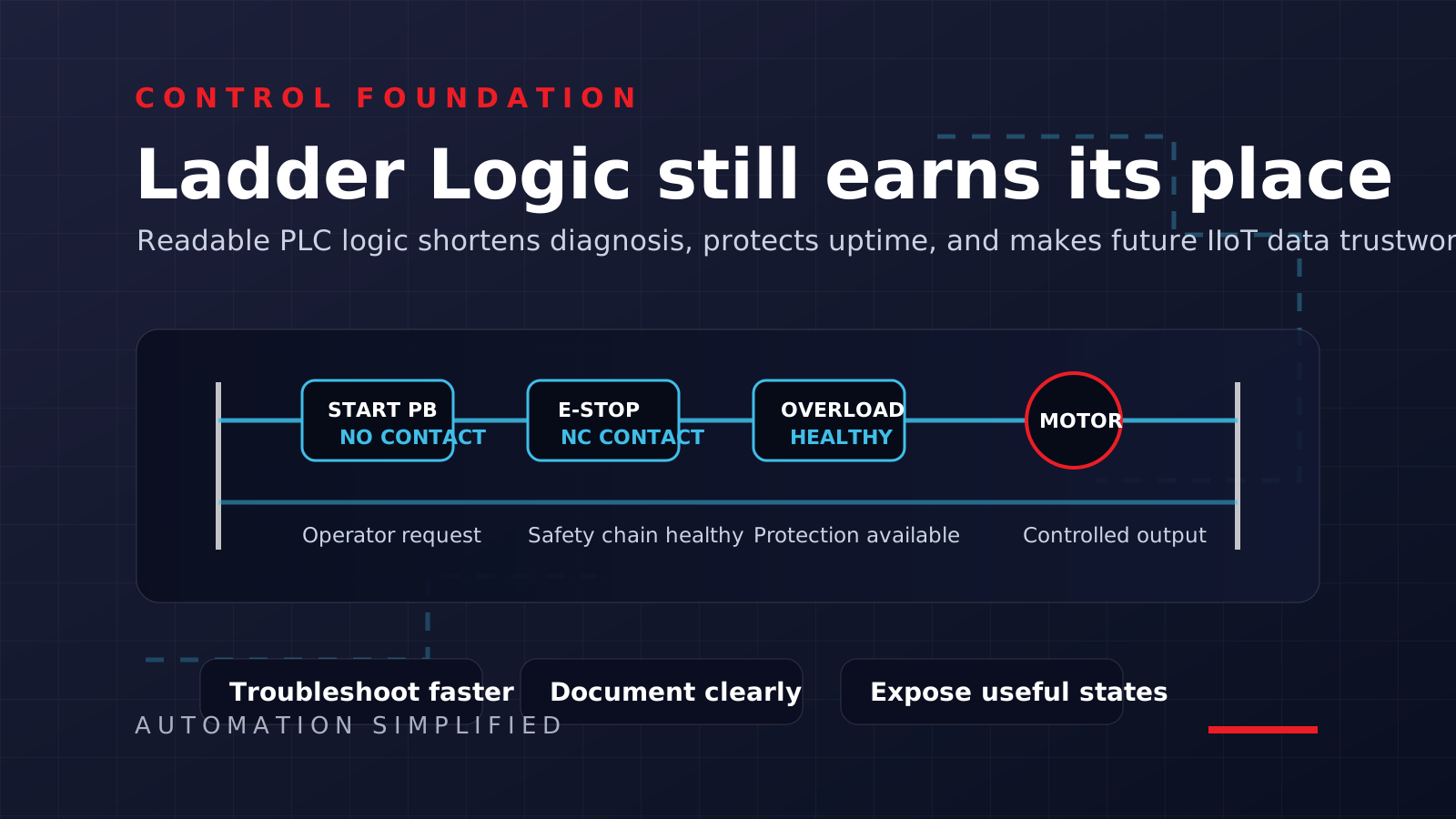
When control logic is weak, the cost rarely appears as a programming problem. It appears as lost production hours, slow diagnosis, operator workarounds, undocumented dependency on one technician, and data that cannot be trusted later.
That is why Ladder Logic still matters. It is not nostalgia for older PLC practice. It is a maintainability discipline. A plant that can read, test, troubleshoot, and document its control logic can recover faster and modernize with less risk.
Modern industrial systems may include SCADA, historians, IIoT gateways, analytics, and AI-supported workflows. But the machine still needs to start, stop, interlock, count, time, sequence, alarm, and fail in a controlled way. In many factories, that work still sits inside PLCs, and Ladder Logic remains one of the most readable ways to express it.
Why leadership should care
Ladder Logic is not only a controls-engineer topic. Control clarity becomes economic clarity.
| Operating constraint | Control discipline required | Business consequence |
|---|---|---|
| Frequent stoppages with unclear fault reasons | Readable interlocks, permissives, alarm logic, and reset paths | Faster diagnosis, less unplanned waiting, lower emergency maintenance load |
| Operator-dependent startup or changeover | Documented sequences, manual/auto modes, and state transitions | More repeatable output and less dependency on tribal knowledge |
| Machines that run, but report weak data | Clean machine states, stable tags, and consistent event logic | Better IIoT, downtime, and condition-monitoring data |
| One technician understands the program | Naming standards, program structure, backups, and handover notes | Lower personnel risk and easier maintenance continuity |
| Automation expansion is planned | Controls foundation before dashboard or AI spend | Capital is spent on a system that can scale without compounding confusion |
The strongest automation projects do not begin with a PLC brand, an HMI screen, or a software feature list. They begin with the operating decision: what should the machine do, what should prevent it, what should happen when it fails, and what evidence should remain afterward?
How Ladder Logic makes machine behavior readable
Ladder Logic was designed to resemble electrical relay diagrams. Two vertical rails represent power rails. Horizontal rungs represent control decisions. Contacts represent conditions. Coils represent outputs or internal states.
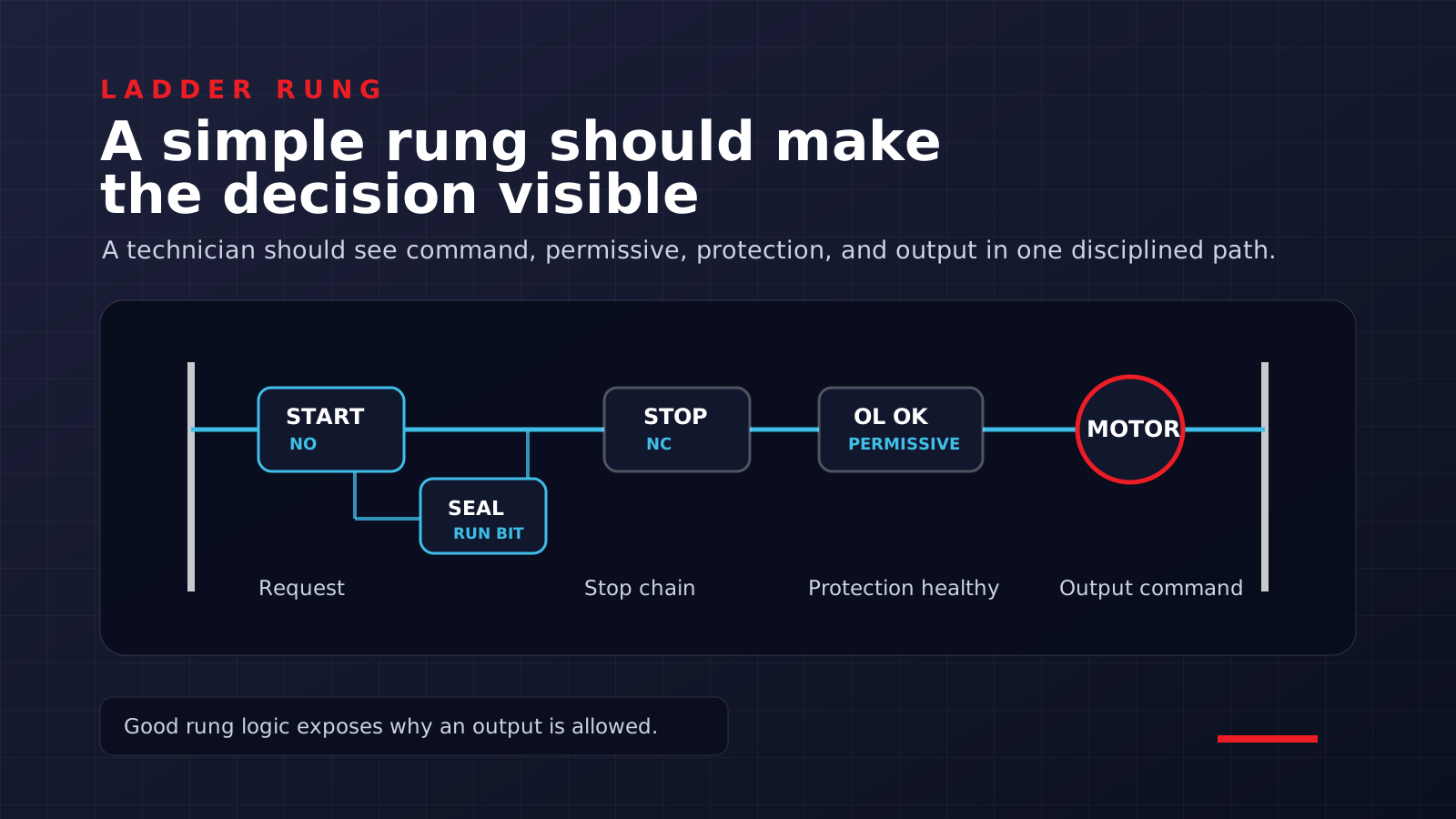
A simple rung may include:
- A normally open contact for a start command.
- A normally closed contact for stop, emergency stop, or overload status.
- A seal-in branch that keeps a run command active after a momentary start.
- A motor, valve, alarm, or internal memory output.
The value is not that the symbols are simple. The value is that the control decision is visible. A technician can ask: which condition is blocking the output? Which permissive is missing? Which fault needs reset? Which state is being held?
That visibility shortens the path from stoppage to action.
The PLC scan cycle, in operating terms
A PLC normally works through a repeated cycle:
- Read inputs.
- Execute the control program.
- Update outputs.
- Communicate diagnostics and data.
- Repeat.
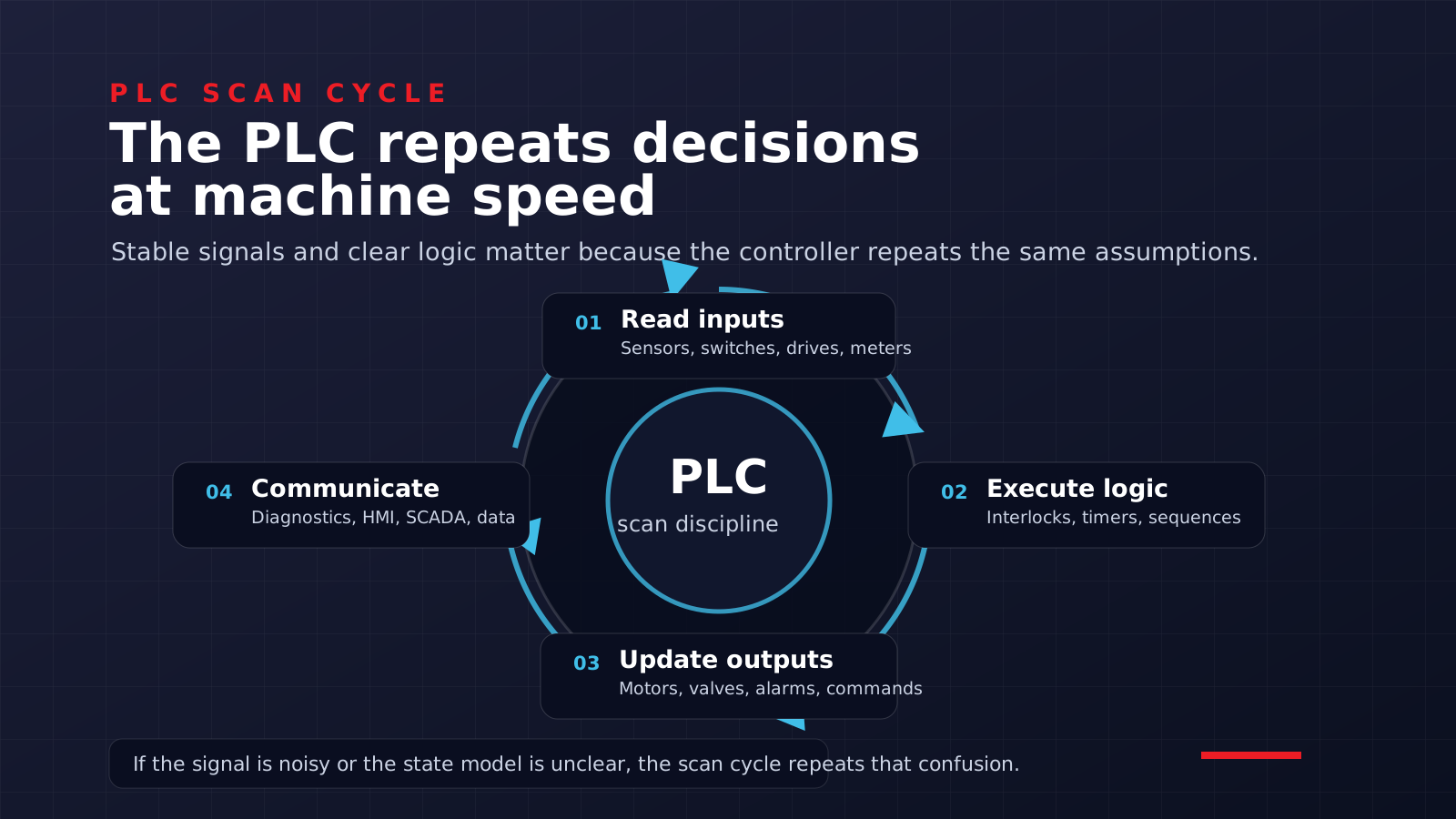
This cycle is fast, but it is not magic. If sensors are unstable, wiring is noisy, names are unclear, or logic is poorly structured, the PLC will execute that uncertainty repeatedly.
This is why automation projects should not begin only with programming. They begin with the process, the instruments, the operating states, the failure modes, and the maintenance action that should follow.
Core Ladder Logic functions
| Control function | Industrial use | Practical example |
|---|---|---|
| AND logic | Require several conditions before action | A motor starts only when guard closed, overload healthy, air pressure ready, and start command present |
| OR logic | Allow more than one valid command path | A pump can start from local panel or remote command, if permissives are healthy |
| NOT logic | Block action when a condition is present | A conveyor stops when jam detection becomes active |
| Timer | Control delay, debounce, warm-up, dwell, or purge duration | Motor 2 starts five seconds after Motor 1 reaches run status |
| Counter | Track parts, cycles, rejects, starts, or attempts | Reject station counts failed products and flags repeat defects |
| Latch and unlatch | Hold a state until a reset or condition clears it | Run command remains active after a momentary start button |
| Compare | Evaluate values against operating limits | Tank level, pressure, current, or temperature triggers an alarm band |
| Sequence | Move a machine through ordered states | Index, clamp, fill, inspect, reject, and discharge |
These functions are simple individually. The engineering skill is in combining them so that the plant remains safe, maintainable, and understandable.
A practical machine sequence example
Consider a small reject station on a packaging or inspection line. The operating target is straightforward: detect a failed product, divert it, confirm the reject, and keep the line running without creating a jam.
A reject station needs more than an output command
Inspection sensor flags product outside tolerance.
Encoder or product count aligns the reject point with the product.
Pneumatic rejector fires within the approved timing window.
Reject bin or photoeye confirms that the product left the line.
Repeated misses or no-confirm events create an actionable alarm.
In a weak design, the logic may only fire the reject output. In a stronger design, the PLC also protects the decision:
- Was the product position known?
- Was air pressure available?
- Did the rejector fire in the allowed window?
- Was the rejected product confirmed?
- How many consecutive rejects or missed confirmations occurred?
- Who should act when the fault repeats?
This is where Ladder Logic discipline becomes operational discipline. The program is not only controlling an actuator. It is preserving evidence for maintenance, quality, and production.
Ladder Diagram, Structured Text, or Function Block
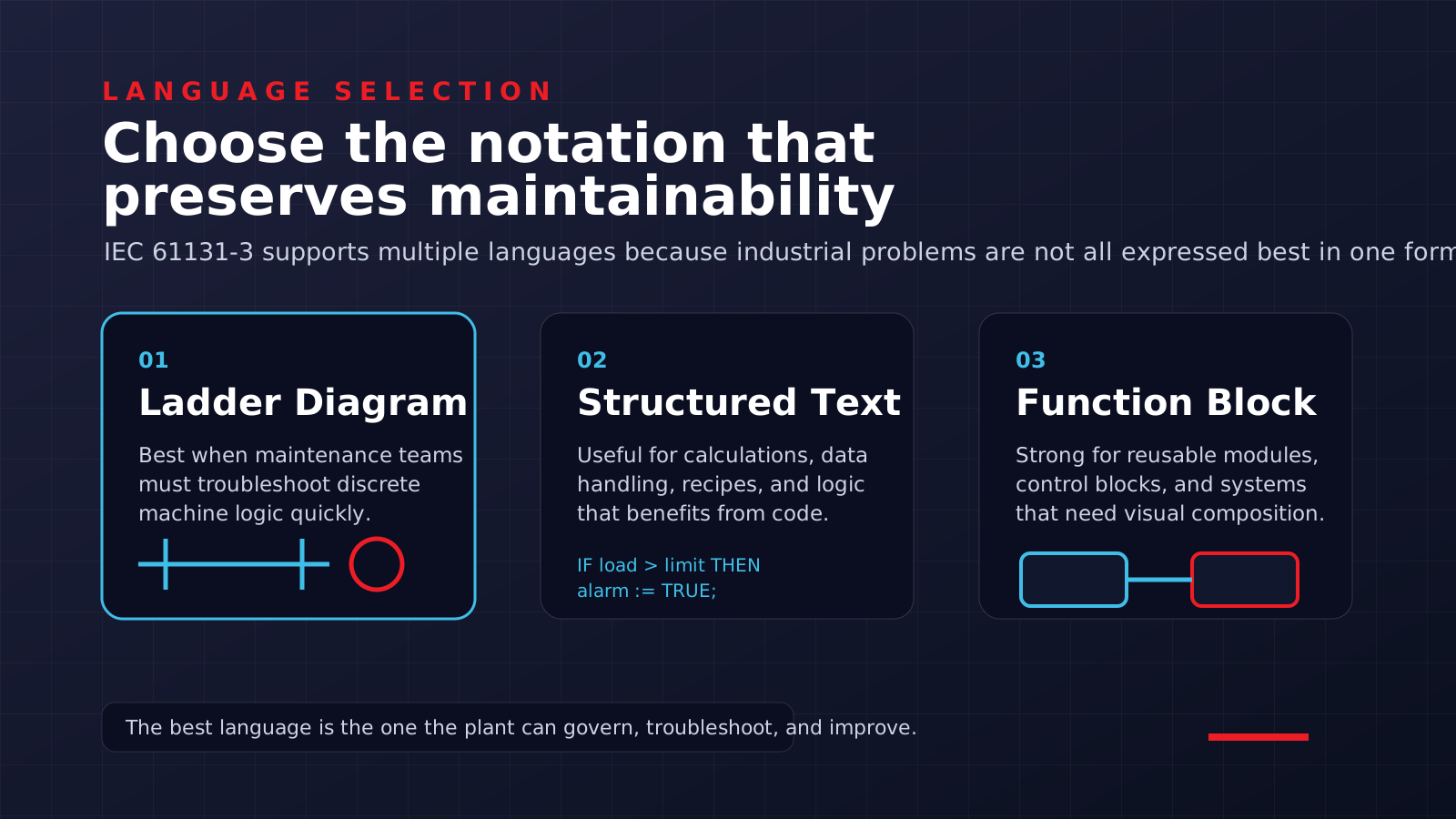
Ladder Logic is important, but it is not the only useful PLC language. The IEC 61131-3 family exists because different control problems benefit from different expressions.
| Programming approach | Where it fits well | Leadership watchpoint |
|---|---|---|
| Ladder Diagram | Discrete machine logic, interlocks, timers, counters, permissives, and technician troubleshooting | Keep naming, sections, comments, and fault logic disciplined; messy Ladder becomes expensive fast |
| Structured Text | Calculations, recipe handling, array logic, data movement, algorithms, and reusable logic | Avoid hiding plant-critical logic in code that maintenance teams cannot diagnose |
| Function Block Diagram | Reusable modules, control loops, signal conditioning, and visual function composition | Define ownership and documentation so blocks remain understandable after handover |
The decision should not be ideological. It should be governed by maintainability, safety, team capability, and the life of the machine.
How to sequence an automation project
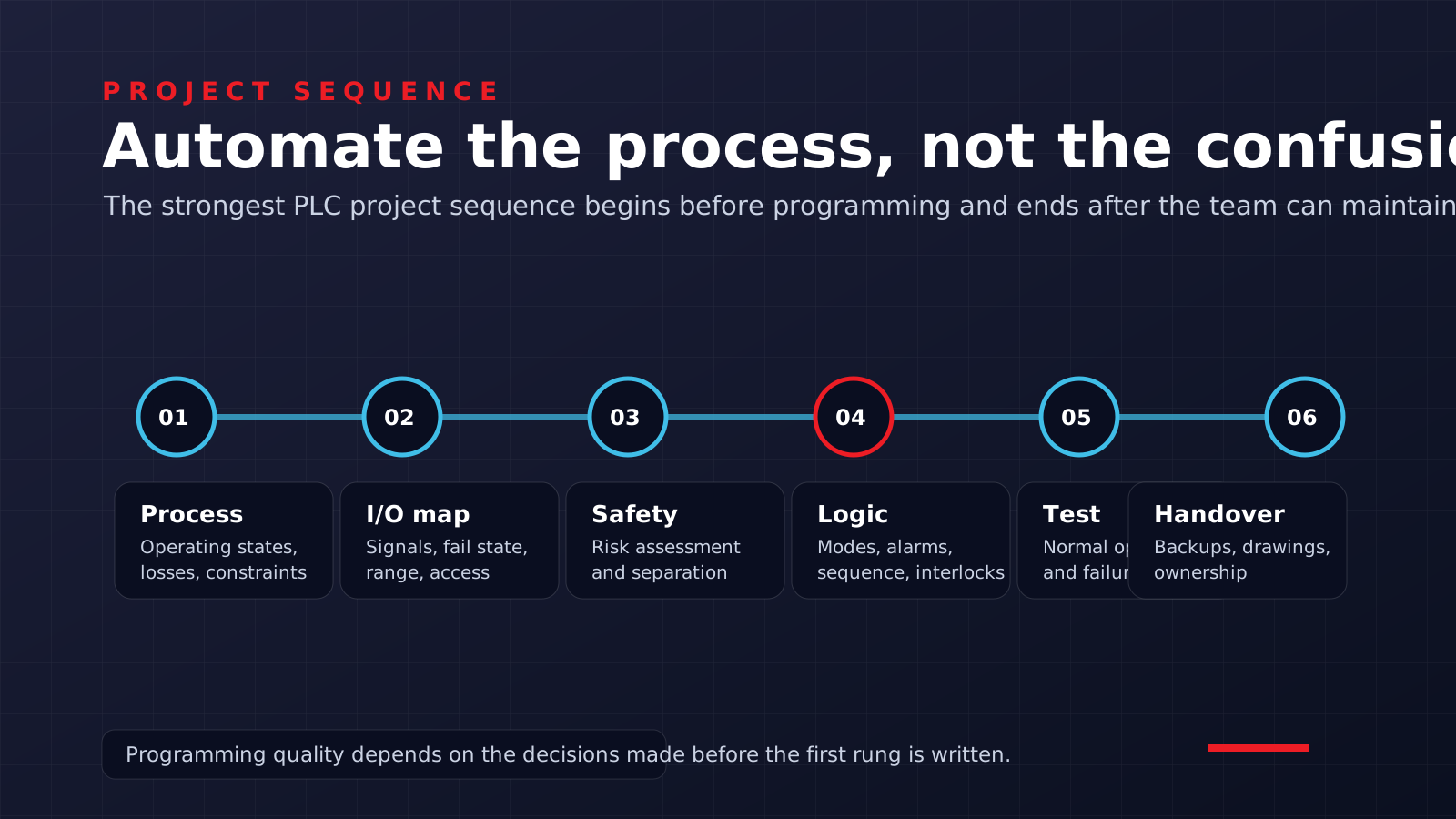
- 01 Define the operating problem
Clarify what should run automatically, what should remain manual, what failure should stop the machine, and what evidence should remain after a stoppage.
- 02 Map inputs and outputs
List sensors, switches, drives, valves, motors, alarms, and actuators with signal type, normal state, fail state, range, unit, and access.
- 03 Engineer safety separately
Treat safety functions through the applicable risk assessment and machine-safety design process. Do not hide safety assumptions inside normal control logic.
- 04 Build readable program structure
Separate startup, normal run, manual mode, automatic mode, faults, alarms, sequence steps, reset paths, and shutdown.
- 05 Test normal and abnormal operation
Include sensor failure, power recovery, communication loss, mechanical jam, operator mistake, and repeated fault scenarios.
- 06 Document for continuity
Leave drawings, tag lists, backups, network notes, alarm lists, sequence descriptions, and change-control notes that the plant can maintain.
For small and mid-sized industrial companies, this sequence is capital protection. It reduces the probability that the plant pays twice: once to automate, and again to understand what was automated.
Why PLC discipline matters for IIoT and AI
IIoT and AI depend on reliable machine states. If PLC tags are undocumented, inconsistent, or too vague, analytics inherit the confusion.
Before exposing PLC data to a dashboard, historian, or AI model, ask:
- Does each tag have a stable meaning across manual, automatic, startup, fault, and maintenance modes?
- Can production and maintenance agree on the same machine-state vocabulary?
- Are alarms actionable, or do they mostly describe symptoms after the line has already stopped?
- Are timestamps reliable enough for downtime, quality, or maintenance analysis?
- Can the plant identify who owns the response after a critical state changes?
Good Ladder Logic does not automatically create good IIoT. But poor control discipline almost always makes useful IIoT harder.
Economic value model
The economic value of PLC improvement is usually found in time, confidence, and continuity:
Monthly value of faster troubleshooting =
fault events per month
x diagnosis time saved per event
x production value per hour
Value of better sequencing =
manual errors avoided
x cost per error
+ startup or changeover time saved
+ reduced quality containment effortA maintainable PLC program reduces operating dependency
This is not a claim that every PLC cleanup produces a fixed return. It is a way to connect control quality to business outcomes that can be measured.
Modernization watchpoints
- Approving a dashboard project before fixing unreliable machine states.
- Treating old PLCs as the problem when the root cause is documentation, naming, or alarm discipline.
- Letting vendor software preference replace plant maintainability requirements.
- Using write-back control from reporting systems without a separate engineering and safety decision.
- Leaving the plant without backups, tag lists, sequence notes, or change-control ownership.
The Industry Digits view
Industrial automation is not only about replacing manual work with machine action. It is about making the process repeatable, measurable, safer to operate, and easier to improve.
For leadership teams, Ladder Logic is worth understanding because it sits close to the economic reality of the plant. When the machine stops, someone must see why. When the line changes over, the sequence must be trusted. When data moves into IIoT, the machine state must mean something.
The strongest automation foundation is not the most complex one. It is the one the plant can operate, troubleshoot, document, and build upon.
Lokesh Chennuru writes Industry Digits field notes for industrial decision makers, focused on automation, IIoT, condition monitoring, predictive maintenance, and industrial AI.
Connect on LinkedInQuestions industrial leaders ask about this
Why is ladder logic still used in modern automation?
Because it maps closely to relay and field wiring, which lets technicians troubleshoot machine behaviour quickly. It remains defined under IEC 61131-3 alongside Structured Text and Function Block Diagram.
When is ladder logic the wrong choice?
For complex calculations, data manipulation, or reusable function blocks, Structured Text or Function Block Diagram is often better. IEC 61131-3 offers multiple languages so logic can be fit-for-purpose.
How does ladder-logic discipline affect IIoT and AI?
Directly: analytics inherit the clarity of PLC tags and machine states. Confusing or undocumented tags pass their confusion to every dashboard and model built on them.
Ready to turn signals into a maintenance decision path?
Book a 30-minute consultation and we will map the fastest useful condition-monitoring or automation win.