
Industrial Cybersecurity For OT And IT Networks: A Practical Guide For Connected Plants
A practical continuity-first guide for securing PLCs, SCADA, IIoT gateways, historians, cloud dashboards, and remote support paths without slowing useful modernization.

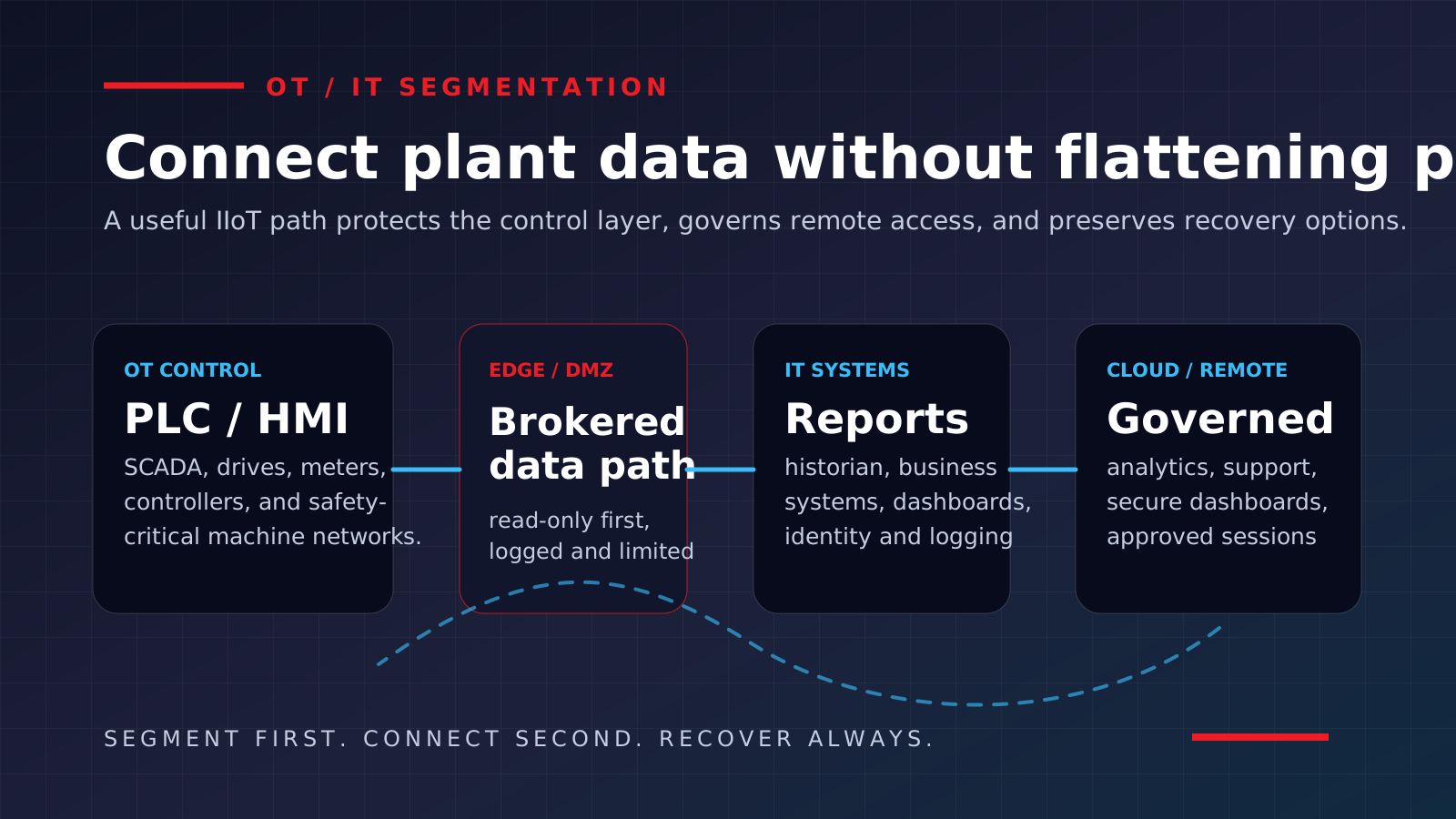
Industry 4.0 increases connectivity. Connectivity increases usefulness, but it also increases responsibility. A plant that connects PLCs, SCADA, historians, IIoT gateways, cloud dashboards, engineering laptops, and remote support should treat security as an operating discipline, not as an afterthought.
For industrial decision makers, OT security is not only an IT issue. It is an operational continuity issue. In office systems, confidentiality often receives the loudest attention. In OT, availability, safety, integrity, and recoverability can decide whether the plant continues to run.
The practical question is simple: if a controller, HMI, engineering laptop, gateway, or remote access path fails tomorrow, how quickly can the plant understand the issue and recover?
Why this matters economically
Industrial cybersecurity is often sold through fear. That framing rarely helps plant teams make better decisions. A better framing is continuity.
| Continuity risk | Operational consequence | Practical control |
|---|---|---|
| Unknown devices on plant networks | Slow troubleshooting and unmanaged exposure | Asset inventory and network map |
| Uncontrolled remote support | Shared access, weak audit trail, and persistent open paths | Named accounts, MFA, approval windows, and logs |
| Missing PLC or HMI backups | Recovery depends on one laptop, one person, or one vendor | Versioned backups and tested restoration |
| Flat OT and IT network | A fault or infection travels further than necessary | Segmentation and controlled edge or DMZ path |
| Unsafe IIoT data access | Dashboard projects weaken control architecture | Read-only first, least privilege, and brokered data movement |
The value is not only avoiding a major incident. It is reducing fragile dependencies so modernization can continue with confidence.
What changes when OT connects to IT
Traditional OT systems were often built for isolated, long-life operation. Many PLCs, HMIs, drives, and instruments were selected for reliability and lifecycle, not internet-facing security.
As plants modernize, data starts moving through:
- PLC and SCADA networks.
- Engineering workstations.
- Historians and reporting servers.
- Remote support connections.
- Industrial gateways and edge devices.
- Cloud dashboards and analytics platforms.
- Vendor tools and maintenance laptops.
Every connection is useful only if it is governed.
Start with asset inventory
You cannot protect what you cannot see.
A practical OT asset inventory should include:
- PLCs, HMIs, SCADA servers, historians, drives, meters, gateways, and engineering workstations.
- Firmware and software versions.
- Network location and communication paths.
- Criticality of each asset.
- Backup availability.
- Vendor support status.
- Remote access paths.
- Known dependencies between systems.
For MSME and mid-sized plants, this does not need to begin as a large enterprise platform. A disciplined spreadsheet or lightweight inventory can be a serious first step if it is maintained and reviewed.
Use a recovery exposure model
Use a continuity model, not a fear model:
Recovery exposure =
expected restoration time
x production value per hour
+ emergency service cost
+ quality or restart risk
Then reduce exposure through backups, access control, segmentation, and tested recovery steps. This makes OT security understandable to finance and operations, not only IT.
Estimate recovery exposure before connecting more systems
Use this as a planning estimate, not a published ROI claim. Replace default values with plant-specific contribution margin, downtime history, and implementation cost during discovery.
Estimated annual value at risk before improvement.
This calculator uses values entered by the reader. It is not a case-study result, savings guarantee, or financial advice.
Segment the network
Flat networks are convenient until something goes wrong. OT network segmentation limits how far a fault, misconfiguration, malware infection, or unauthorized access can spread.
Common segmentation practices include:
- Separate office IT from plant OT.
- Separate critical control networks from reporting networks.
- Use a controlled edge or DMZ layer for data exchange.
- Restrict remote access through approved paths.
- Avoid direct internet exposure of PLCs, HMIs, SCADA, and engineering systems.
Segmentation should be designed with operations. The engineering team needs to understand process dependencies, vendor support paths, shutdown windows, and what must remain available during an incident.
Control remote access
Remote access is useful, especially for plants that depend on outside experts. But uncontrolled remote access is one of the highest-risk habits in industrial environments.
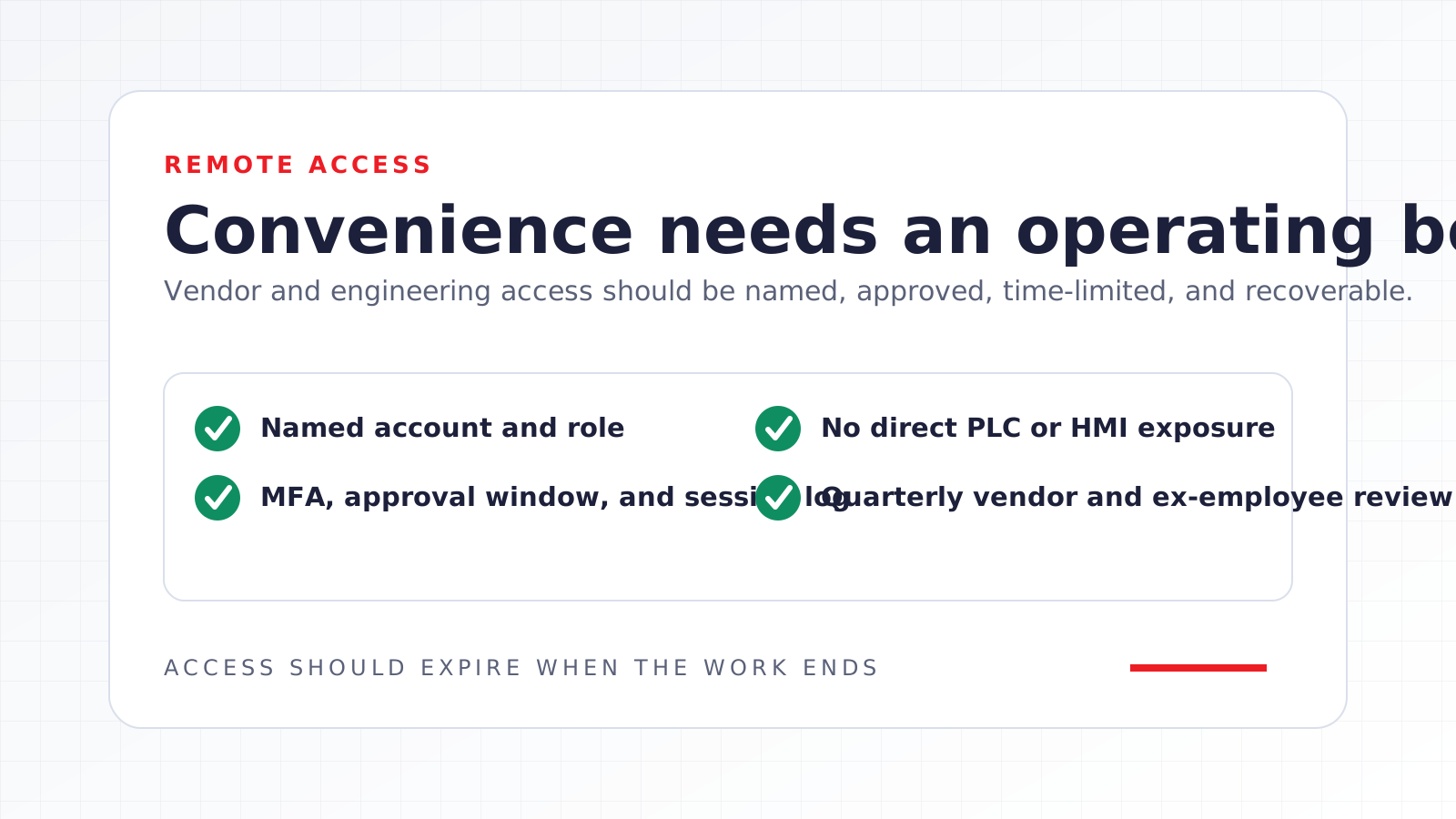
Minimum expectations:
- Use named accounts instead of shared credentials.
- Require multi-factor authentication where possible.
- Allow access only when needed and remove it when work is complete.
- Log sessions, engineering changes, and file transfers.
- Disable old vendor, contractor, and former-employee access.
- Keep engineering software and maintenance laptops controlled.
- Avoid persistent open paths because they are convenient.
Protect engineering workstations and backups
PLC and HMI backups are operational insurance. When a device fails or a program is corrupted, backups can decide whether downtime is hours or days.
Protect:
- PLC program backups.
- HMI and SCADA project files.
- Network configuration backups.
- Drive parameter backups.
- Historian, recipe, and report configuration backups.
- Golden images for engineering workstations where practical.
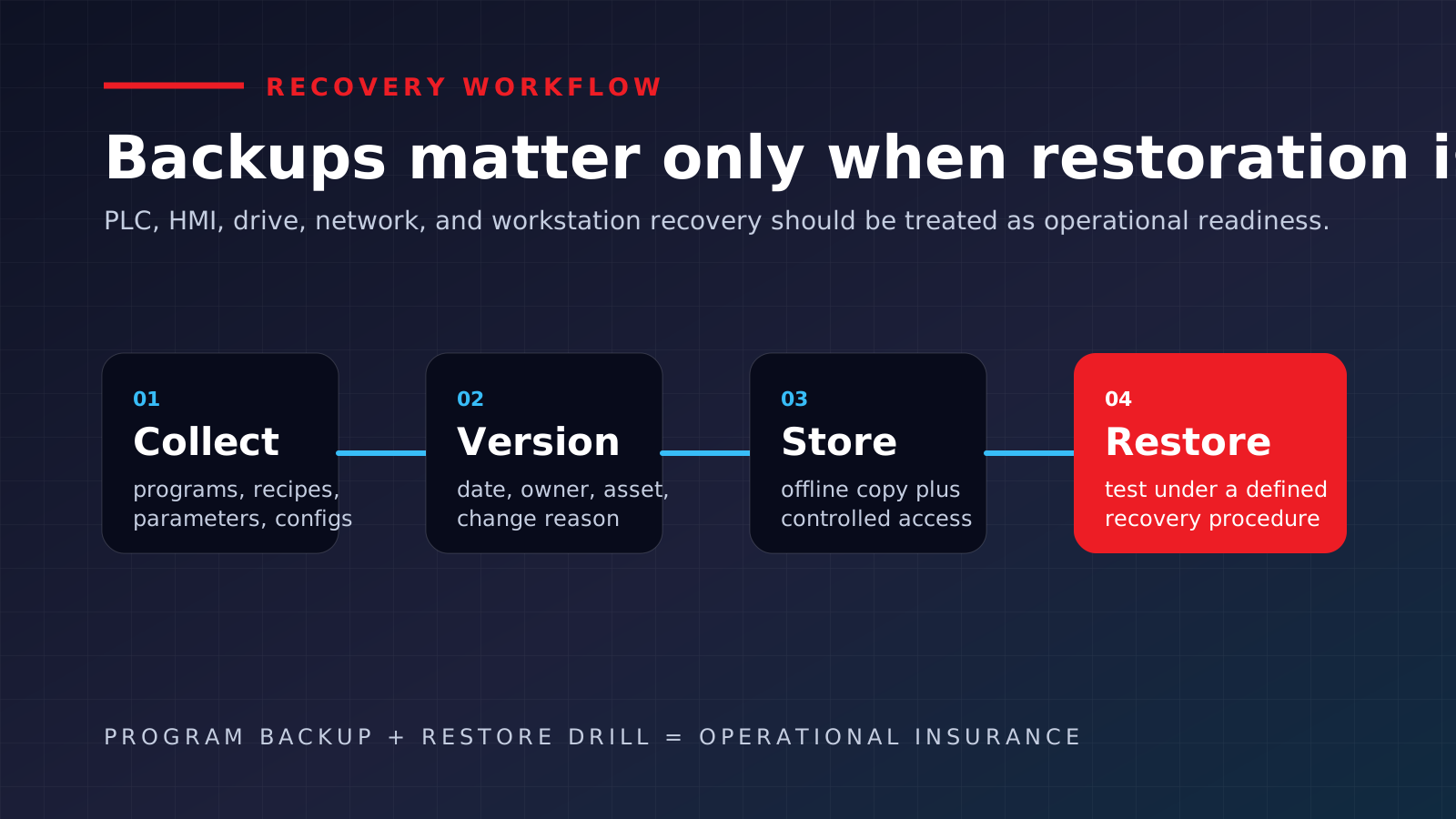
Backups should be tested, versioned, and stored so they remain available during an incident. An untested backup is an assumption. A tested restore procedure is a recovery asset.
Design IIoT data access safely
IIoT projects should default to read-only data access unless write-back control is intentionally engineered, reviewed, and approved.
Safe data access principles:
- Pull only required tags.
- Use least privilege.
- Place data gateways in a controlled network zone.
- Avoid exposing PLCs directly to cloud services.
- Validate time synchronization and data integrity.
- Monitor gateway health and failed authentication attempts.
For secure OT architecture, NIST SP 800-82 Rev. 3, the NIST Cybersecurity Framework 2.0, CISA Cross-Sector Cybersecurity Performance Goals, and the ISA/IEC 62443 series are useful references. They do not replace plant-specific engineering, but they help prevent casual architecture decisions.
Make security practical for plant teams
Security programs fail when they ignore operations. A plant team needs practices that fit shutdown windows, vendor dependencies, spare parts, production schedules, and safety requirements.
Practical controls include:
- Clear change-control process for PLC, HMI, and SCADA changes.
- USB and removable-media policy.
- Patch review based on asset criticality and compatibility.
- Incident response playbook for plant operations.
- Access review for vendors and former employees.
- Regular backup verification.
- Security awareness for engineers and technicians.
The Industry Digits view
Industrial cybersecurity should support automation, not block it. A secure architecture makes modernization easier because decision makers can connect systems with confidence.
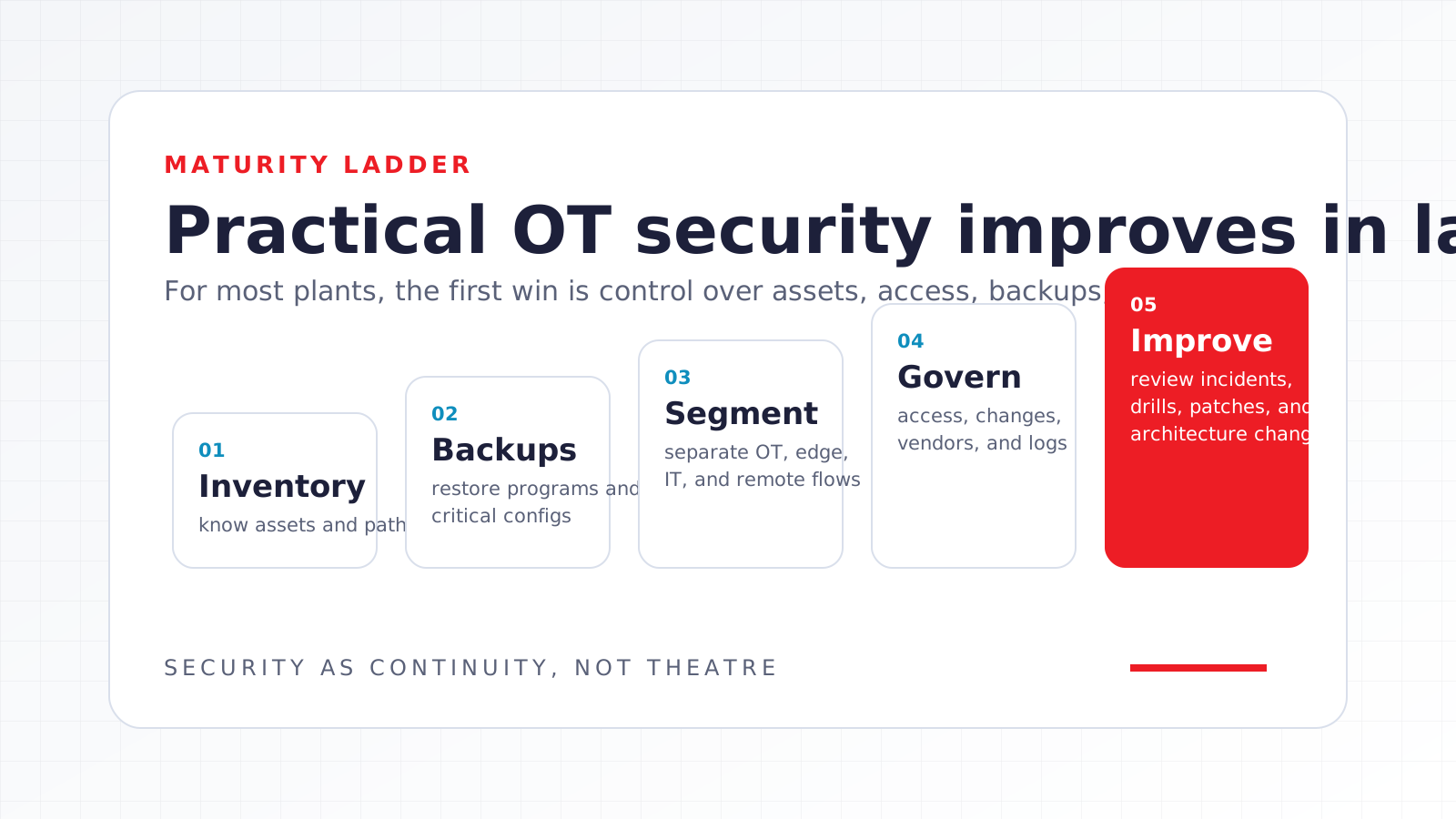
For most MSME and mid-sized plants, the first cybersecurity improvement is not a large security platform. It is a clear asset inventory, a network map, controlled remote access, reliable backups, and a disciplined IIoT data path.
Run a one-day OT continuity audit:
- 01 List critical assets
Identify PLCs, HMIs, drives, gateways, engineering laptops, and reporting systems.
- 02 Confirm backup position
Find the latest program and project backups, owner, storage location, and restore method.
- 03 Map remote access
Identify every vendor, contractor, remote desktop, VPN, and support path.
- 04 Draw the data path
Show how data moves from PLC to dashboard, cloud, report, or mobile view.
- 05 Mark unknowns
Flag shared passwords, unknown devices, unsupported software, and untested recovery steps.
This creates immediate control before a larger security program begins.
Lokesh Chennuru writes Industry Digits field notes for industrial decision makers, focused on automation, IIoT, condition monitoring, predictive maintenance, and industrial AI.
Connect on LinkedInQuestions industrial leaders ask about this
How is OT security different from IT security?
IT often prioritises confidentiality, while OT usually prioritises availability and safety because downtime and unsafe states directly affect people, equipment, and production. NIST SP 800-82 and ISA/IEC 62443 frame this difference.
Where should a small or mid-sized plant start with OT security?
With an asset inventory, a network map, controlled remote access, tested backups, and a disciplined IIoT data path, not a large platform. You cannot protect what you cannot see.
Is industrial cybersecurity only an insurance cost?
It is better framed as a continuity investment: fewer unknown assets, faster recovery, safer remote support, and the confidence to connect IIoT and analytics without weakening control.
Ready to turn signals into a maintenance decision path?
Book a 30-minute consultation and we will map the fastest useful condition-monitoring or automation win.