
Food And Beverage Automation: Practical IIoT And Control Ideas For Hygienic Production Lines
How food and beverage plants can use automation, IIoT, and condition monitoring to improve uptime, hygiene, quality, and packaging reliability without overcomplicating operations.

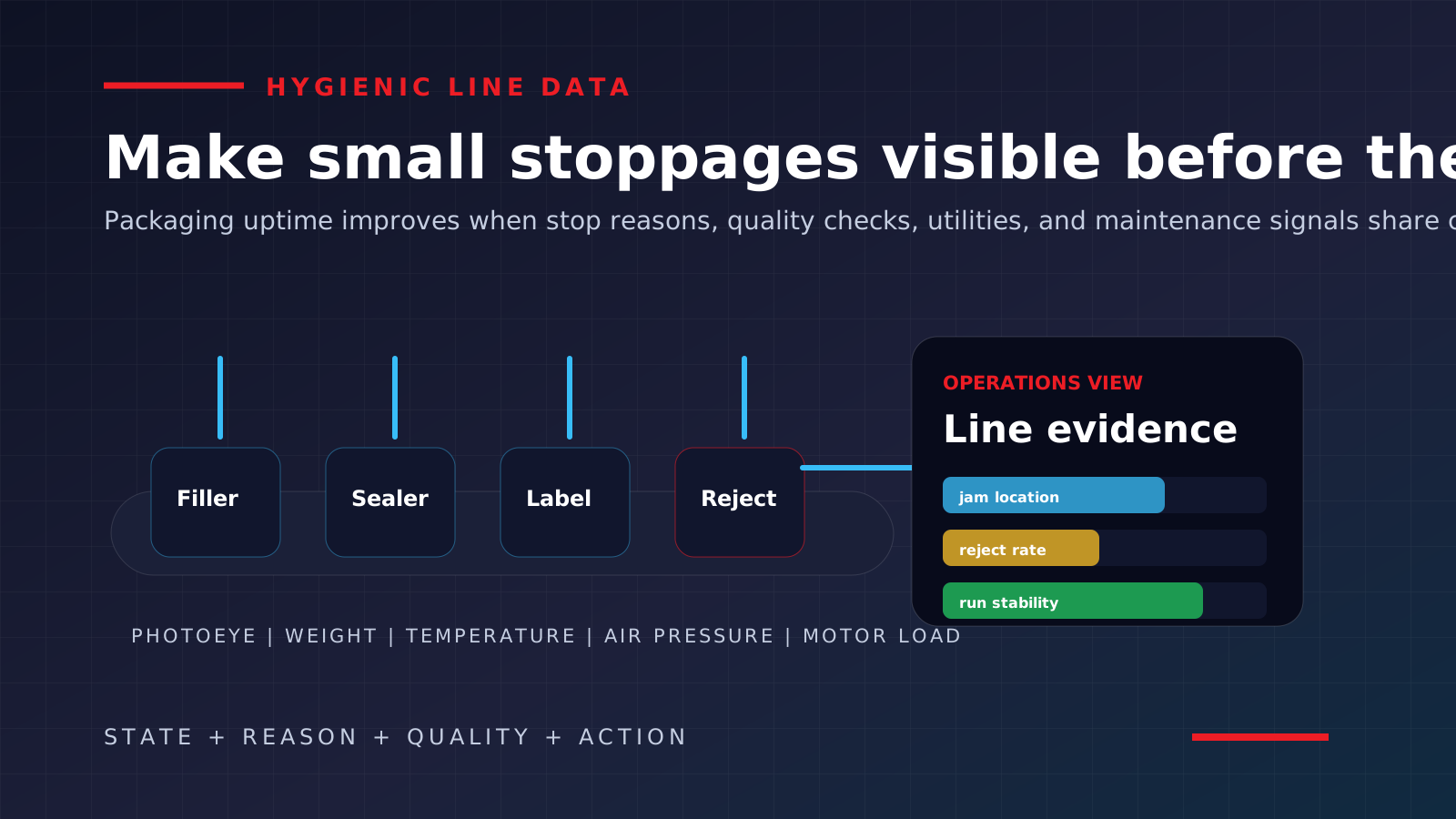
Food and beverage automation is not only about speed. It is about producing consistently, cleaning reliably, reducing waste, protecting quality, and keeping equipment available during demanding production schedules.
For plant owners, the economic pressure is often hidden in small losses: five minutes lost here, one jam there, a rejected batch, compressed-air waste, an unplanned washdown delay, or a filling variation that becomes rework. Automation becomes valuable when it turns these scattered losses into visible, controllable patterns.
For MSME and mid-sized plants, the best projects usually begin in practical places: packaging jams, filling accuracy, washdown-safe sensing, pump and motor reliability, utility monitoring, batch visibility, downtime reason capture, and quality inspection.
What plant leadership should care about
| Business pressure | Useful automation evidence | Operational value |
|---|---|---|
| Packaging downtime | Stop reason, location, state, speed, operator action, and restart time | Find repeat losses instead of accepting them as normal |
| Product waste or rework | Reject count, filling variation, recipe, temperature, sealing condition, and machine state | Connect quality variation to operating context |
| Cleaning and washdown windows | Cycle completion, flow, temperature, valve state, conductivity where measured, and exception records | Improve visibility without making unsupported compliance claims |
| Maintenance overload | Motor current, vibration, bearing temperature, run hours, trips, and inspection action | Prioritize high-impact assets before they interrupt production |
| Customer confidence | Traceable production and quality records linked to batch, line, shift, and event | Support clearer quality conversations with evidence |
The goal is not only higher speed. It is fewer uncontrolled losses.
Why food and beverage automation is different
Food and beverage plants have constraints that general automation plans often miss:
- Hygiene and cleaning requirements.
- Moisture, heat, sugar, oil, powder, and corrosion exposure.
- Batch and recipe variation.
- Frequent changeovers.
- Packaging material variability.
- Food safety documentation.
- Operator-dependent quality checks.
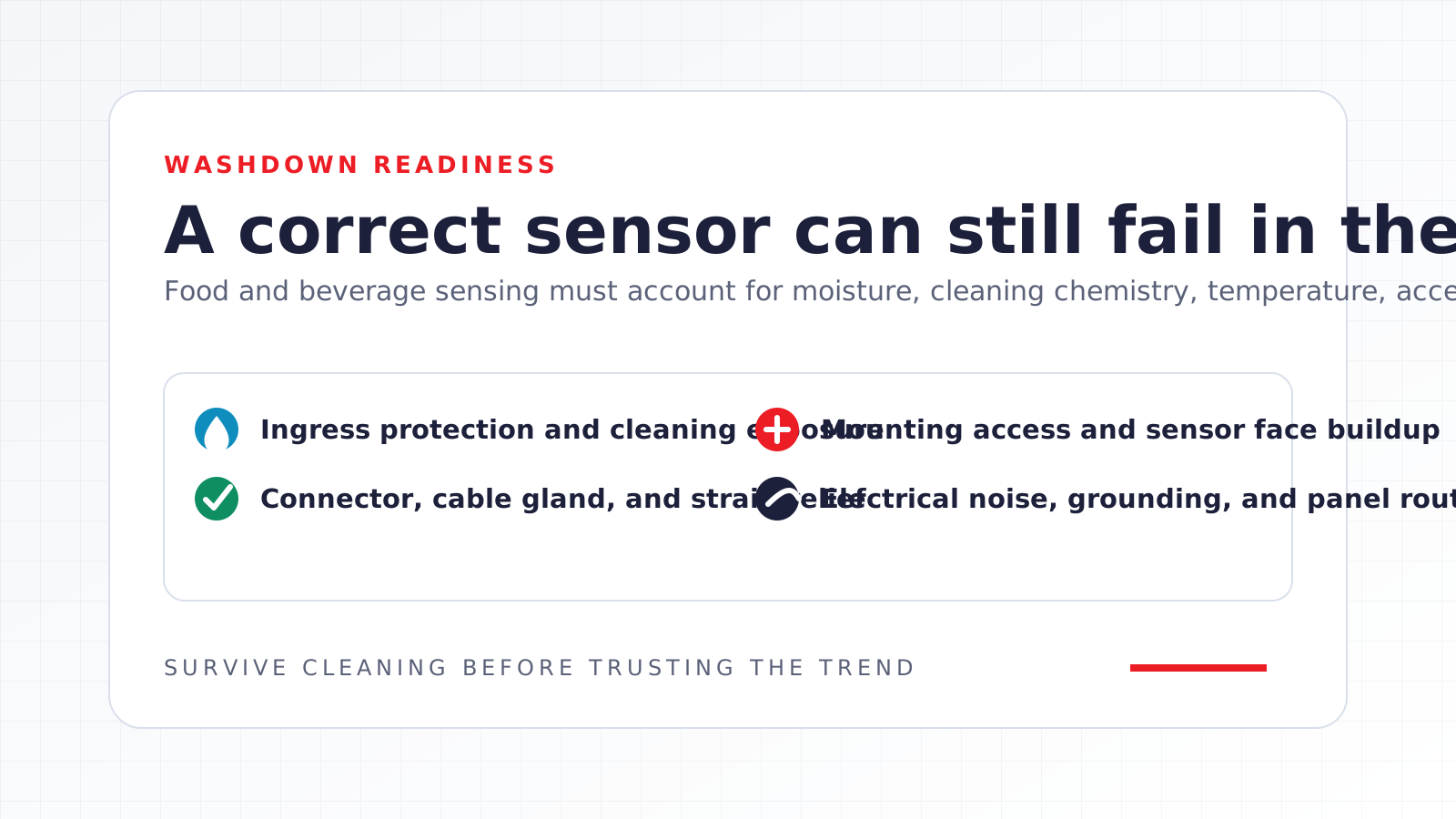
Sensors, panels, cable glands, enclosures, and HMIs must be selected with the environment in mind. A sensor that works well in a dry machine area may fail quickly in a washdown zone.
1. Packaging line stability
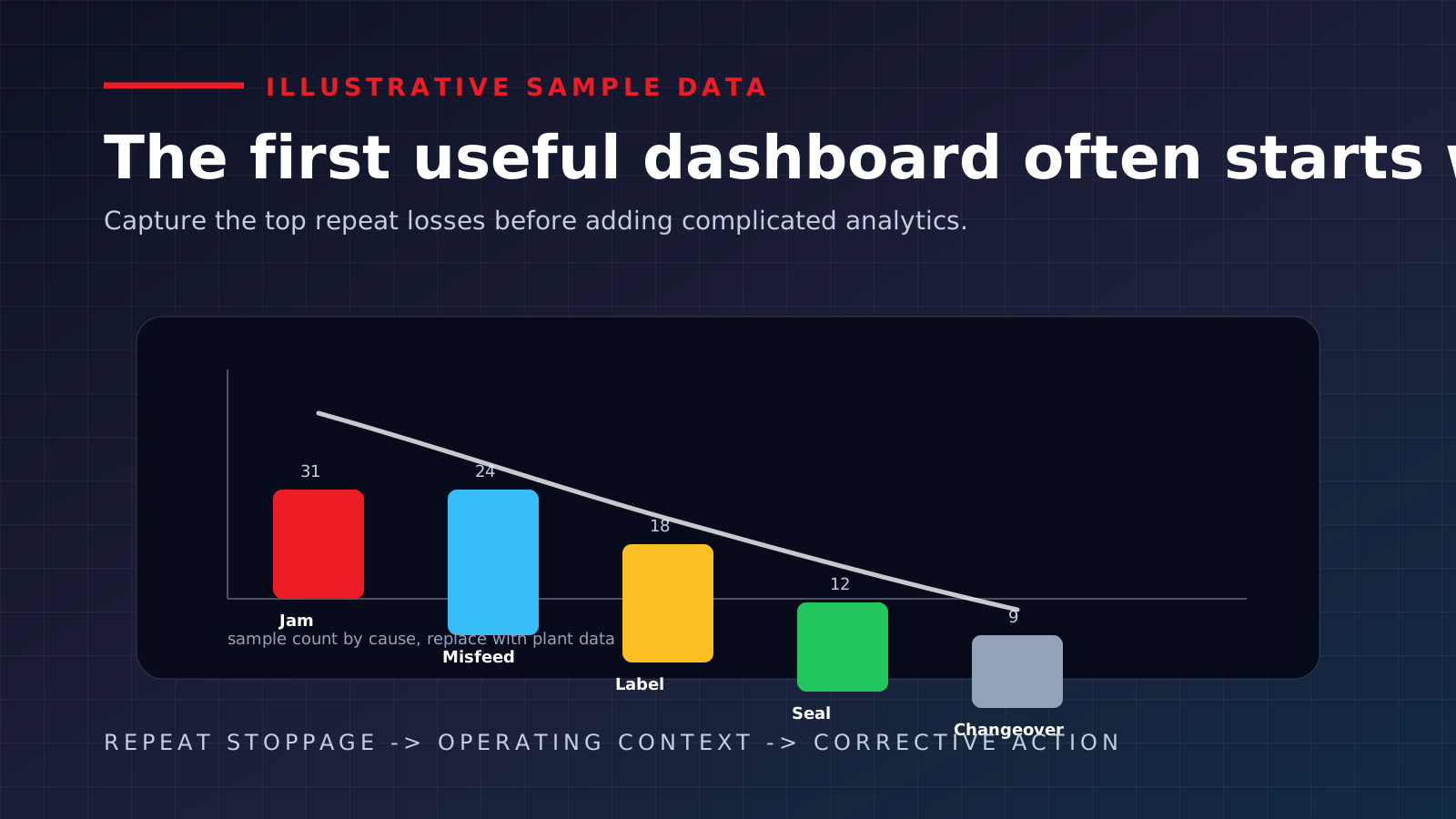
Packaging lines lose time through jams, misfeeds, label issues, bottle or pouch positioning errors, sealing defects, and changeover mistakes. Every stop may look small. The total loss rarely is.
Packaging loss per shift =
minor stops x average minutes lost
x production value per minute
+ scrap or rework from restarts and rejects
Useful signals include:
- Machine state and stop reason.
- Jam location.
- Cycle time.
- Reject count.
- Motor load.
- Air pressure.
- Temperature at sealing or heating stations.
- Vision inspection output where justified.
The first goal should be to identify the top three stoppage reasons and their operating conditions. Once visible, the team can improve guides, sensors, timing, air pressure, maintenance intervals, or operator setup.
2. Pump, motor, and conveyor reliability
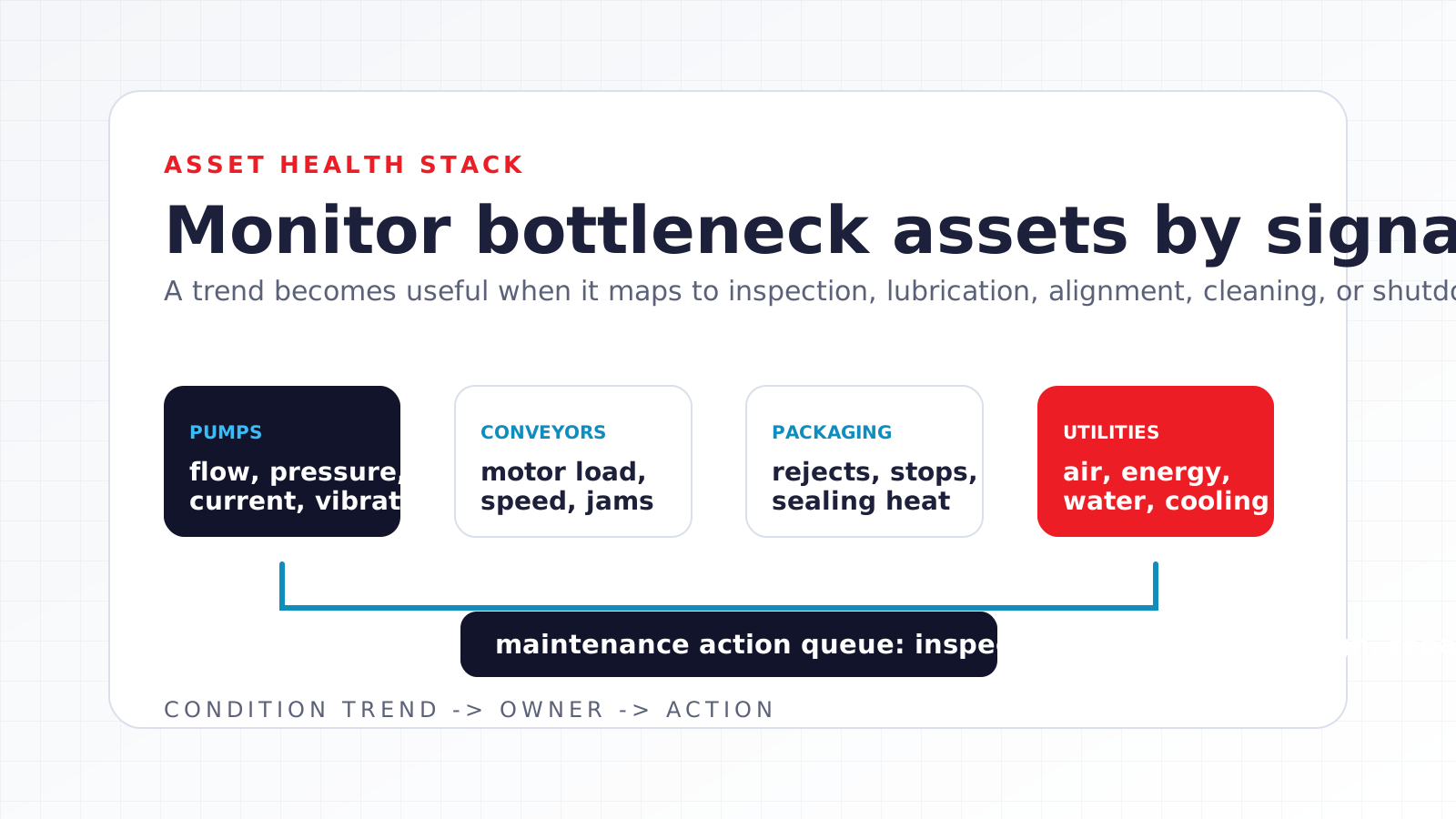
Food plants often rely on pumps, mixers, conveyors, gearboxes, compressors, chillers, and packaging motors. These assets usually show early signs before failure.
Useful monitoring:
- Motor current.
- Vibration.
- Bearing temperature.
- Run hours.
- Seal leakage indicators where applicable.
- Lubrication condition.
- Repeated overloads or trips.
Condition-based monitoring is valuable when it connects to action. A trend should trigger inspection, lubrication, alignment check, belt check, cleaning action, or shutdown planning.
3. Clean-in-place and washdown visibility
Cleaning cycles are critical but can be difficult to verify manually. Automation can help track:
- Cleaning cycle start and stop.
- Temperature.
- Flow.
- Conductivity or chemical concentration where measured.
- Valve position.
- Pump state.
- Cycle completion and exceptions.
Do not publish compliance claims unless the system has been validated for the specific requirement. Automation can support visibility and records; compliance depends on the actual process, validation, documentation, and regulatory context.
4. Quality inspection
Vision and sensor systems can support:
- Fill-level checks.
- Label presence and alignment.
- Cap or seal presence.
- Date-code verification.
- Package damage detection.
- Foreign-object detection in specific controlled contexts.
The important design question is what happens after detection. Reject mechanisms, image retention, alarm logic, operator review, and false-reject handling must be engineered.
A practical implementation path
- 01 Line audit
Identify the highest-loss line, the most frequent stoppages, and the assets most likely to interrupt production.
- 02 Signal selection
Select robust signals tied to action. Avoid fragile sensors just because they look technically interesting.
- 03 Control and visibility
Improve PLC and HMI states before building dashboards. A dashboard cannot repair weak machine states.
- 04 Maintenance workflow
Turn trends into checks: belt tension, bearing lubrication, motor load, sensor cleaning, guide adjustment, air leak inspection, or valve review.
- 05 Review and scale
Review downtime, rejects, utility use, and maintenance actions. Expand only where the first loop proves useful.
Watch for weak implementation patterns
- Dashboards are installed before downtime reasons are reliable.
- Dry-zone sensors are used in wet, oily, sugary, powder, or washdown areas.
- Recipe data and quality data remain disconnected from machine state.
- Compressed air, cooling, water, and utility losses are ignored because they sit outside the main machine.
- AI is used as language before stable signals, repeatable events, and clear HMI states exist.
The Industry Digits view
Food and beverage automation should simplify the line for the people who run it. Good systems make the machine state clear, make cleaning and quality easier to verify, and give maintenance enough early warning to act before production is lost.
The practical first project is usually not full plant digitization. It is one line, one high-loss problem, and one decision workflow that operators and maintenance can trust.
Choose one packaging or process line and record the next 100 stoppages with time, reason, state, and corrective action. Then compare the log with PLC and HMI events. This simple exercise often shows whether the first investment should be sensor placement, HMI improvement, downtime reason capture, maintenance checks, or operator setup control.
Lokesh Chennuru writes Industry Digits field notes for industrial decision makers, focused on automation, IIoT, condition monitoring, predictive maintenance, and industrial AI.
Connect on LinkedInQuestions industrial leaders ask about this
Where does food and beverage automation give the fastest value?
Usually packaging-line stability, pump and motor reliability, clean-in-place visibility, and utility monitoring, which turn scattered minor losses into visible, controllable patterns.
Why do food-plant sensors fail early?
Because washdown, heat, sugar, oil, and corrosion exposure are not treated as part of selection. A sensor that is correct for a dry area can fail quickly in a wet zone unless enclosure rating and cabling are designed for the environment.
Can automation prove food-safety compliance?
Automation can support visibility and records, but compliance depends on the actual process, validation, and regulatory context such as FDA FSMA and ISO 22000. Compliance should not be implied without system-specific validation.
Ready to turn signals into a maintenance decision path?
Book a 30-minute consultation and we will map the fastest useful condition-monitoring or automation win.