
Thermal, Vibration, Or Current: Choosing The First Signal That Earns Trust
A condition monitoring decision guide for choosing the first signal that builds trust, protects maintenance capacity, and gives earlier warning on critical assets.

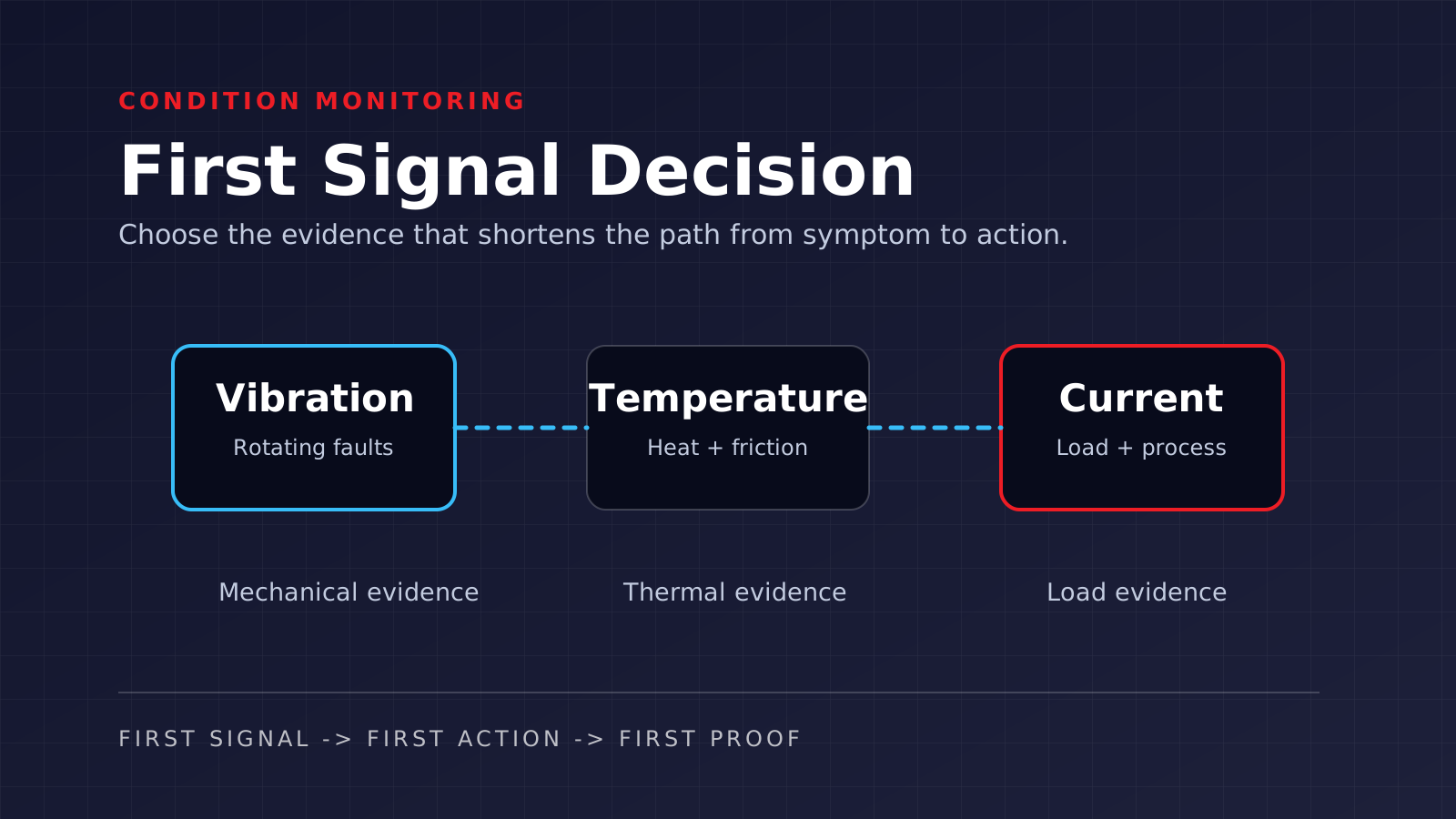
Condition monitoring programs often begin with a deceptively small capital decision: which signal deserves the first implementation budget?
The right first signal depends on the asset, the failure mode, the environment, and the maintenance action that will follow. Vibration, temperature, and current are all useful. But they do not tell the same story, and they do not create the same maintenance decision.
For industrial leaders, this decision matters because sensor programs can expand quickly. The right first signal builds confidence and protects maintenance capacity. A poorly chosen first signal creates noise, false alarms, and another system the plant stops trusting.
ISO 17359 provides general guidelines for condition monitoring and diagnostics of machines, while ISO 20816-3 is part of the machine vibration evaluation family. This article does not replace those standards; it translates the first business decision into practical plant language.
Anchor the signal to the failure mode
Use where rotating faults such as bearing wear, misalignment, imbalance, looseness, or gear issues are credible.
Use where overheating, lubrication issues, blocked cooling, or electrical heating need visible tracking.
Use where electrical load, process restriction, jamming, overload, or abnormal duty cycle may explain the issue.
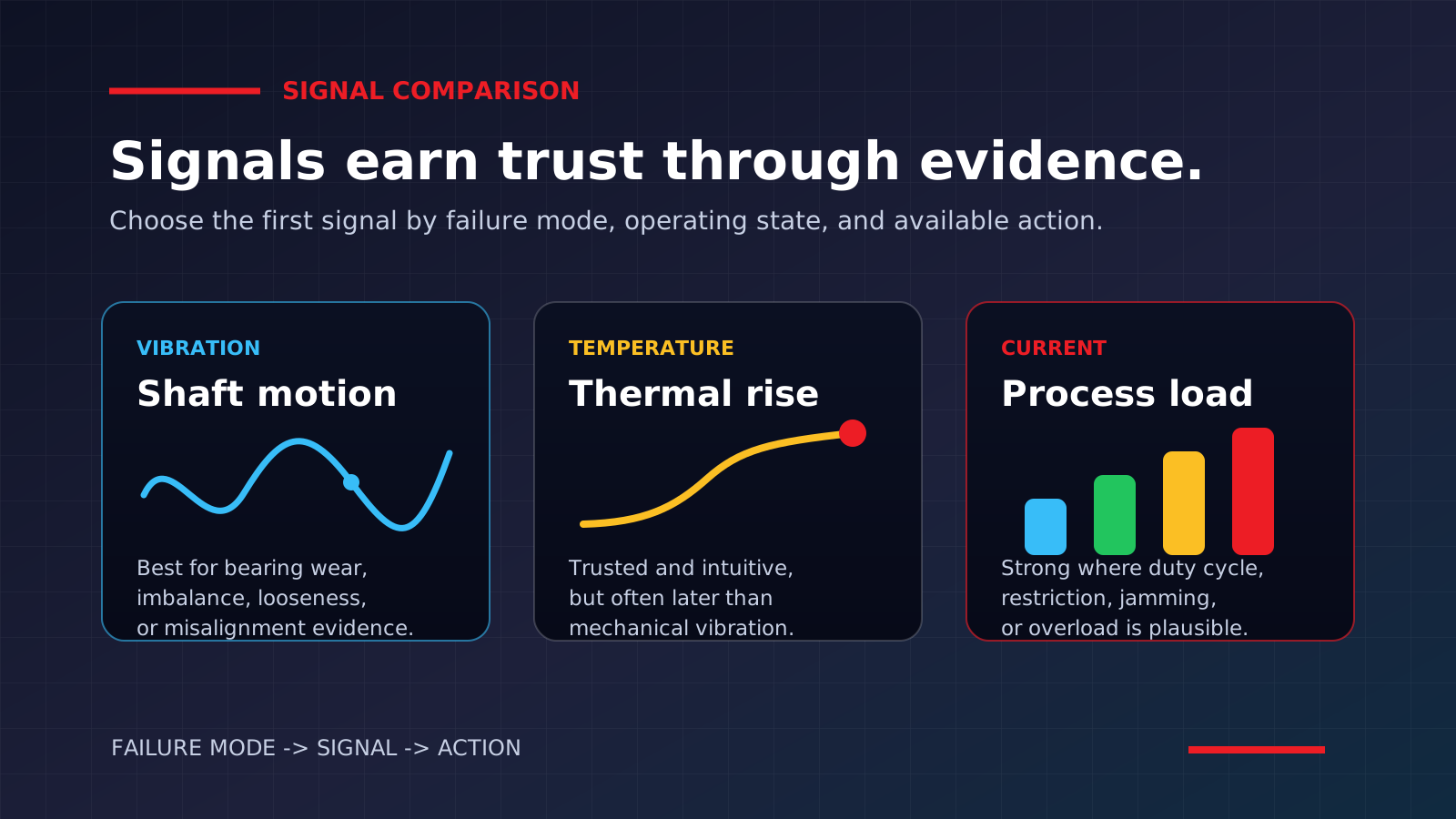
Anchor the first signal to the failure mode
Begin with operating evidence, not the sensor catalogue:
- Most frequent failure mode.
- Failure mode with the highest downtime or quality impact.
- Inspection or repair action available if the signal changes early.
- Signal that changes before the failure becomes visible.
- Named owner who will act on the alert.
If the failure mode is unknown, start with maintenance history and operator observations before buying sensors.
What disciplined signal selection protects
- Emergency bearing, motor, pump, fan, or conveyor failures.
- Replacing parts too early because the team lacks evidence.
- Ignoring early signs until the asset stops production.
- Over-instrumenting low-criticality equipment.
- Alert fatigue from weak thresholds and poor context.
The purpose of sensing is not data collection. It is better maintenance timing, sharper prioritization, and earlier confidence.
Vibration: strongest for rotating mechanical evidence
Vibration is often the strongest first signal for rotating equipment.
Typical evidence areas:
- Bearing defects.
- Misalignment.
- Imbalance.
- Looseness.
- Gear issues.
- Cavitation indicators in pump systems.
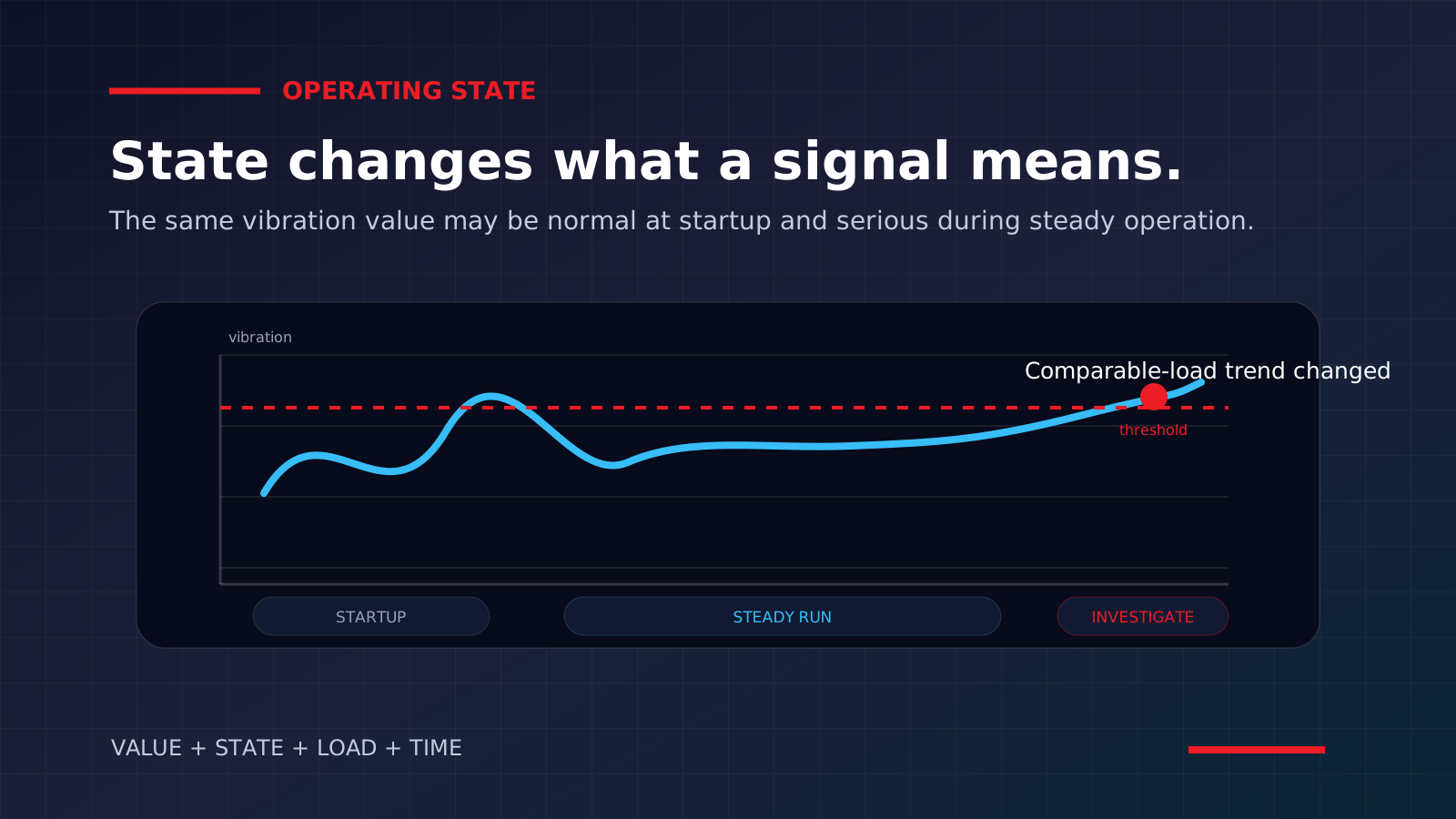
Vibration works well when the sensor is mounted correctly, sampling is appropriate, and trends are interpreted with operating state. A vibration rise during startup may not mean the same thing as a vibration rise under steady load.
This is why vibration should not be reduced to a standalone number. Measurement location, mounting, operating speed, load, machine class, and baseline trend matter. A route-based vibration program may be enough for some assets. Online monitoring may be justified for assets where failure impact is high or access is difficult.
Temperature: valuable, communicable, but frequently later
Temperature is a consequential condition signal, not merely a convenient one. In rotating assets, a thermal drift may reflect friction, lubricant shear, inadequate cooling, overload, electrical heating, or a process state that has changed the duty imposed on the machine.
Its strength is communicability. A rising bearing or housing temperature is easy for operations and maintenance teams to compare, discuss, and escalate. Its limitation is timing. A decisive thermal rise often requires enough frictional energy to accumulate in the bearing, lubricant, housing, and surrounding structure; by that point, the initiating mechanical or lubrication condition may already be mature. Temperature is therefore a strong companion signal, but it is not always the earliest diagnostic signal.
For hydrodynamic journal bearings, the reason is mechanical. The rotating journal and stationary sleeve depend on a stable lubricant film. Load, speed, viscosity, feed pressure, oil temperature, contamination, clearance, and geometry all influence that film. When film support weakens, shaft motion and vibration can change before the bearing housing has accumulated enough heat to make temperature the dominant evidence.
ISO 7902-3:2026 addresses permissible operational parameters for hydrodynamic plain journal bearings, including empirical limits for film thickness, temperature, and bearing load. ISO 3448 gives the viscosity classification system for industrial liquid lubricants, while ISO 4406 provides a coding method for solid-particle contamination in hydraulic fluid systems. For condition programmes, ISO 14830-1 extends the standards context into tribology-based monitoring of lubricating oils, hydraulic fluids, synthetic fluids, and greases.
The practical conclusion is straightforward: temperature becomes more authoritative when it is interpreted beside vibration and lubricant evidence. Temperature asks whether heat has developed. Vibration asks whether shaft motion has changed. Oil condition asks whether the film support is degrading.
Two public cement cases support this logic. In Ecol’s cement roller-press oil case, oil diagnostics identified grease contamination and elevated viscosity, and the response combined filtration, oil refreshment, and cyclic laboratory analysis until the planned shutdown. In International Cement Review’s roller-press monitoring case, online condition monitoring detected a bearing-vibration deviation early enough for the plant to plan spare parts and replacement during a scheduled stoppage.
Current: strong for electrical load and process behavior
Motor current can reveal load changes, overloads, jams, process restriction, pump behavior, conveyor load, and abnormal duty cycles. ISO 20958 is the relevant condition-monitoring standard for online electrical signature analysis of three-phase induction motors.
Current monitoring is especially helpful when mechanical access is difficult but electrical panels are accessible. It can also be easier to standardize across many similar motors.
Current is also useful because it often reflects process behavior. A pump restriction, conveyor overload, mixer viscosity change, jam, or repeated startup can appear in current before the mechanical root cause is fully understood. But the same strength is also a limitation: current needs process context.
| Signal | Best operating use | Where it earns trust | Engineering constraint |
|---|---|---|---|
| Vibration | Mechanical faults in rotating assets | Early and diagnostic when mounted and interpreted correctly | Needs operating-state context and measurement discipline |
| Temperature | Heat, friction, overload, cooling issues | Communicable to operations teams and useful as companion evidence | Frequently appears after mechanical or lubrication change has progressed |
| Current | Electrical load and process change | Often available from drives or panels | Needs context to separate process load from asset health |
A selection pattern you can defend
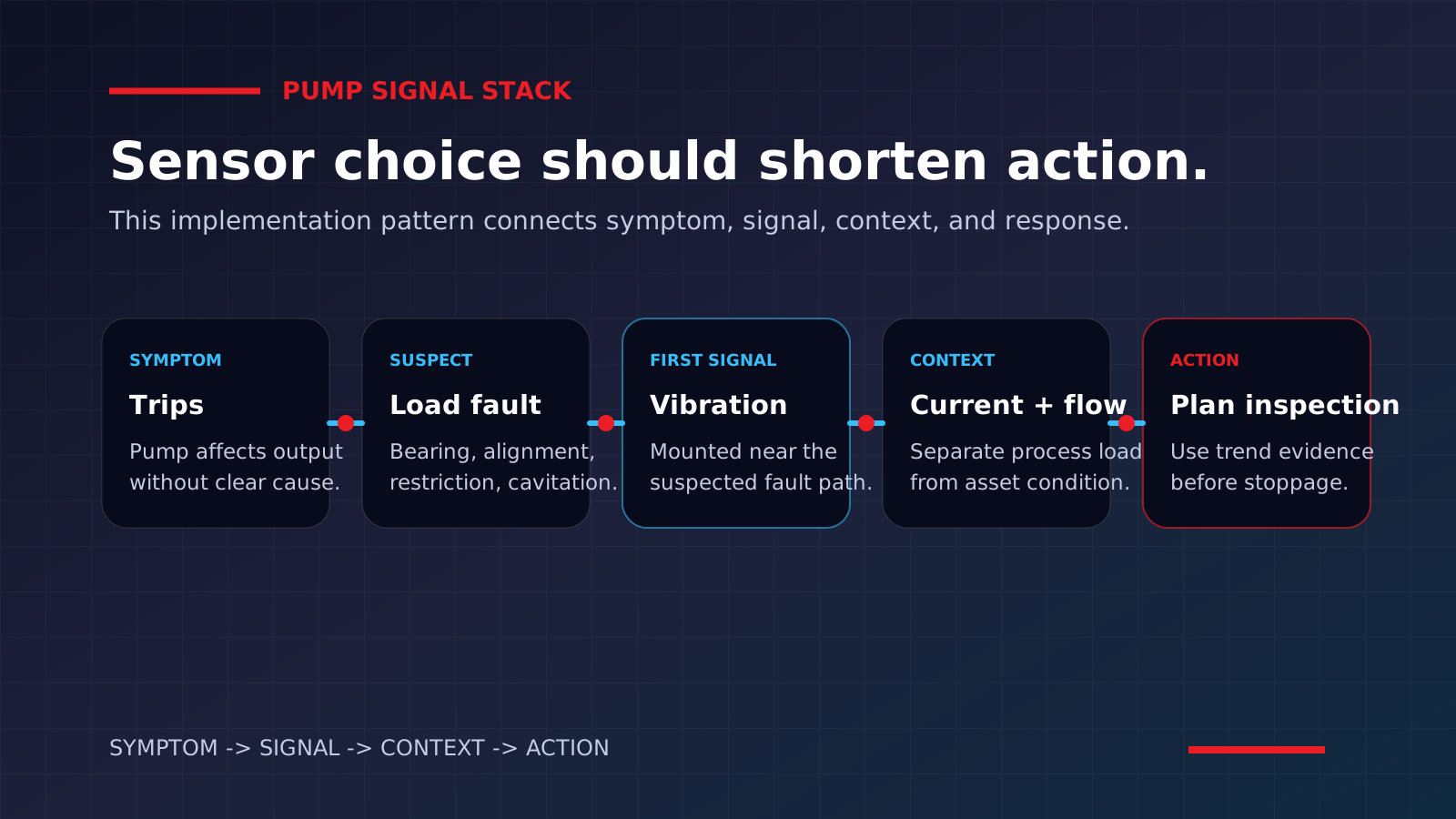
Imagine a motor-driven pump that intermittently trips and occasionally affects production. The team has three credible signal paths:
- Add a vibration sensor on the pump or motor bearing housing.
- Add a temperature sensor on the bearing or casing.
- Use motor current from the drive or panel.
The recommended first path depends on the operating evidence:
- If bearing wear, misalignment, or imbalance is suspected, begin with vibration and capture operating state.
- If overheating or lubrication issue is suspected, add temperature as a watch signal.
- If the issue may be process load, restriction, cavitation, or repeated overload, current plus pressure/flow context may explain more.
The right signal depends on the failure mode and action path
This pattern is not a case result. It is a decision logic. The point is to select the signal that shortens the distance from symptom to maintenance action.
Value estimate model
For each candidate asset, estimate:
Monitoring priority =
failure impact
x failure likelihood
x detectability before failure
Then compare:
Sensor value =
avoided failure or inspection value
- sensor, installation, data, and maintenance costEstimate whether the first signal can justify itself
Use this as a planning estimate, not a published ROI claim. Replace default values with plant-specific contribution margin, downtime history, and implementation cost during discovery.
Estimated annual value at risk before improvement.
This calculator uses values entered by the reader. It is not a case-study result, savings guarantee, or financial advice.
This prevents a common failure mode: monitoring many easy assets while ignoring the few assets that truly stop the plant.
Use the data the plant already owns
Before adding sensors, review:
- PLC tags.
- Drive data.
- Motor protection relays.
- SCADA alarms.
- Energy meters.
- Manual inspection logs.
- Maintenance work orders.
Existing data is especially important for small and mid-sized industrial companies because it protects capital. Before buying new hardware, review whether drives already expose current, faults, run hours, starts, overloads, or alarms. Sometimes the first project is not a new sensor; it is making existing data usable.
The Industry Digits view
Condition monitoring should be designed around action. A sensor is useful when it helps the plant decide whether to inspect, lubricate, align, slow down, continue, or plan a shutdown.
The best first sensor is not always the most advanced one. It is the one that creates the clearest maintenance decision for the highest-risk asset.
For a deeper worksheet, pair this article with the gated Industrial IoT Sensor Selection Checklist. For implementation architecture, connect the selected signals into the Industrial Data & IIoT Architecture data path and the Critical Asset Monitoring maintenance workflow.
Lokesh Chennuru writes Industry Digits field notes for industrial decision makers, focused on automation, IIoT, condition monitoring, predictive maintenance, and industrial AI.
Connect on LinkedInQuestions industrial leaders ask about this
Which condition-monitoring sensor should I install first?
For rotating, mechanically critical assets, vibration is usually the most diagnostic first signal. Current suits load and process-restriction problems where the electrical panel is accessible, and temperature is a simple, robust watch signal. Start from the failure mode.
Is temperature a weak condition-monitoring signal?
No. It often changes after friction or load has already risen, which makes it an excellent confirmatory and watch signal, especially combined with current or vibration and operating-state context.
Can motor current detect mechanical faults?
Current reveals load change, overload, jams, and process restriction, and can flag duty-cycle abnormalities. It shows symptoms more than precise mechanical root cause, so it needs operating context to separate load from fault.
Ready to turn signals into a maintenance decision path?
Book a 30-minute consultation and we will map the fastest useful condition-monitoring or automation win.