
IIoT Architecture For Machine Data Flow: Turning Plant Signals Into Strategic Decisions
A refined IIoT architecture guide for turning machine signals, PLC data, and sensor context into decisions that improve uptime, maintenance, energy, and production confidence.

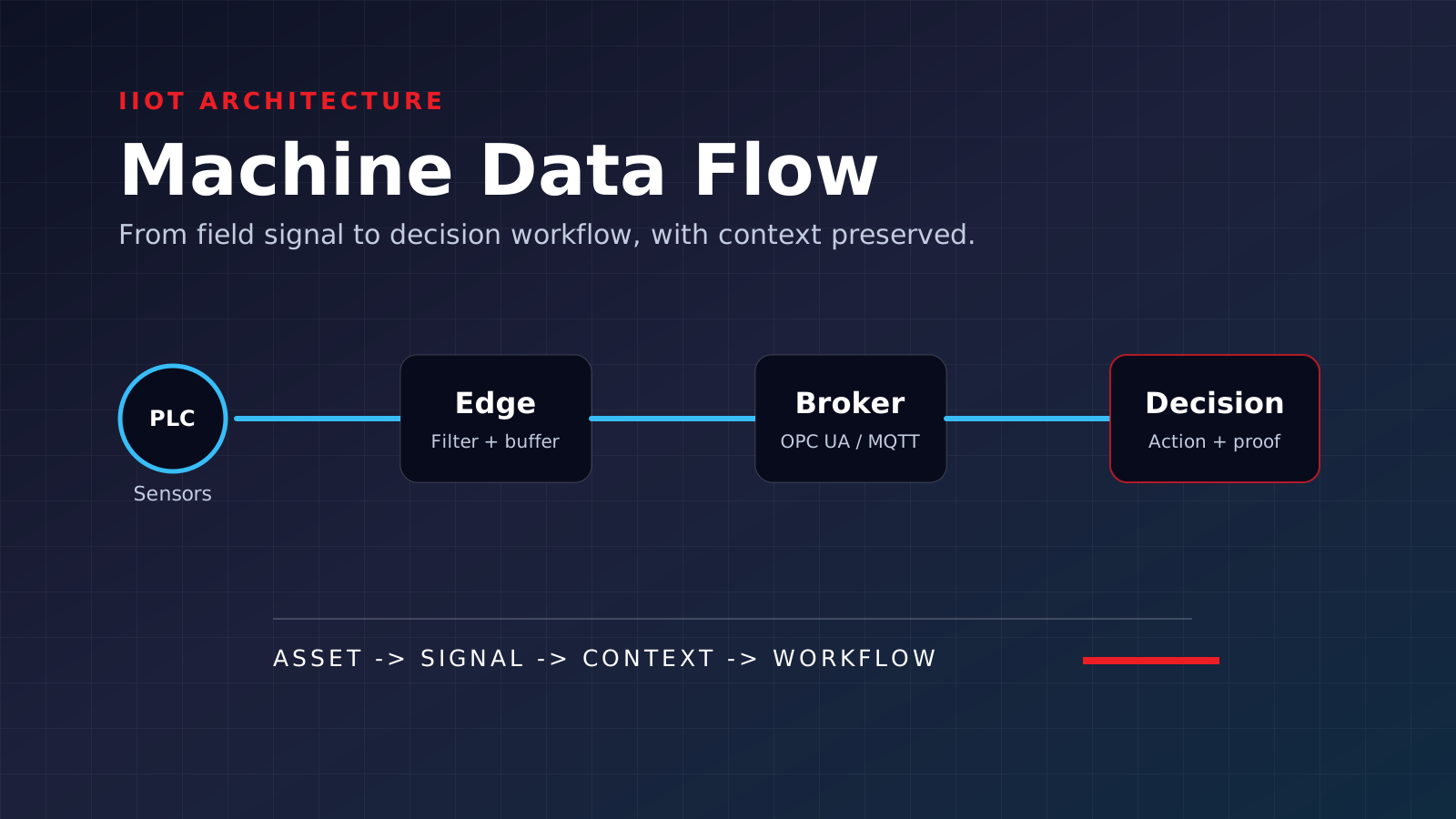
An IIoT project does not become valuable because data moves from a machine to a screen. It becomes valuable when the right signal, with the right context, reaches the right decision before cost accumulates.
The leadership test is clear: will this architecture reduce operational uncertainty? If it does not, the project is only an integration exercise. A mature IIoT system helps the plant understand what is happening, why it is happening, what may fail next, and what action should follow.
The five layers of useful IIoT architecture
Measure the physical process, failure mode, or operating state.
Capture trusted PLC, drive, meter, HMI, SCADA, and sensor data.
Buffer, filter, normalize, and secure industrial data movement.
Map tags into asset, state, product, unit, and ownership context.
Route signals into maintenance, production, quality, or energy action.
What this architecture is expected to protect
IIoT architecture should protect four business outcomes:
This is why architecture matters. A weak first architecture makes every future project more expensive.
Layer 1: asset and signal
This is where the physical process becomes measurable. The inputs may include temperature, pressure, flow, level, humidity, vibration, acoustic data, current, voltage, power quality, cycle counters, run hours, alarms, fault codes, downtime reasons, quality checks, and maintenance actions.
The selection should begin from the decision, not from the sensor catalogue. If the goal is to predict bearing issues, vibration and temperature may help. If the goal is to reduce compressed-air waste, pressure, flow, and duty cycle may matter more.
Layer 2: control and acquisition
Most plants already have useful data inside PLCs, drives, meters, HMIs, or SCADA systems. Before adding new sensors, check what already exists.
Important questions:
- Which tags are reliable and already used by operators?
- Which signals are only internal logic and not useful outside the PLC?
- Are timestamps available and accurate?
- Is the PLC network segmented from enterprise IT?
- Is read-only data access enough, or is any write-back required?
For early IIoT projects, read-only data access is often the safer default. Write-back control should be treated as a separate engineering and safety decision. When the project touches control or safety behavior, it should be handled as an engineered automation change, not a reporting feature.
Layer 3: network and edge
The edge layer is where industrial data is buffered, normalized, filtered, and secured before it moves further.
Common responsibilities of the edge layer:
- Connect to PLCs, meters, instruments, historians, or SCADA.
- Buffer data during network interruptions.
- Filter noisy or unnecessary tags.
- Apply local calculations such as averages, rates, thresholds, or state changes.
- Publish data to a broker or application using an approved protocol.
- Enforce security boundaries between OT and IT.
OPC UA is commonly used for industrial interoperability. MQTT is often used for lightweight publish-subscribe telemetry. IO-Link may be useful where richer sensor diagnostics are required close to the field layer.
| Architecture need | Preferred pattern | Implementation risk |
|---|---|---|
| Read structured data from PLCs, SCADA, or industrial systems | OPC UA | Requires correct server modelling and security configuration |
| Publish telemetry from edge systems to applications | MQTT | Needs topic discipline, payload design, and broker governance |
| Capture diagnostics from smart sensors and actuators | IO-Link | Requires IO-Link masters and device descriptions; not a plant-wide data model by itself |
| Integrate production and business context | ISA-95-aligned model | Needs agreement on assets, hierarchy, products, batches, and operations |
Protocol choice should follow the job the data must perform. It should not be chosen because a vendor demonstration looked clean.
Layer 4: data model and application
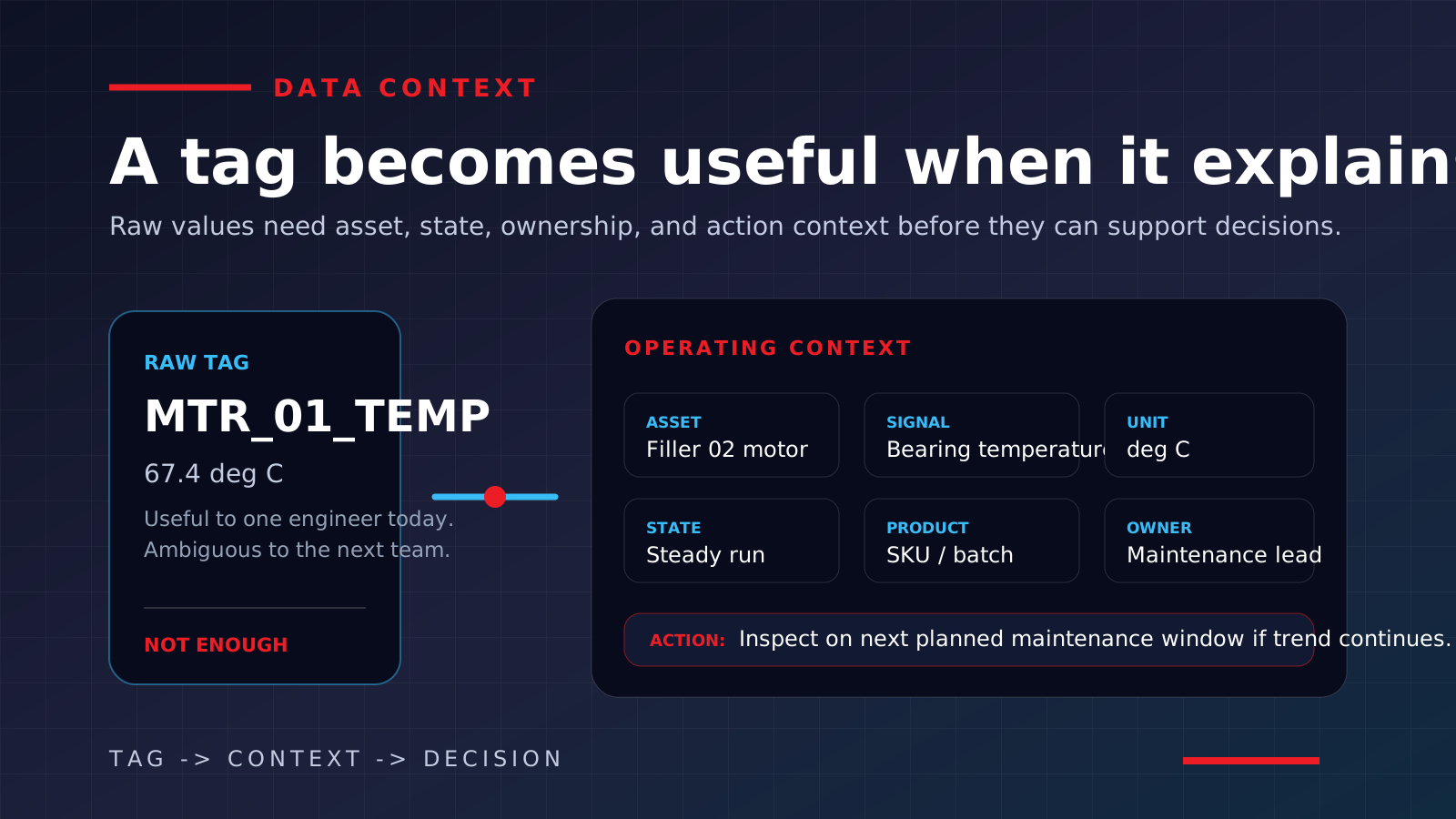
Raw tags are not enough. A tag named MTR_01_TEMP may be clear to one engineer today and useless to a new team two years later.
The ISA-95 lens is useful because it separates equipment, control, operations, and business layers. A small plant does not need a heavy enterprise architecture exercise, but it does need common names for assets, lines, products, batches, shifts, downtime, and maintenance events.
| Data context | Example |
|---|---|
| Asset | Filler 02, compressor 03, rolling mill motor |
| Signal | Motor current, bearing temperature, line speed |
| Unit | Ampere, deg C, rpm, bar, mm/s |
| State | Startup, steady run, shutdown, cleaning, fault |
| Product or batch | SKU, recipe, batch number |
| Decision owner | Operator, maintenance, quality, energy, production |
The goal is not to collect more data. It is to make data explain the plant.
Layer 5: decision and action
The final layer is where the system earns its investment.
Examples:
- Alert maintenance only when a signal changes under comparable operating conditions.
- Create a watchlist for assets that show early degradation.
- Send a daily production loss summary to operations leadership.
- Trigger inspection when vibration, temperature, and load move together.
- Compare energy use by line, shift, product, or utility area.
If the workflow depends on one expert manually interpreting charts every day, it is not yet operational.
Economic value model
For a first IIoT project, calculate value from the operating decision it improves:
Value of faster machine diagnosis =
number of stoppages per month
x minutes saved per diagnosis
x value of production time per minute
Value of early maintenance action =
avoided failure cost
- planned inspection cost
- sensor/data system cost allocated to that assetEstimate the value of earlier machine diagnosis
Use this as a planning estimate, not a published ROI claim. Replace default values with plant-specific contribution margin, downtime history, and implementation cost during discovery.
Estimated annual value at risk before improvement.
This calculator uses values entered by the reader. It is not a case-study result, savings guarantee, or financial advice.
A machine data pattern that holds up
Consider a motor-driven pump used in a process line. This is an implementation pattern, not a claimed Industry Digits case result.
From pump symptom to maintenance action
Run status, trip history, fault status, and operating state from PLC or drive.
Current and vibration add load and mechanical condition context.
Gateway filters noise and attaches asset, unit, and state metadata.
Trend changes under steady load trigger inspection, not generic alarm noise.
Maintenance action is recorded so the team can verify whether the trend changed.
This is useful IIoT. It begins with signal quality, context, and decision design.
What the first architecture brief should contain
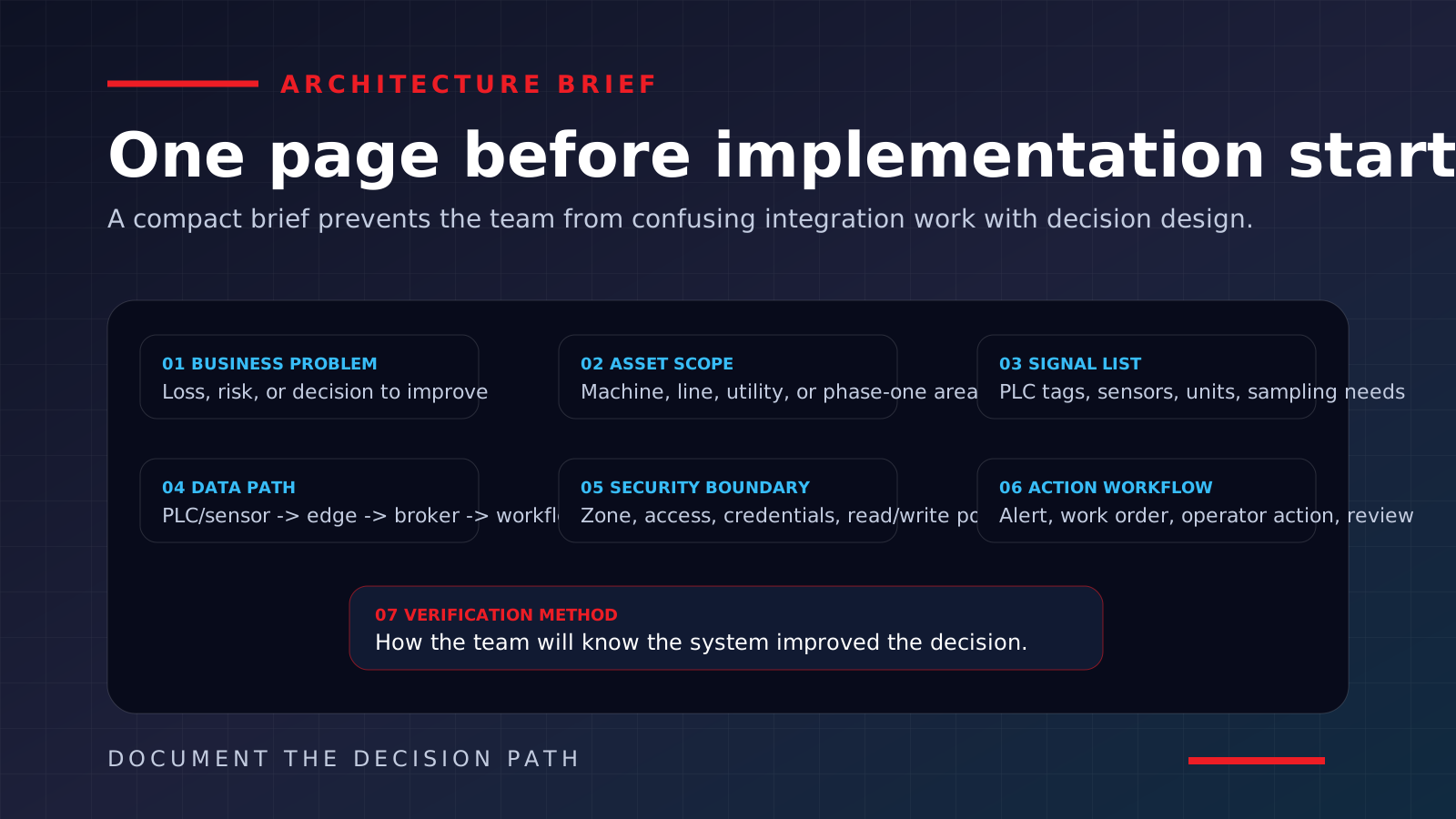
Before implementation, create one architecture page per use case:
| Architecture section | Required decision record |
|---|---|
| Business problem | Loss, risk, or decision that the use case addresses |
| Asset scope | Machines, lines, utilities, or equipment covered in phase one |
| Signal list | Existing PLC tags, new sensors, units, sampling needs, and owner |
| Data path | PLC/sensor -> edge/gateway -> broker/API/historian -> application/workflow |
| Security boundary | Network zone, access method, credential ownership, read/write policy |
| Action workflow | Alert, investigation, work order, operator action, or review meeting |
| Verification method | How the team will know the system improved the decision |
This single page can prevent weeks of later confusion.
Security must be designed into the architecture
IIoT connects systems that were often designed for isolated operation. Security cannot be added as a last step. NIST SP 800-82 Rev. 3 is a strong reference for operational technology security, and ISA/IEC 62443 is a core industrial automation and control system security standards series.
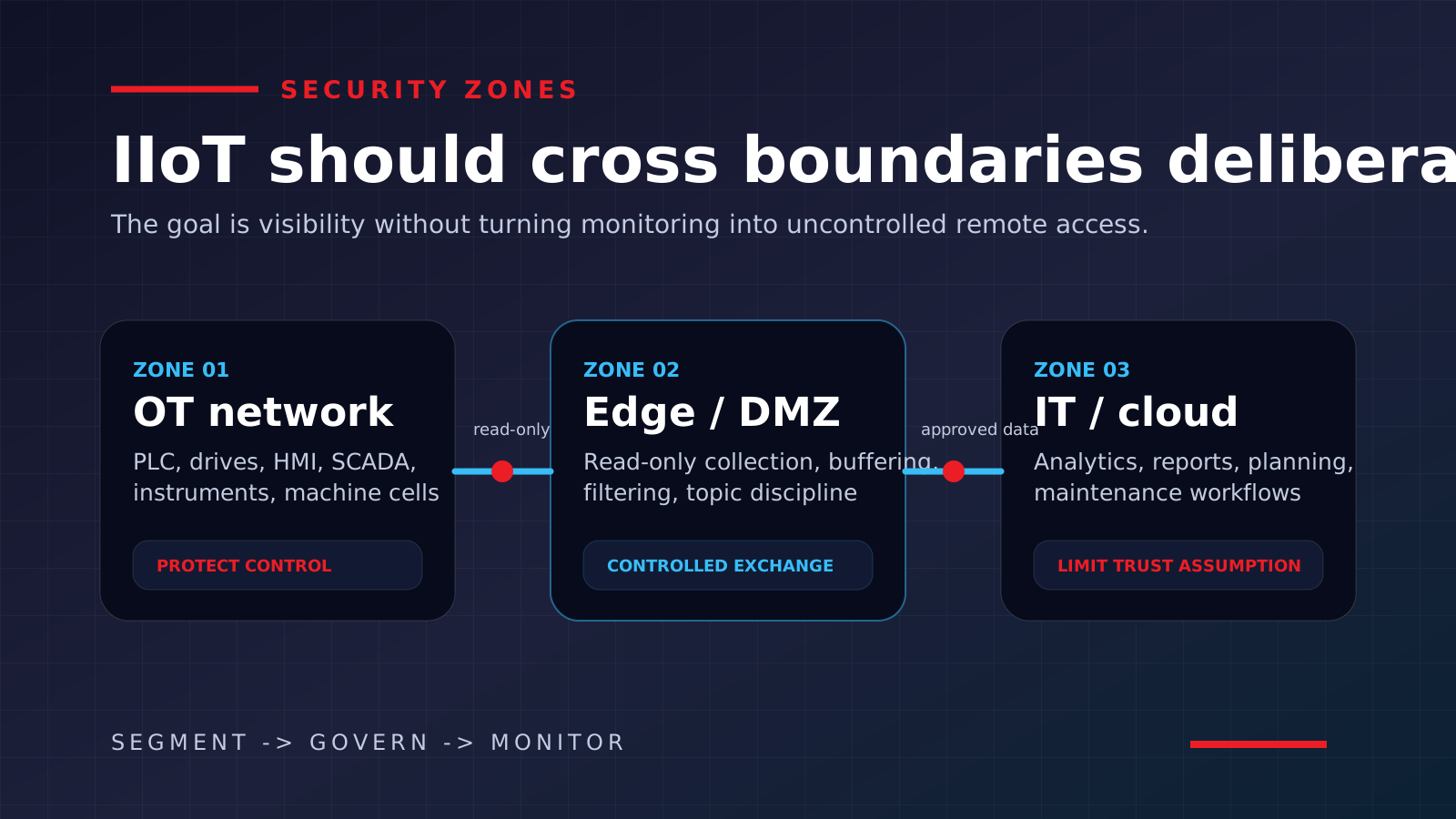
- Segment OT networks from enterprise networks.
- Use least-privilege access for data collection.
- Avoid uncontrolled remote access.
- Maintain asset inventory and firmware visibility.
- Keep backups of PLC/HMI/SCADA projects.
- Monitor unusual traffic and authentication failures.
- Align security practices with NIST, ISA/IEC 62443, and local requirements.
The Industry Digits implementation principle
The best architecture is the one your plant can operate after installation. Start small, document every layer, and make the first use case produce a visible decision.
For most small and mid-sized industrial companies, the first IIoT project should not be a platform-wide transformation. It should be a focused loop around one asset group, one line, or one utility system.
Begin with the smallest architecture that can make a high-value decision reliably.
Lokesh Chennuru writes Industry Digits field notes for industrial decision makers, focused on automation, IIoT, condition monitoring, predictive maintenance, and industrial AI.
Connect on LinkedInQuestions industrial leaders ask about this
What are the layers of an IIoT architecture?
A practical model has five layers: asset and signal, control and acquisition, network and edge, data model and application, and decision and action. Each has a distinct responsibility, and most failed projects blur them together.
OPC UA or MQTT for industrial machine data?
OPC UA is widely used for interoperable industrial information modelling, while MQTT is common for lightweight publish-subscribe telemetry. The right choice depends on asset type, vendor ecosystem, security, latency, and data volume, and the two are often combined.
Why do IIoT projects fail?
Most fail when they move data without context or a decision owner. An architecture only earns its cost when a signal, carrying operating context, changes a maintenance, production, quality, or energy decision.
Ready to turn signals into a maintenance decision path?
Book a 30-minute consultation and we will map the fastest useful condition-monitoring or automation win.