
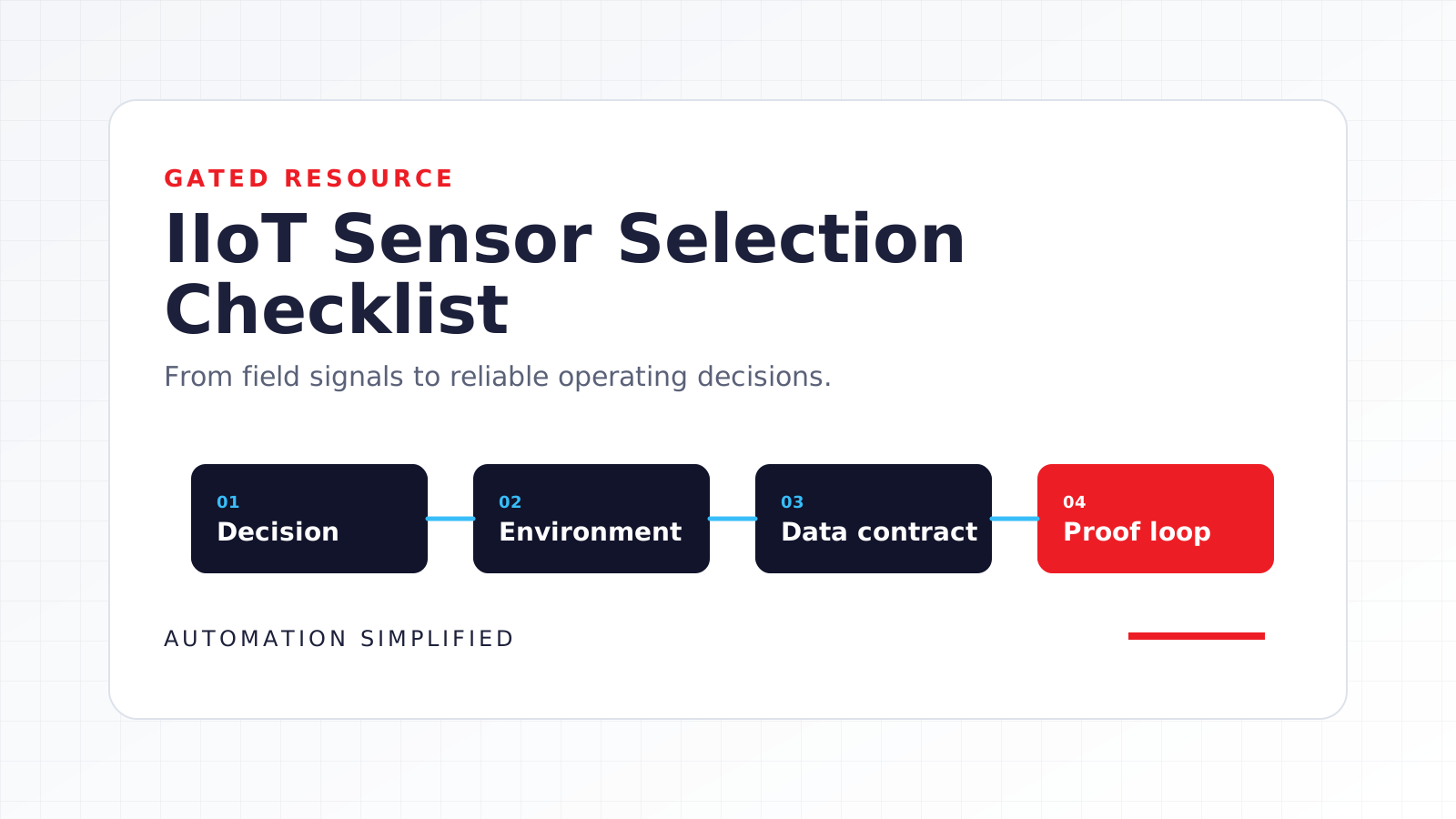
Industrial IoT Sensor Selection Checklist: From Field Signals To Reliable Decisions
A gated resource for selecting IIoT sensors, transducers, and switches that can survive the plant environment and support reliable operating decisions.

Industrial IoT projects often lose credibility at the sensor layer before the platform is ever judged. The gateway may be installed, the connection may work, and the application may receive data, but the signal can still be noisy, poorly located, difficult to maintain, or disconnected from an operating decision.
This checklist is designed for plant teams and industrial decision makers who want sensor, transducer, and switch selection to support maintenance confidence, capital discipline, and repeatable operating action.
Use this resource after reading Thermal, Vibration, Or Current. That article helps choose the first monitoring signal. This checklist helps decide whether the selected sensor can survive the plant environment, integrate cleanly, and create a useful maintenance or operations action.
Why sensor selection has commercial weight
Sensors are small purchases individually, but weak sensor decisions create recurring cost:
- Measurements that do not explain the problem.
- Sensors that fail in heat, dust, vibration, or washdown.
- Data that cannot be trusted by maintenance.
- Alerts that create noise instead of control.
- Additional engineering time to repair a weak architecture later.
The economic value of sensor selection is not the sensor price. It is avoiding bad data, protecting trust, and acting earlier on the few signals that matter.
Good sensor selection also protects trust. Once operators and maintenance teams see noisy or irrelevant alerts, they stop believing the system. Recovering that trust is harder than choosing sensors properly in the first place.
From field signal to reliable decision
Define the operating decision and the person accountable for acting on it.
Confirm the sensor can survive heat, dust, washdown, vibration, noise, and access constraints.
Document tag, unit, state, owner, destination, and action logic before installation.
Review whether the signal created action and whether the action improved the decision.
1. Define the operating decision
Before selecting a sensor, name the decision it must improve.
Operating decisions:
- Stop or continue running this asset?
- Inspect bearing before next shutdown?
- Detect low flow before product quality is affected?
- Identify compressed-air waste?
- Confirm cleaning cycle completion?
- Trigger a maintenance work order?
If the signal does not improve a decision, defer it until the operating case is clearer.
Commercial readiness screen
| Commercial filter | Decision evidence |
|---|---|
| Loss exposure | Downtime, waste, quality risk, safety exposure, or maintenance uncertainty the signal can reduce |
| Decision owner | Named maintenance, production, quality, energy, or engineering owner for the signal |
| Timing margin | Enough early warning to inspect, plan, slow down, or schedule maintenance before cost accumulates |
| Field validation | A practical way for the team to compare the signal against equipment behavior |
| Repeatability | A pattern that can be reused on similar assets once the first proof loop works |
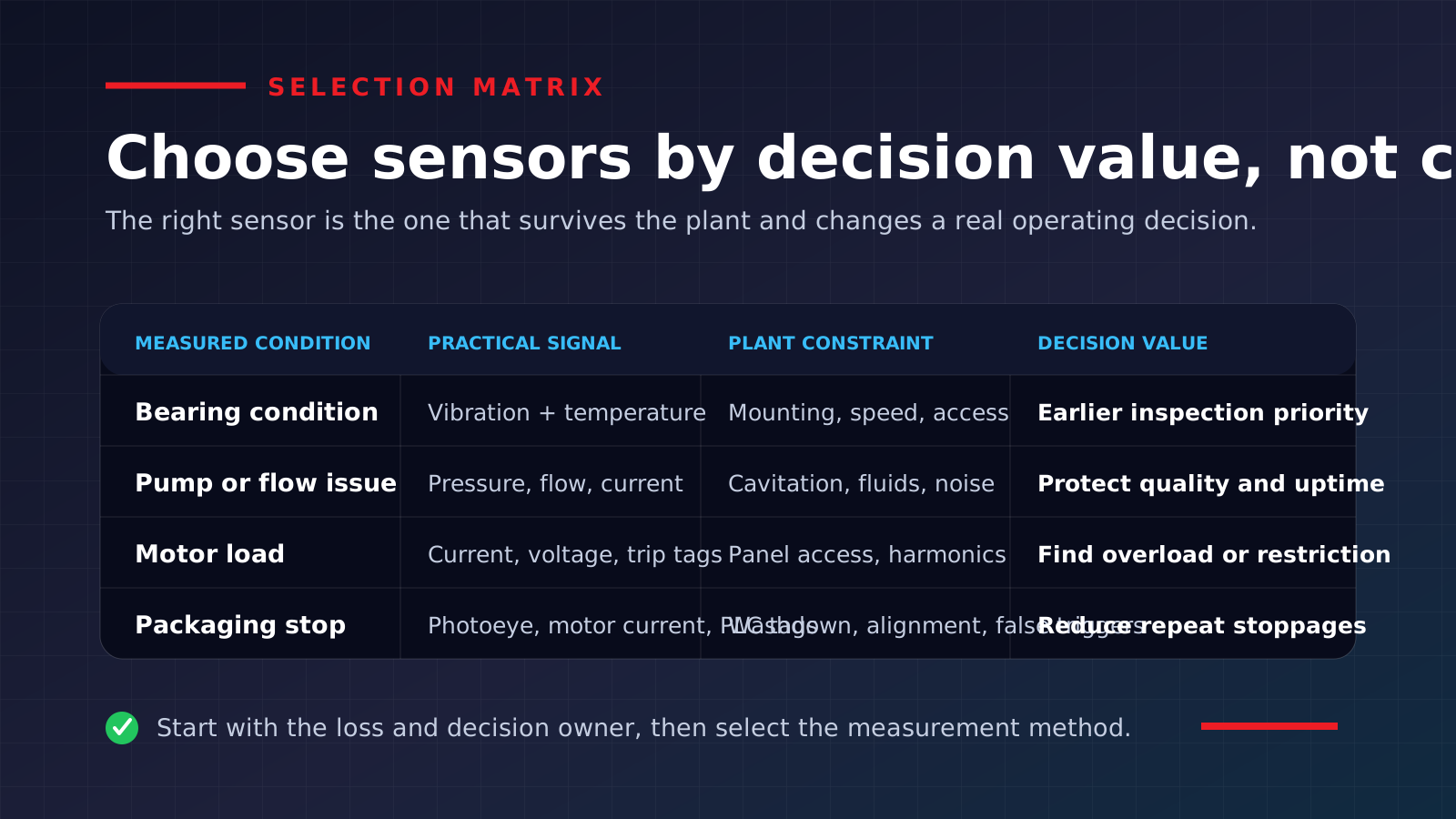
If the case is not commercially or operationally clear, the sensor can wait.
2. Define the measurement
| Selection checkpoint | Engineering note |
|---|---|
| Measured variable | Temperature, pressure, flow, level, vibration, current, power, humidity, speed, position, conductivity, etc. |
| Expected range | Include normal, startup, shutdown, and abnormal ranges. |
| Engineering unit | Use consistent units across the plant. |
| Response time | Fast protection signals and slow trend signals have different requirements. |
| Accuracy threshold | Avoid paying for precision that does not change the decision. |
| Repeatability requirement | Many maintenance trends depend more on repeatable measurement than absolute accuracy. |
When selecting condition monitoring signals, align the method with accepted practice where relevant. ISO 17359 is a useful anchor for setting up a condition monitoring program, and ISO 20816 is relevant when evaluating machine vibration.
3. Engineer for the plant environment
Industrial environments decide sensor life.
| Plant condition | Selection requirement |
|---|---|
| Washdown or moisture | Check enclosure rating, connectors, cable glands, and cleaning chemical exposure. |
| Dust, powder, or cement | Consider ingress protection, sensor face buildup, and maintenance access. |
| High vibration | Review mounting, cable strain relief, and connector reliability. |
| High temperature | Confirm sensor, cable, connector, and electronics temperature ratings. |
| Electrical noise | Review grounding, shielding, signal type, and panel routing. |
| Hazardous area | Confirm required certifications and engineering review before selection. |
A sensor that is technically correct but physically fragile is not a reliable IIoT sensor.
4. Map failure modes to decision-grade signals
| Asset condition | Decision-grade signals |
|---|---|
| Bearing wear | Vibration, temperature, lubrication condition, run hours |
| Motor overload | Current, temperature, voltage, trip history |
| Pump cavitation or flow issue | Pressure, flow, vibration, current |
| Valve actuation problem | Command/feedback mismatch, cycle count, response time |
| Compressed-air waste | Pressure, flow, compressor duty cycle |
| Packaging jam | Photoelectric sensors, motor current, stop reason, reject count |
Instrument selectively. Monitor the signals that can change action.
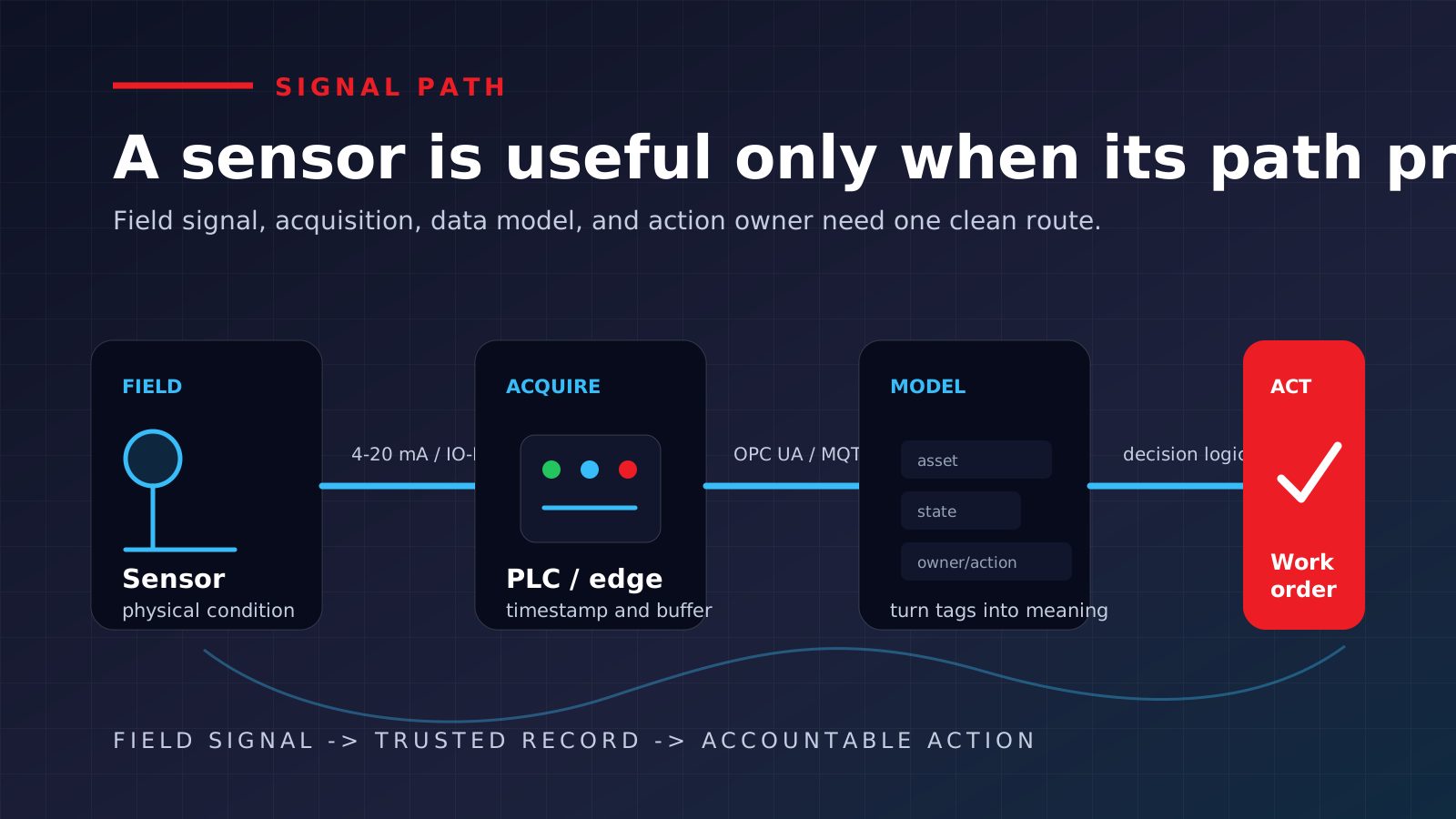
5. Choose the signal and integration path
Common signal options:
- Digital input for switches and status.
- Analog 4-20 mA or 0-10 V for many process instruments.
- Pulse or frequency for speed/flow applications.
- IO-Link for richer sensor diagnostics in supported systems.
- Ethernet or serial communication for intelligent devices.
- Direct PLC tag access for existing measurements.
IO-Link can be useful when the project needs richer sensor diagnostics near the machine. OPC UA and MQTT may fit higher-level industrial data movement, depending on architecture. The important point is to avoid mixing field-device selection with platform selection.
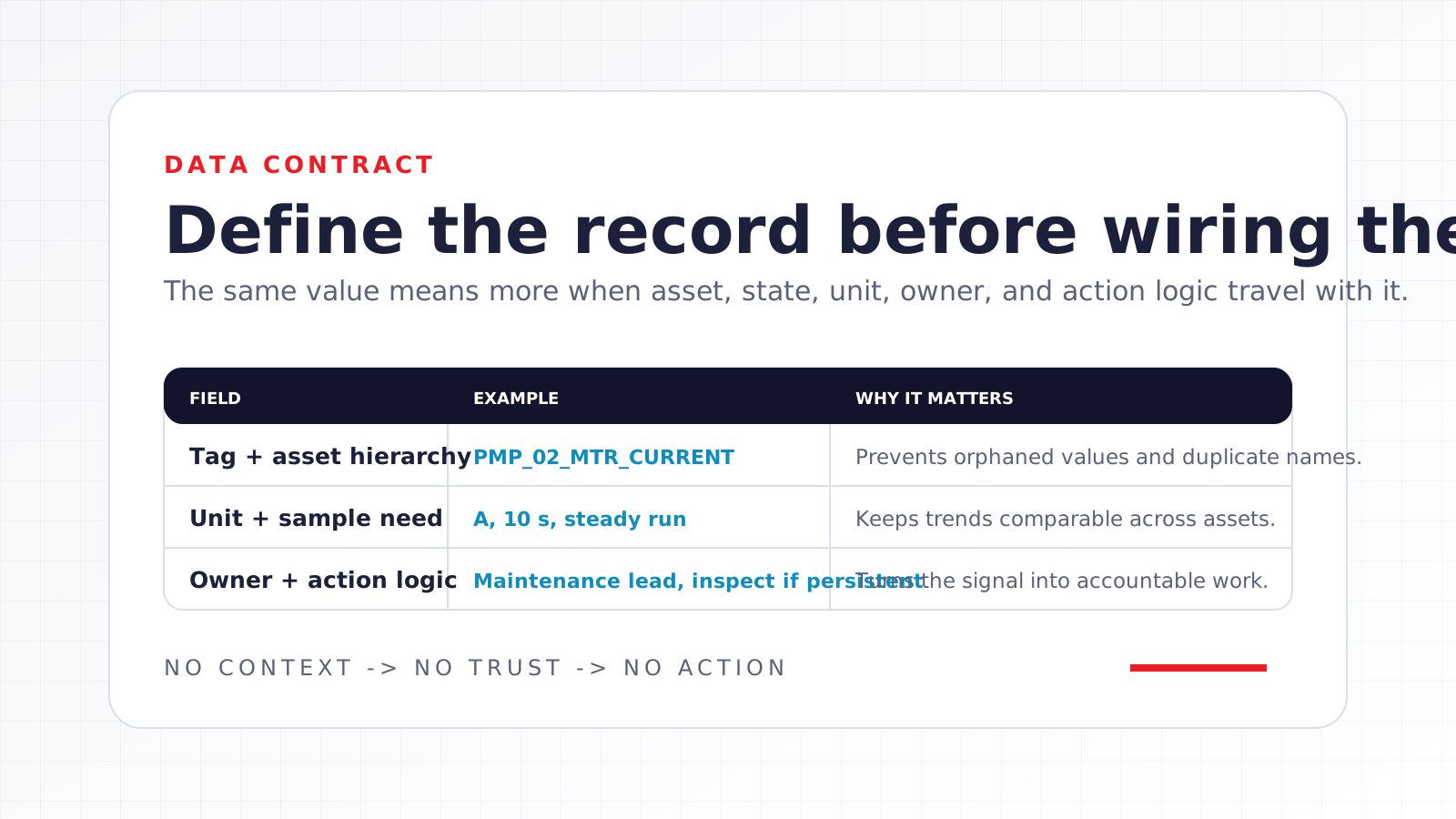
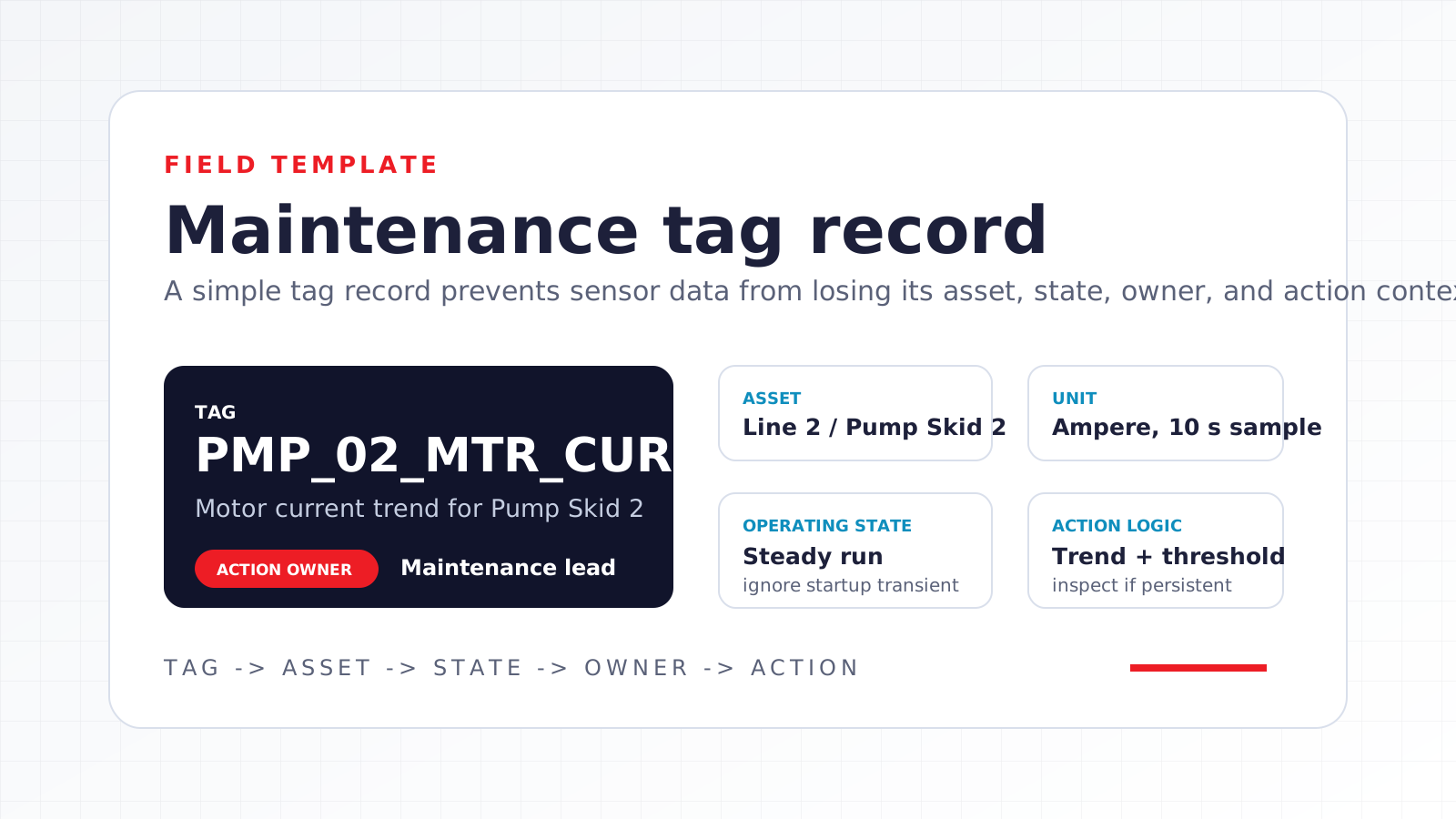
6. Define the data contract before installation
Before the sensor is installed, define a compact data contract:
| Data-contract field | Example decision record |
|---|---|
| Tag name | PMP_02_MTR_CURRENT |
| Asset hierarchy | Plant 1 / Process Line 2 / Pump Skid 2 / Motor |
| Unit | A, deg C, mm/s, bar, L/min |
| Sampling need | Every 1 s, every 10 s, event-based, daily route |
| Normal operating states | Startup, steady run, cleaning, standby, fault |
| Alert logic | Threshold, rate of change, operating-state comparison, watchlist |
| Action owner | Maintenance, operator, quality, energy, engineering |
| Data destination | PLC, historian, edge gateway, dashboard, CMMS/work order |
This is light enough for a focused first project and strong enough to avoid confusion later.
For OT security, use NIST SP 800-82 Rev. 3 as a reference point when sensor data moves from the machine network toward enterprise systems, cloud applications, or remote users.
Value estimate model
For each sensor group, estimate:
Planning value =
addressable loss per year
x confidence that the signal detects it early
x ability of the team to act
- total sensor lifecycle cost
Lifecycle cost includes sensor, installation, wiring, panel/IO changes, calibration, replacement, data storage, dashboarding, and maintenance.
Estimate sensor program value before rollout
Use this as a planning estimate, not a published ROI claim. Replace default values with plant-specific contribution margin, downtime history, and implementation cost during discovery.
Estimated annual value at risk before improvement.
This calculator uses values entered by the reader. It is not a case-study result, savings guarantee, or financial advice.
First 90-day proof review
After installation, review:
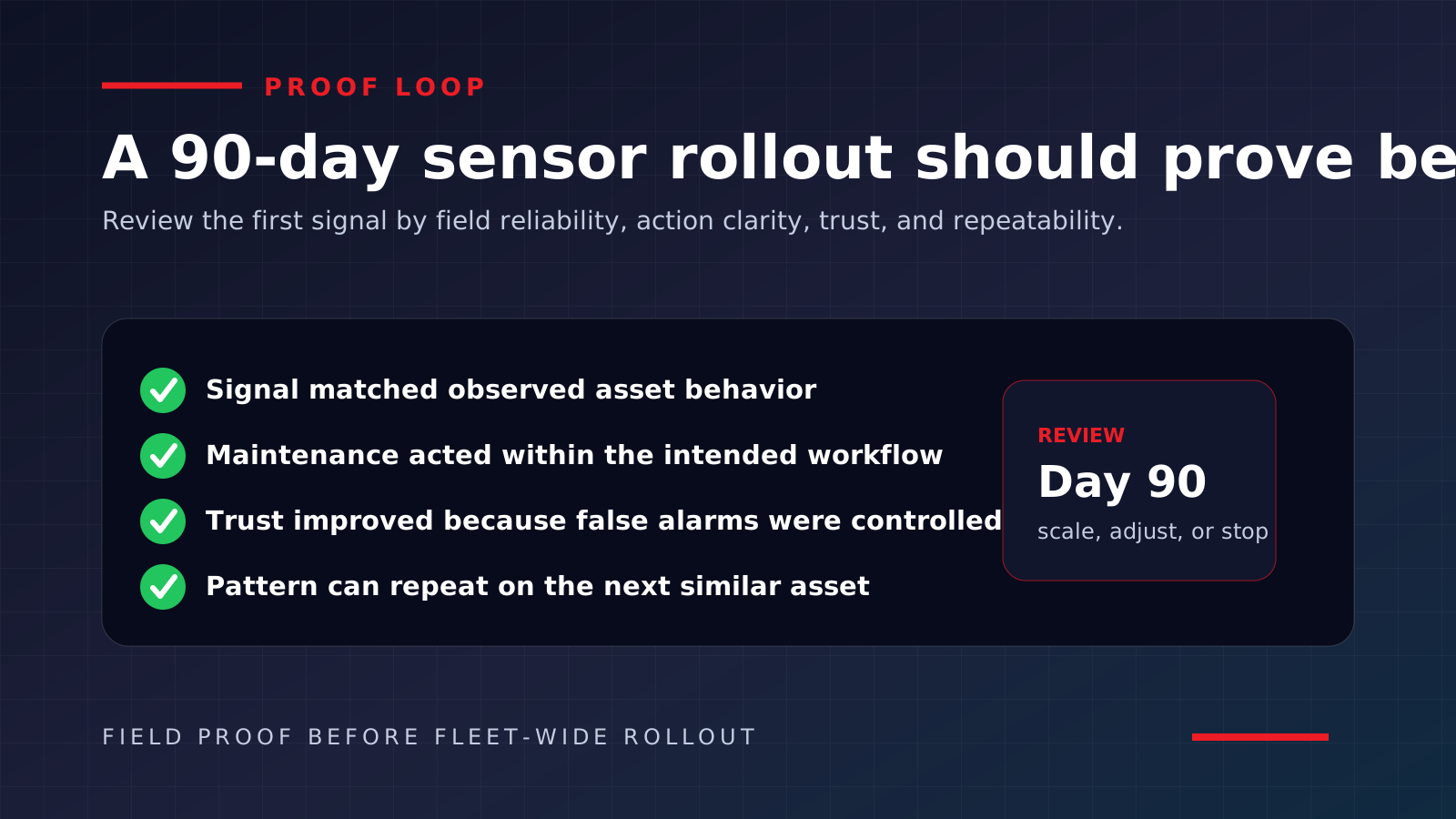
- Physical reliability remained acceptable in the actual plant environment.
- Alerts matched observed asset behavior.
- Maintenance acted on the signal within the intended workflow.
- The action reduced diagnosis time, surprise failure risk, or unnecessary inspection.
- Operators and maintenance teams trusted the alert enough to use it.
- The data model made sense to people outside the project team.
- The sensor pattern was clear enough to repeat on similar assets.
This turns a sensor purchase into a controlled learning loop.
What a credible first rollout should improve
What the gated worksheet should contain
The final gated PDF should be built as a working resource, not a repackaged article:
- One-page decision filter.
- Sensor selection worksheet.
- Environment-to-selection matrix.
- Failure-mode-to-signal matrix.
- Data contract template.
- Maintenance ownership checklist.
- IIoT architecture handoff notes.
- Proof checklist for first 90 days.
Lokesh Chennuru writes Industry Digits field notes for industrial decision makers, focused on automation, IIoT, condition monitoring, predictive maintenance, and industrial AI.
Connect on LinkedInQuestions industrial leaders ask about this
How do I choose an industrial IoT sensor?
Start from the decision and the failure mode, not the catalogue. ISO 17359 frames condition-monitoring selection around measurable parameters tied to known failure modes, then environment, signal type, data contract, and maintenance practicality.
What is a data contract for a sensor?
It is the metadata that makes a signal trustworthy: asset, location, unit, normal range, threshold, sampling rate, owner, and related failure mode. Without it, a tag becomes a mystery to the next engineer.
Should I use 4-20 mA, IO-Link, or a digital input?
4-20 mA suits many analog process instruments, IO-Link adds device diagnostics on supported systems, and digital inputs suit switches and status. Match the signal type to the decision and to the acquisition layer you already run.
Ready to turn signals into a maintenance decision path?
Book a 30-minute consultation and we will map the fastest useful condition-monitoring or automation win.