
Process And Chemical Automation: Control, Visibility, And Safer Decision Workflows
A practical guide to automation and IIoT for process and chemical plants, focused on control reliability, alarms, instrumentation, maintenance, and operational visibility.

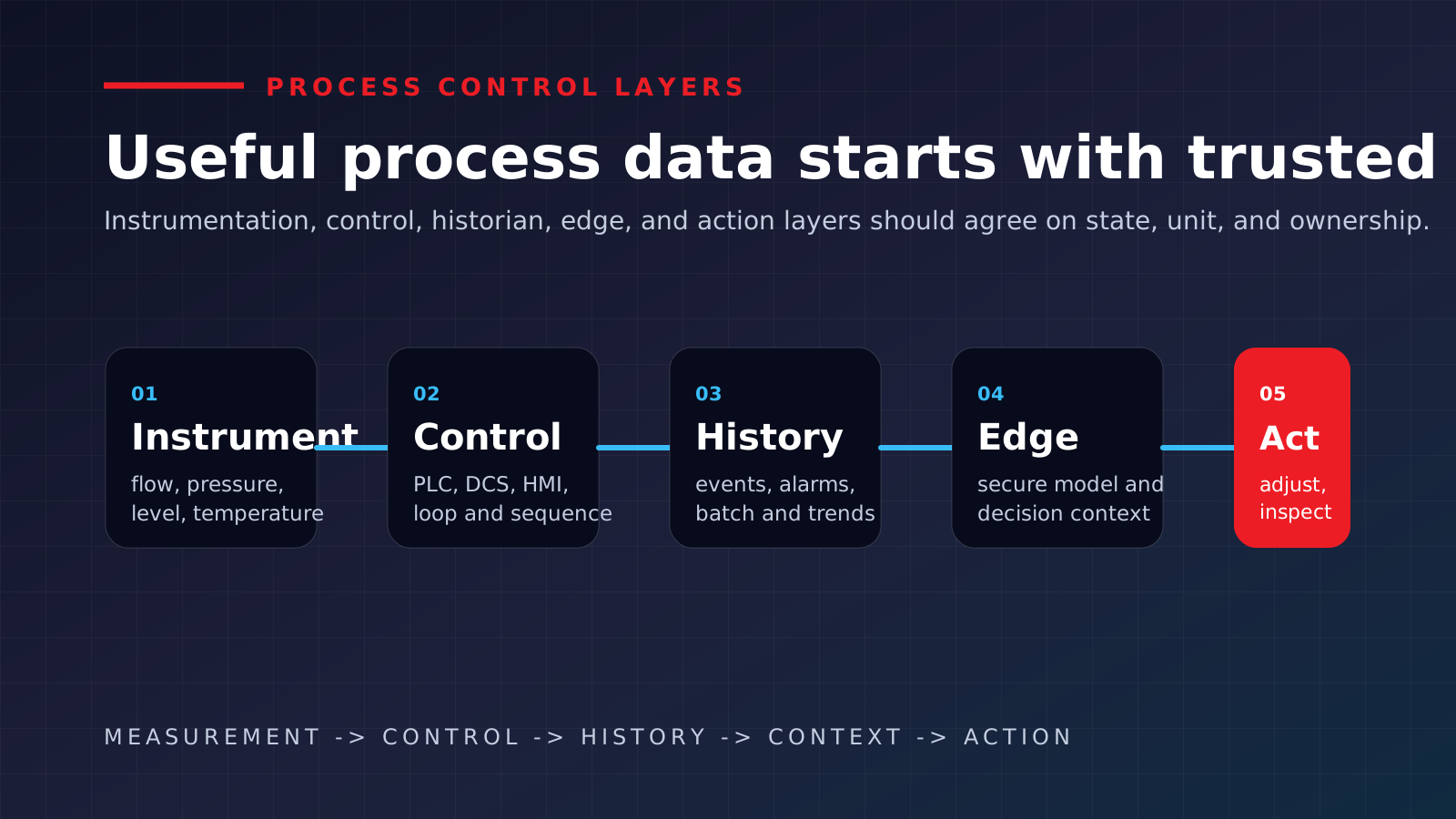
Process and chemical automation is different from simple machine automation because the plant behavior is continuous, interconnected, and often safety-critical. A valve movement, temperature drift, pressure change, pump issue, or utility constraint can affect quality, yield, emissions, equipment health, and safety.
For decision makers, the value is not abstract digitalization. It is reducing variation, avoiding process upsets, protecting critical equipment, improving traceability, and giving operators better control before a deviation becomes expensive.
What process plants need from automation
Common goals include:
- Stable control of flow, pressure, level, temperature, and composition.
- Better alarm quality.
- Reduced manual intervention in repetitive operating steps.
- Safer startup, shutdown, transfer, and cleaning sequences.
- Better visibility of pumps, valves, heat exchangers, tanks, and utilities.
- Faster root cause analysis after quality or process deviations.
- Maintenance planning for rotating assets and critical valves.
For MSME and mid-sized plants, automation improvement often begins with instrument reliability and control discipline before advanced analytics.
Where the economic value appears
| Loss area | Automation value | Decision improvement |
|---|---|---|
| Off-spec product | Better process visibility, alarm quality, and recipe or batch context | Find deviation causes faster and reduce repeat events |
| Utility waste | Monitor steam, compressed air, cooling, water, and power | Compare consumption against production and operating state |
| Emergency maintenance | Earlier pump, motor, and valve issue detection | Plan inspection before failure controls the schedule |
| Operator dependency | Standardized sequences, clearer HMIs, and abnormal-state guidance | Reduce hidden variation between shifts |
| Audit and record burden | Better records, traceability, and controlled change history where validated | Support evidence, without claiming compliance automatically |
The plant does not need more data first. It needs better control over the losses that already exist.
Instrumentation is the foundation
If instruments are unreliable, dashboards and analytics will be unreliable.
Important instrument questions:
- Is the measurement needed for control, safety, quality, maintenance, or reporting?
- Is the sensor installed in the correct location?
- Is the range appropriate for normal and abnormal operation?
- Is calibration maintained?
- Is the signal noisy or drifting?
- Is the control loop tuned and stable?
- Is the alarm actionable?
Good process visibility begins with trusted measurements.
Alarm quality matters
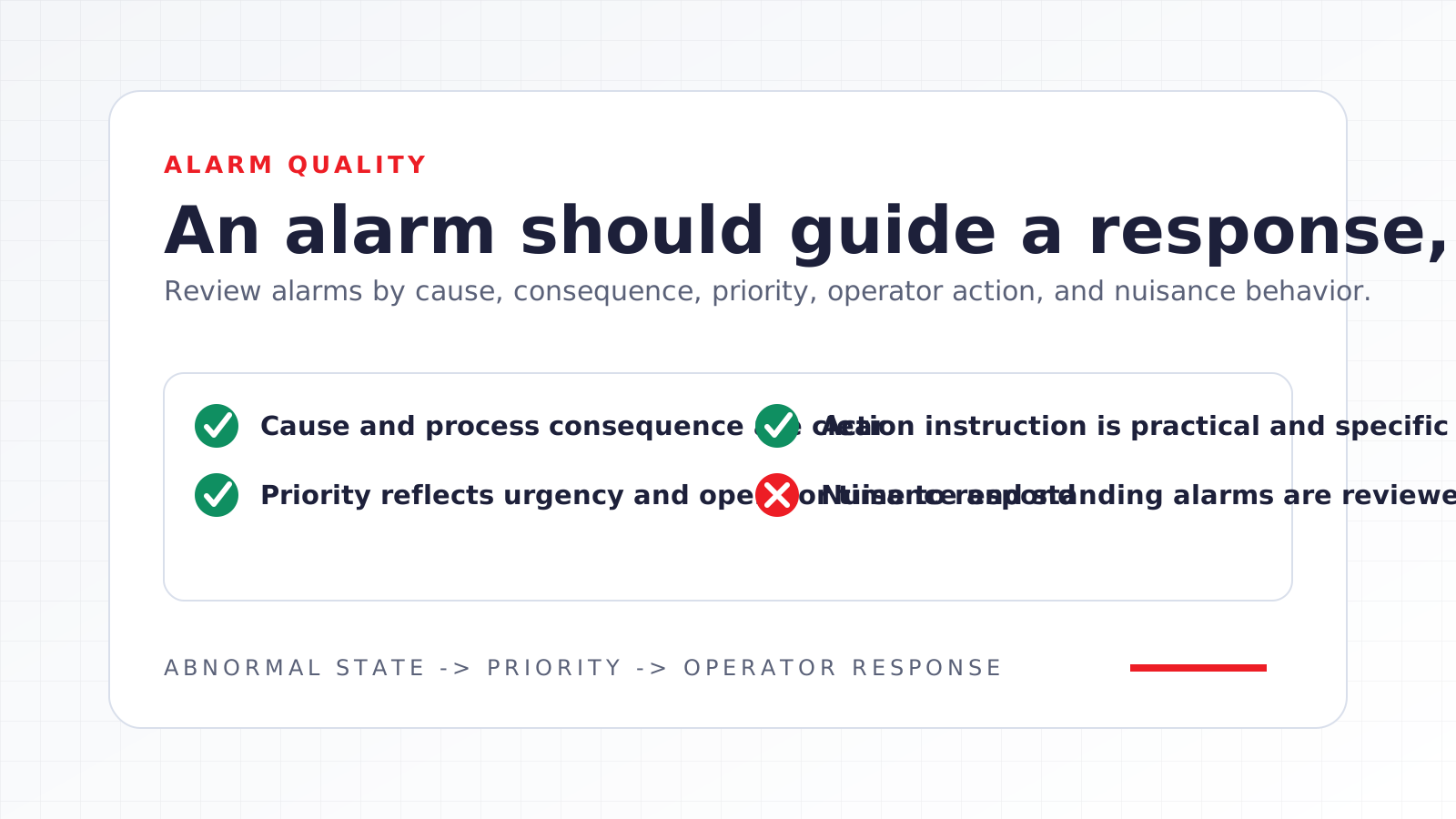
Too many alarms can make the plant less controlled, not more controlled. Operators need alarms that are clear, prioritized, and actionable.
An alarm should clarify:
- What happened.
- Why it matters.
- What the operator should do.
- How urgent the response is.
- Whether it is a real abnormal state or a nuisance alarm.
Batch and continuous processes need different workflows
Batch processes often need recipe management, sequence control, material verification, temperature and mixing profiles, and batch records.
Continuous processes need stable control, trend monitoring, energy optimization, process constraints, and early detection of deviation.
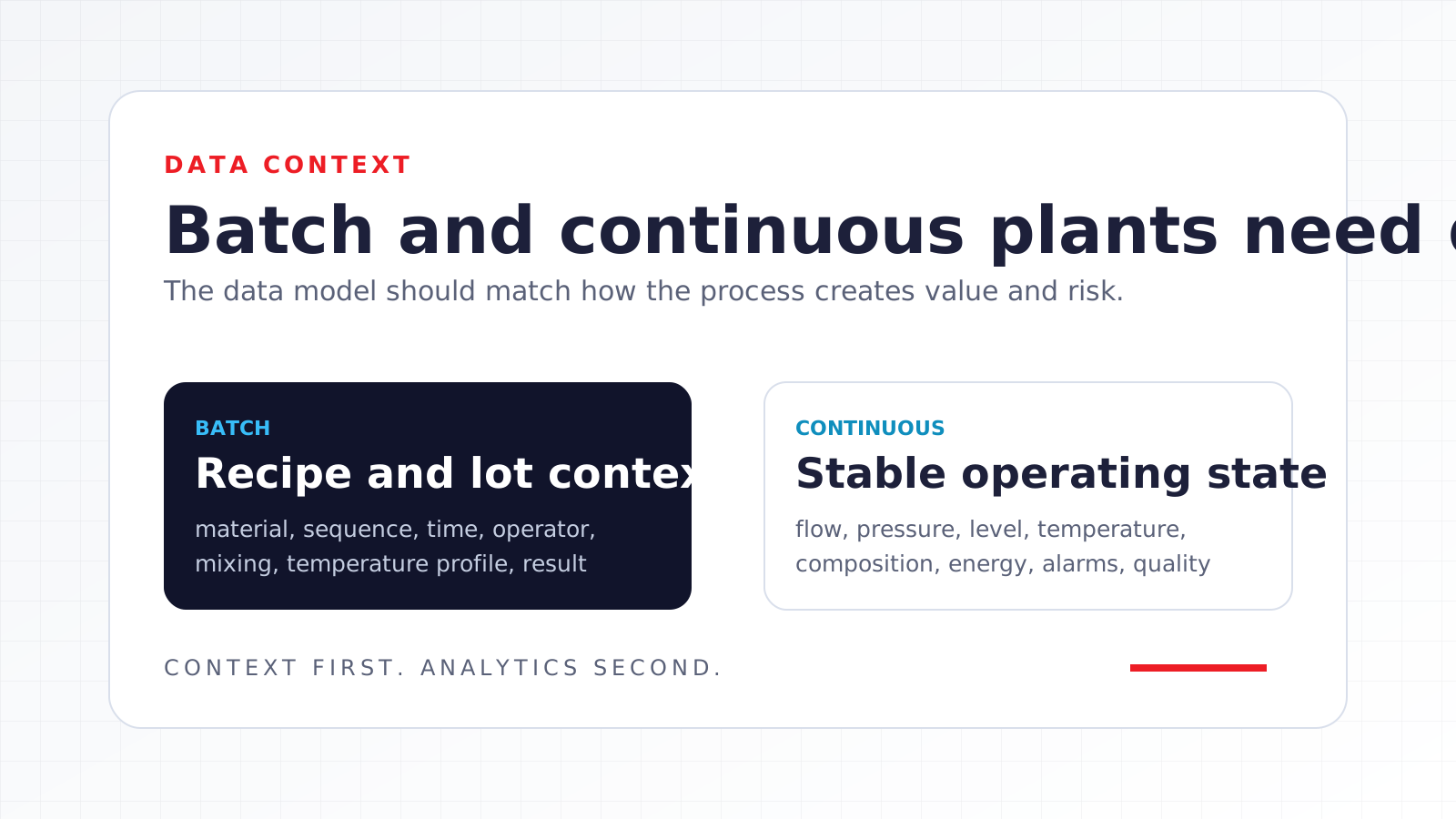
The data model should respect this difference. A generic dashboard can hide the process story if the context is wrong.
IIoT use cases that make sense
Pump and motor monitoring
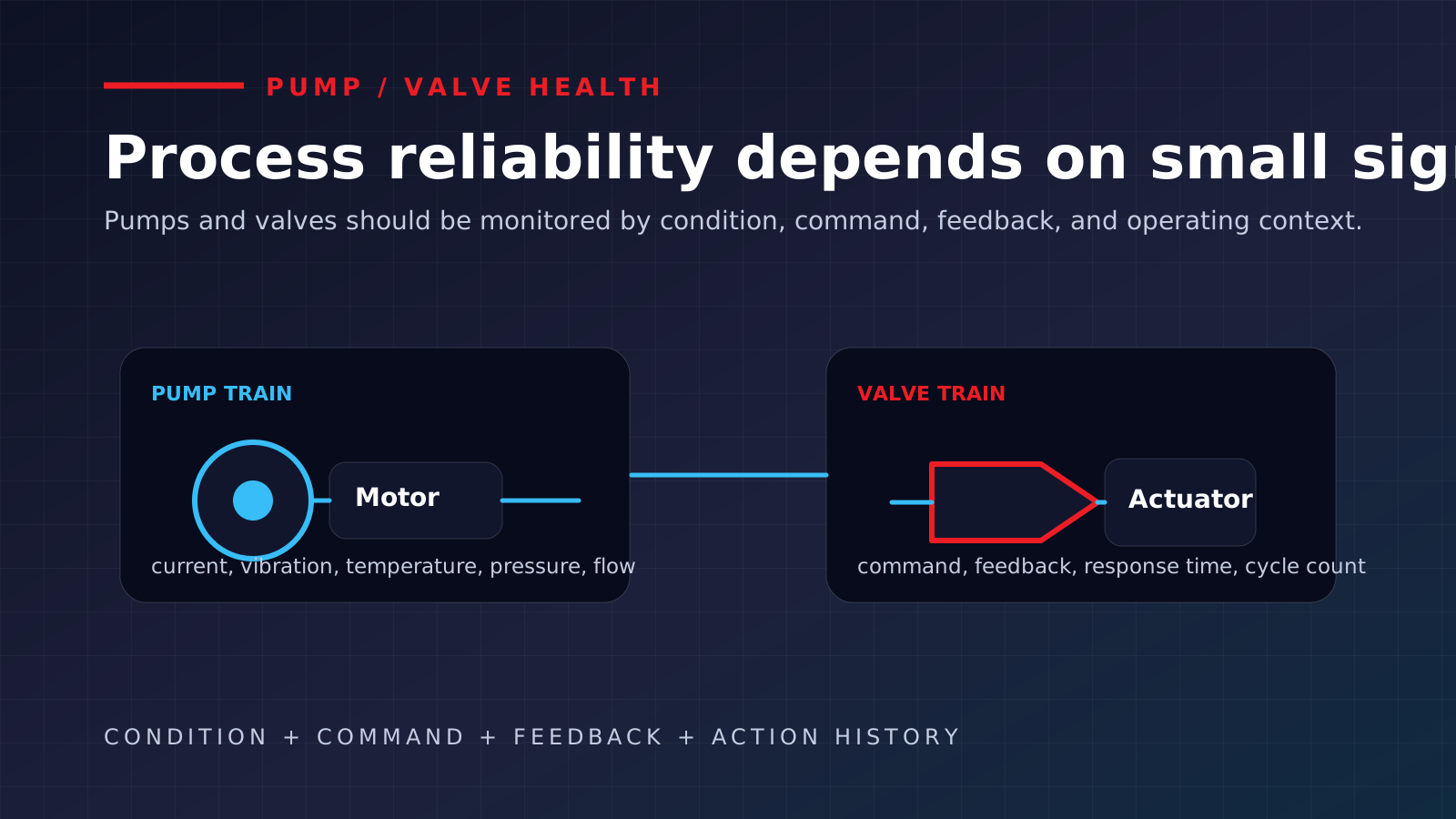
Current, vibration, temperature, run hours, suction pressure, discharge pressure, and flow can support maintenance decisions.
Valve health and actuation tracking
Valve failures can cause quality loss, downtime, and safety risk. Track cycle count, command-feedback mismatch, slow response, leakage indicators where available, and maintenance history.
Utility monitoring
Steam, compressed air, chilled water, cooling water, and power are often major cost and reliability factors. Utility monitoring can identify waste, overload, leaks, and abnormal consumption.
Process deviation review
Connect quality deviations with temperature, pressure, flow, speed, recipe, batch, operator shift, and equipment state. This helps teams move from opinion to evidence.
Economic value models
For a process deviation project:
Monthly value of deviation reduction =
number of off-spec or rework events
x average cost per event
x realistic reduction target
For a utility monitoring project:
Utility waste opportunity =
baseline consumption
- expected consumption under comparable production
x tariff or utility cost
These formulas do not replace engineering analysis, but they help leaders choose the first project.
Security and safety boundaries
Process automation must respect OT security and process safety. Data capture should not weaken control networks. Write-back control from external applications should be avoided unless deliberately engineered, risk assessed, and approved.
For hazardous processes, compliance and safety requirements vary by region, material, process, and facility. References such as OSHA Process Safety Management in the United States and local regulations may apply. This article should not be read as a compliance statement. It is an automation and IIoT planning guide.
A practical modernization sequence
- 01 Map the process and control loops
Document major assets, instruments, control loops, alarms, interlocks, utilities, and operating states.
- 02 Identify one loss pattern
Choose quality variation, pump failure, utility waste, alarm overload, batch delay, valve failure, or manual record error.
- 03 Validate measurements
Before analytics, confirm sensors, calibration, signal scaling, tag names, and units.
- 04 Improve control and alarms
Tune loops, rationalize alarms, improve HMI visibility, and document abnormal states.
- 05 Add IIoT where it changes decisions
Connect high-value signals to dashboards, alerts, work orders, or review reports.
- 06 Review and standardize
Standardize naming, units, states, historian strategy, and maintenance workflows before scaling.
The Industry Digits view
For process and chemical plants, the best automation work is careful work. It improves stability, visibility, and decision quality without creating uncontrolled complexity.
The first project should make one important process decision clearer: when to intervene, when to inspect, when to adjust, and how to verify the result.
Select one repeated deviation or equipment issue and build a timeline around it: recipe, batch, process values, alarms, operator action, maintenance action, and quality result. If the timeline is hard to reconstruct, the first modernization need is data context, not AI.
Lokesh Chennuru writes Industry Digits field notes for industrial decision makers, focused on automation, IIoT, condition monitoring, predictive maintenance, and industrial AI.
Connect on LinkedInQuestions industrial leaders ask about this
What is the most practical first automation project in a process plant?
Often alarm rationalisation to ISA-18.2 or one recurring deviation, because it improves continuity and operator decision quality without always requiring major new hardware.
How should batch and continuous processes be modelled differently?
Batch needs recipe, phase, and material context (ISA-88), while continuous needs stable operating state and time-series context. A data model that ignores the difference weakens root-cause analysis.
Does adding process data weaken control-network safety?
It should not. Data capture should default to read-only, place gateways in a controlled zone, and keep functional-safety boundaries (IEC 61511) intact. Write-back must be deliberately engineered and approved.
Ready to turn signals into a maintenance decision path?
Book a 30-minute consultation and we will map the fastest useful condition-monitoring or automation win.