
01
0-6s
Process state
The process line opens with tank, pump, valve, and reactor state before any alarm is interpreted.
Control-system clarity, alarm quality, instrumentation context, and OT data paths for continuous and batch process operations.
Continuous and batch environments are interconnected and often safety-critical: a valve movement, temperature drift, or pump fault can travel into yield, emissions, equipment health, and safety. The useful work is control-system clarity, historian context, and decision workflows that respect operational risk — before analytics.
Show why pump, valve, reactor, transmitter, batch phase, historian, and operator response must preserve cause, consequence, and action before a process alarm becomes useful.
The process line opens with tank, pump, valve, and reactor state before any alarm is interpreted.
Transmitters and historian tags preserve timestamp, recipe, phase, and run-state context.
Priority, cause, consequence, and response are separated so operators act on evidence, not noise.
The final action path keeps normal control, deviation review, maintenance, and safety boundaries distinct.
Focused problem framing with routes into the closest deep-dive sector and the matching solution blueprints.
Operators face too many vague alarms and too little actionable context. Alarm rationalisation to ISA-18.2 — priority, cause, consequence, and response — often improves continuity without major new hardware.
Safety functions should be engineered and documented under IEC 61511 / IEC 61508, not hidden inside everyday control logic. Data and monitoring projects must not weaken these boundaries.
Rotating-asset, valve actuation, and utility signals only become trustworthy when reviewed with process state, historian context, and maintenance ownership (ISO 17359).
Batch processes need recipe, phase, and material context (ISA-88); continuous processes need stable operating state and time-series context. A data model that ignores the difference weakens root-cause analysis.
The service list is a starting point for discovery, not a claim that every plant needs every layer.
Rationalise alarms and operating states to ISA-18.2 practice so operators act on cause, not noise, while functional-safety boundaries (IEC 61511) stay intact and documented.
Preserve batch and continuous context — recipe, phase, and historian timestamp — from instrument to decision surface using ISA-88 and ISA-95 conventions over OPC UA.
Track pump, valve, and utility condition with process-state context so deviation review moves from opinion to evidence (ISO 17359).
These articles support the public problem framing without presenting private plant results as case studies.
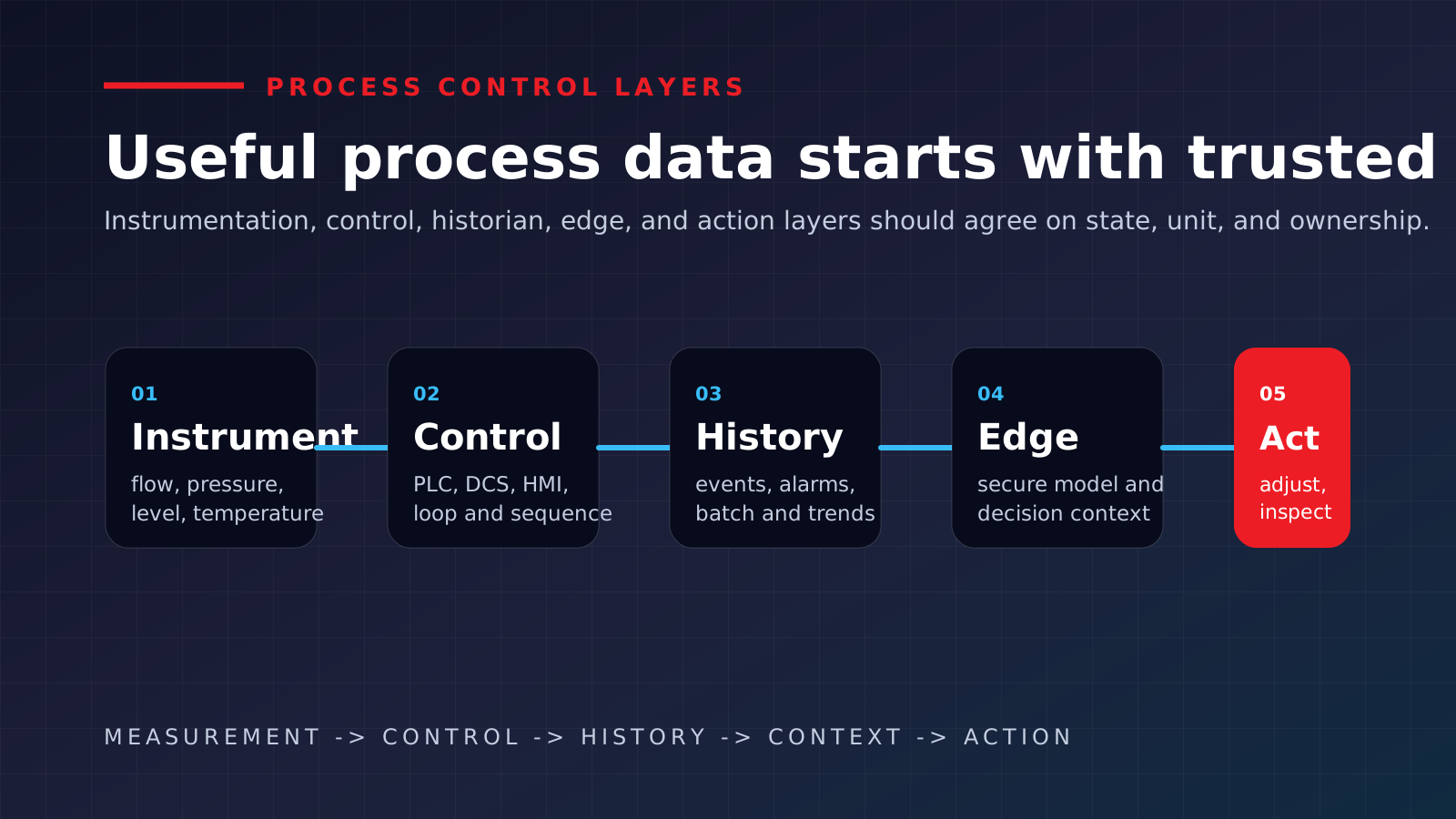 Industrial Automation
 A practical guide to automation and IIoT for process and chemical plants, focused on control reliability, alarms, instrumentation, maintenance, and operational visibility.
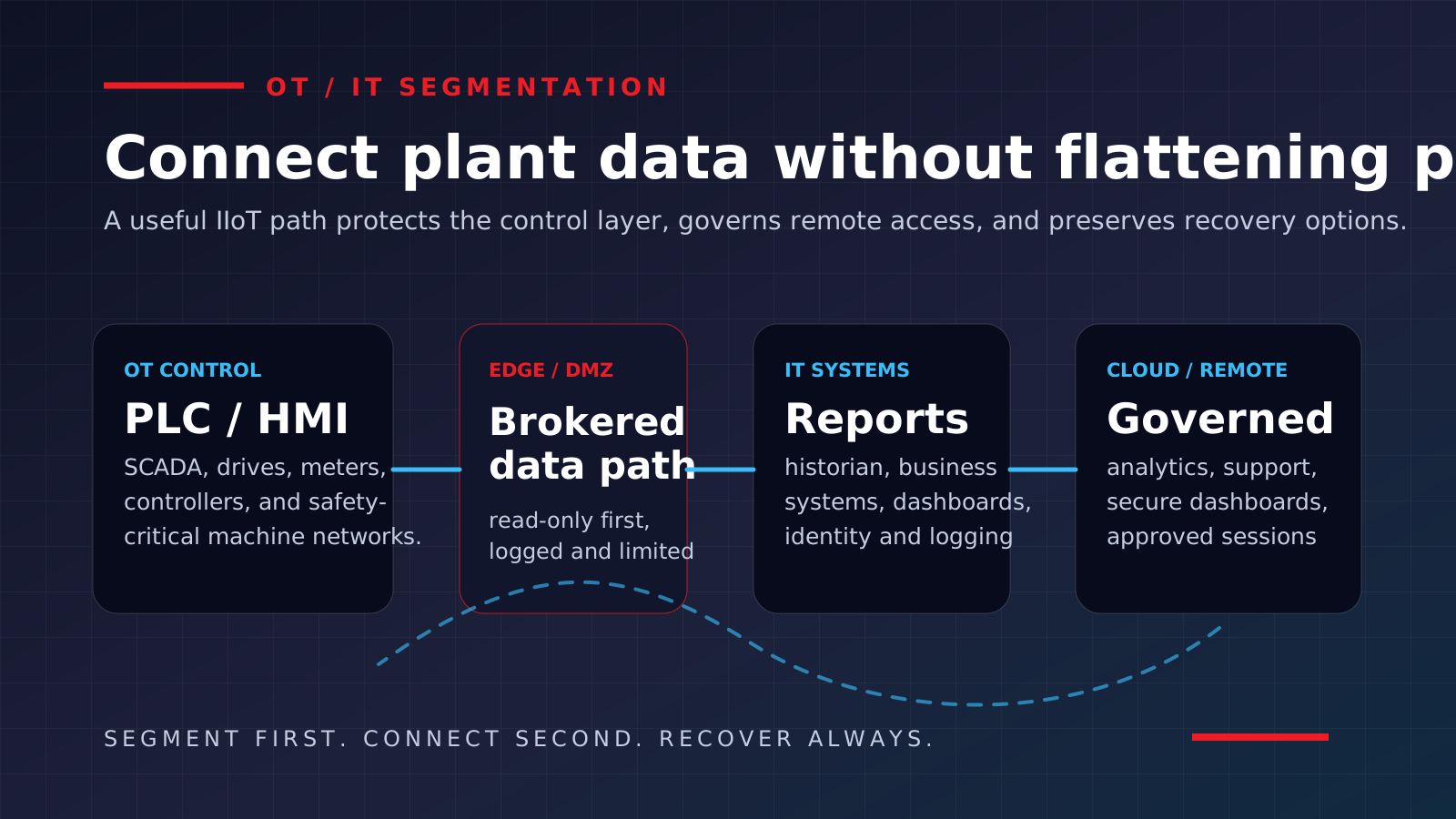 Industrial Cybersecurity
 A practical continuity-first guide for securing PLCs, SCADA, IIoT gateways, historians, cloud dashboards, and remote support paths without slowing useful modernization.
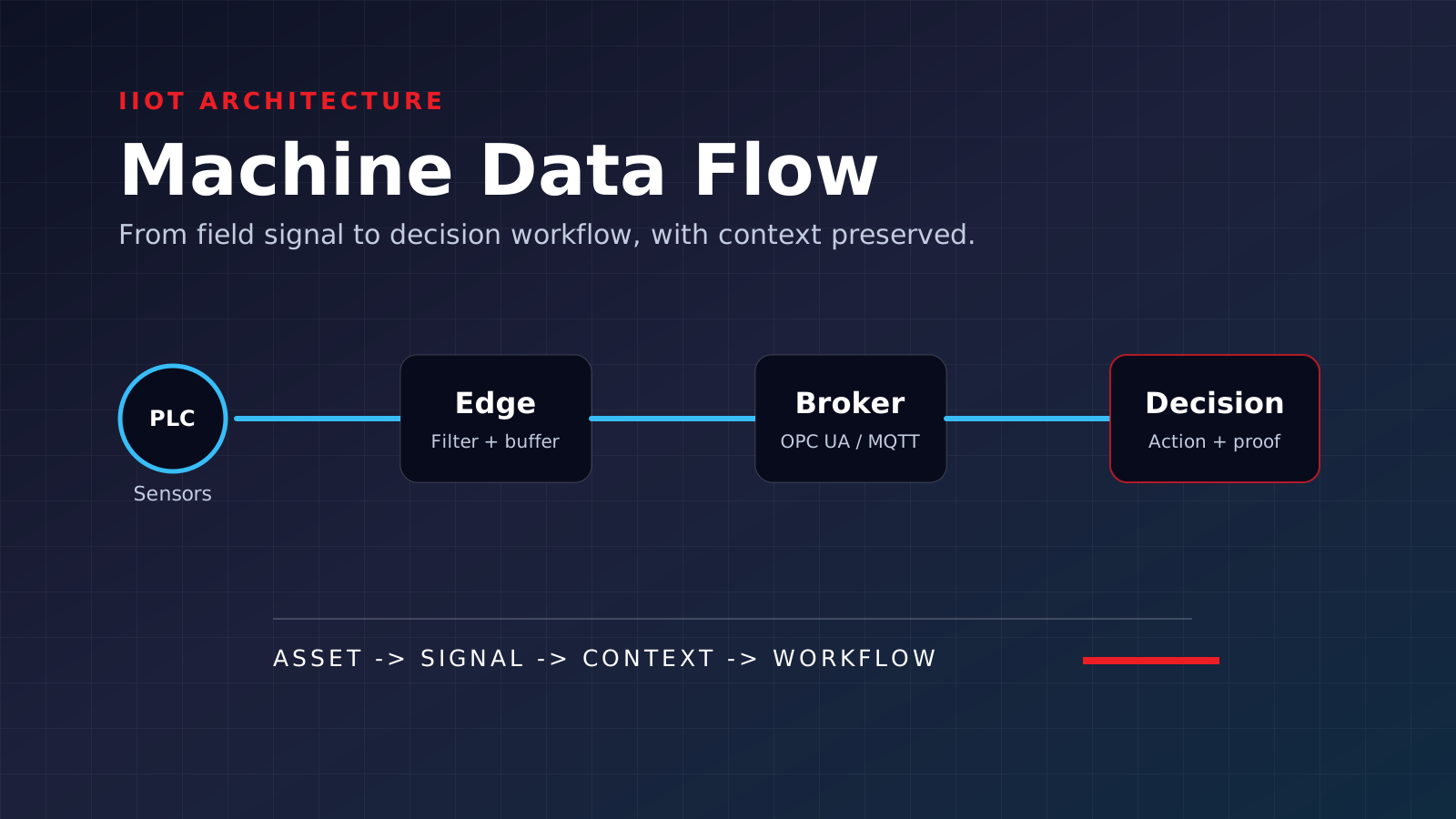 IIoT
IIoT A refined IIoT architecture guide for turning machine signals, PLC data, and sensor context into decisions that improve uptime, maintenance, energy, and production confidence.
The strongest first project is usually alarm rationalisation or one recurring process deviation, scoped with control, data-path, and condition-monitoring patterns — and with functional-safety boundaries left untouched.