
01
0-6s
Operating consequence
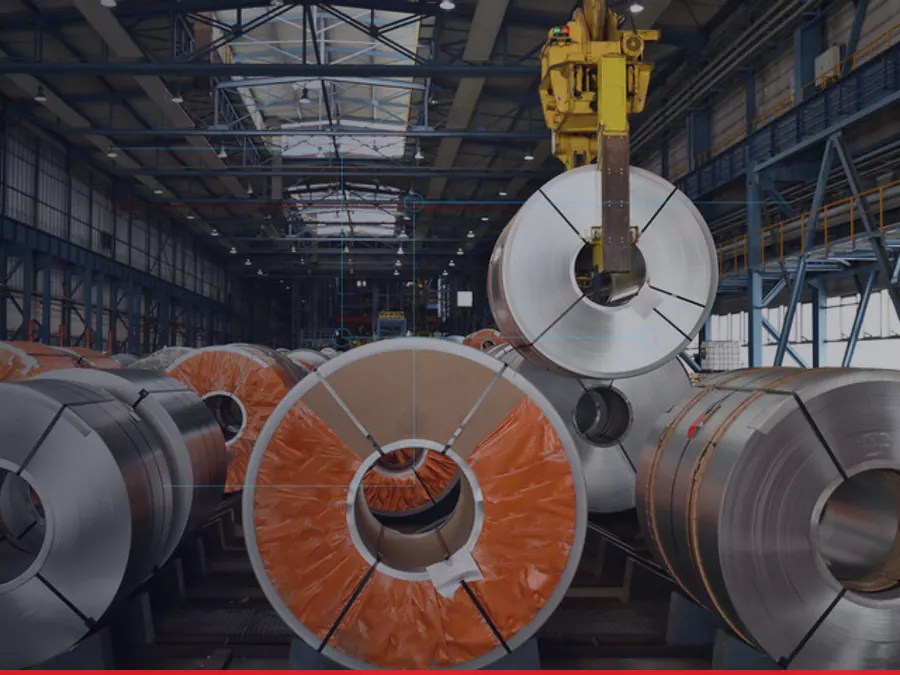
Harsh process assets are shown under load, dust, heat, and time pressure.
Rugged monitoring, process visibility, and reliability workflows for harsh, high-throughput environments.
Heat, dust, load variation, and rotating equipment make signal quality, maintainability, and shutdown timing more important than glossy dashboards.
Show how crusher, mill, fan, gearbox, and bearing evidence must remain tied to load, dust, heat, and operating state before shutdown planning.
Harsh process assets are shown under load, dust, heat, and time pressure.
Crusher, mill, fan, gearbox, and bearing supports are treated as one process path.
Vibration, temperature, oil cleanliness, current, and operating state are connected before action.
The evidence routes to watch, inspect, lubrication review, and planned shutdown work.
Each problem maps to a core service or a public solution blueprint.
Mills, fans, rollers, drives, and gearboxes need vibration, temperature, current, lubrication, and operating-state context before bearing alerts can be trusted.
Heat, dust, vibration, wash zones, and access constraints can make a good signal fail in practice unless the environment is treated as part of the data contract.
Continuity decisions depend on knowing whether a signal requires watch, inspection, planned intervention, or shutdown coordination.
PLC logic, HMI states, alarms, and handover notes must remain readable enough for operations and maintenance to diagnose faults under pressure.
The service list is a starting point for discovery, not a claim that every plant needs every layer.
Build bearing decision windows for mills, kilns, fans, and gearboxes from vibration (ISO 20816-3), temperature, current, and oil-cleanliness (ISO 4406) evidence.
Keep PLC logic, interlocks, and HMI states readable enough to diagnose faults under heat, dust, and load — the conditions that make handover notes matter.
Treat the harsh environment as part of the data contract: enclosure rating (IEC 60529), cabling, and placement designed before historian capture.
These articles support the public problem framing without presenting private plant results as case studies.
 Predictive Maintenance
 A practical field guide for using vibration, temperature, current, lubrication evidence, and operator observations to turn bearing risk into planned maintenance action.
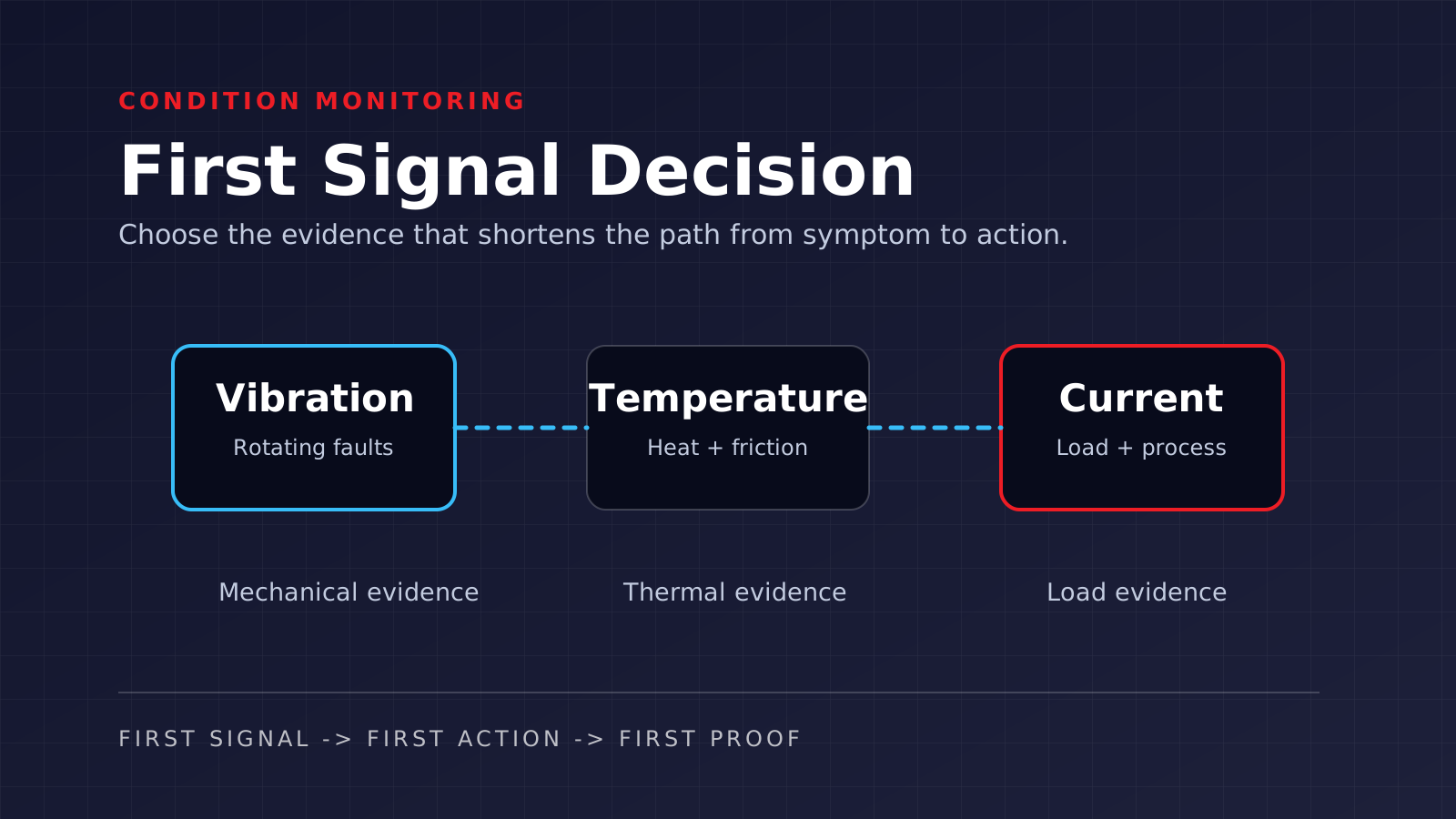 Condition-Based Monitoring
 A condition monitoring decision guide for choosing the first signal that builds trust, protects maintenance capacity, and gives earlier warning on critical assets.
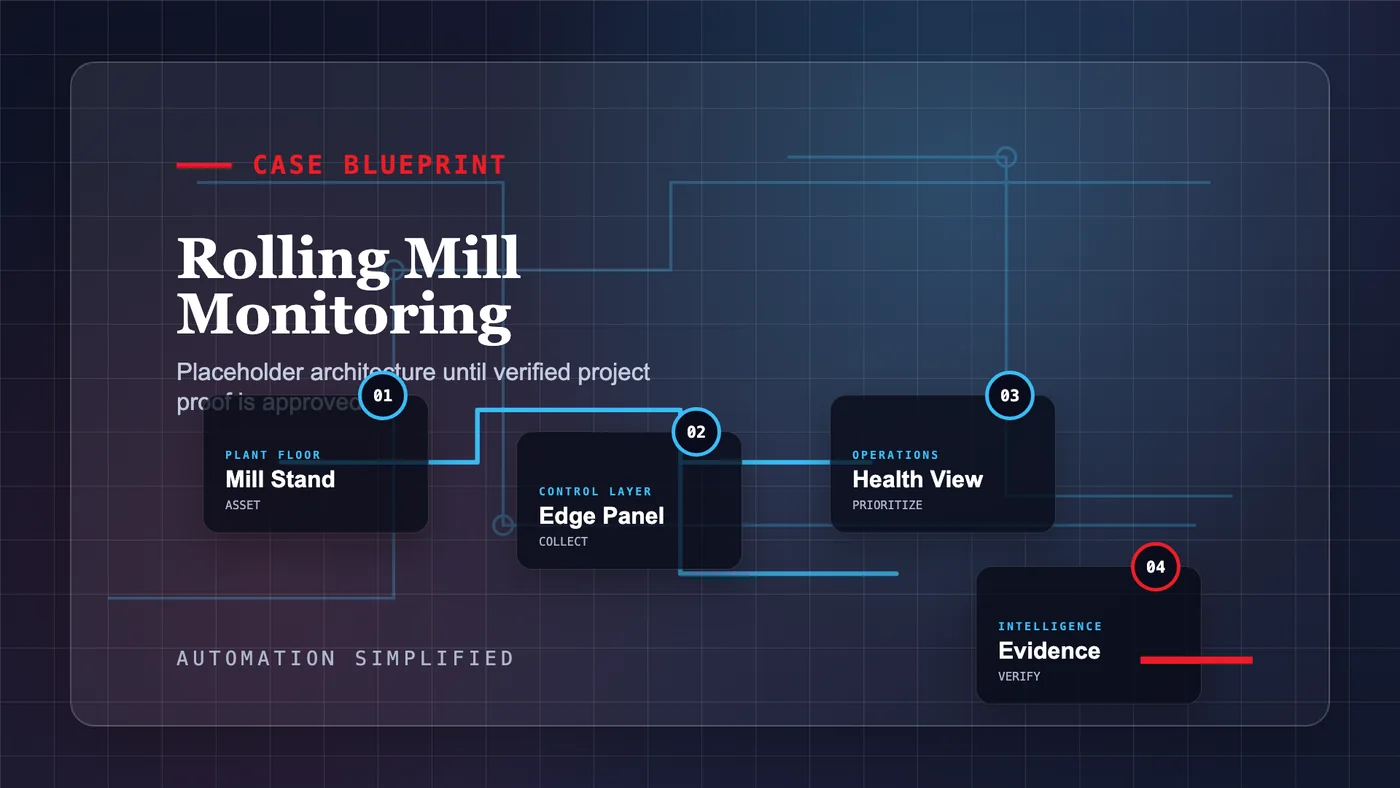 Condition-Based Monitoring
 A technical review of journal-bearing monitoring in sheet metal reduction lines, connecting roll force, viscosity, lubricant feed condition, oil cleanliness, temperature, vibration, and maintenance action.
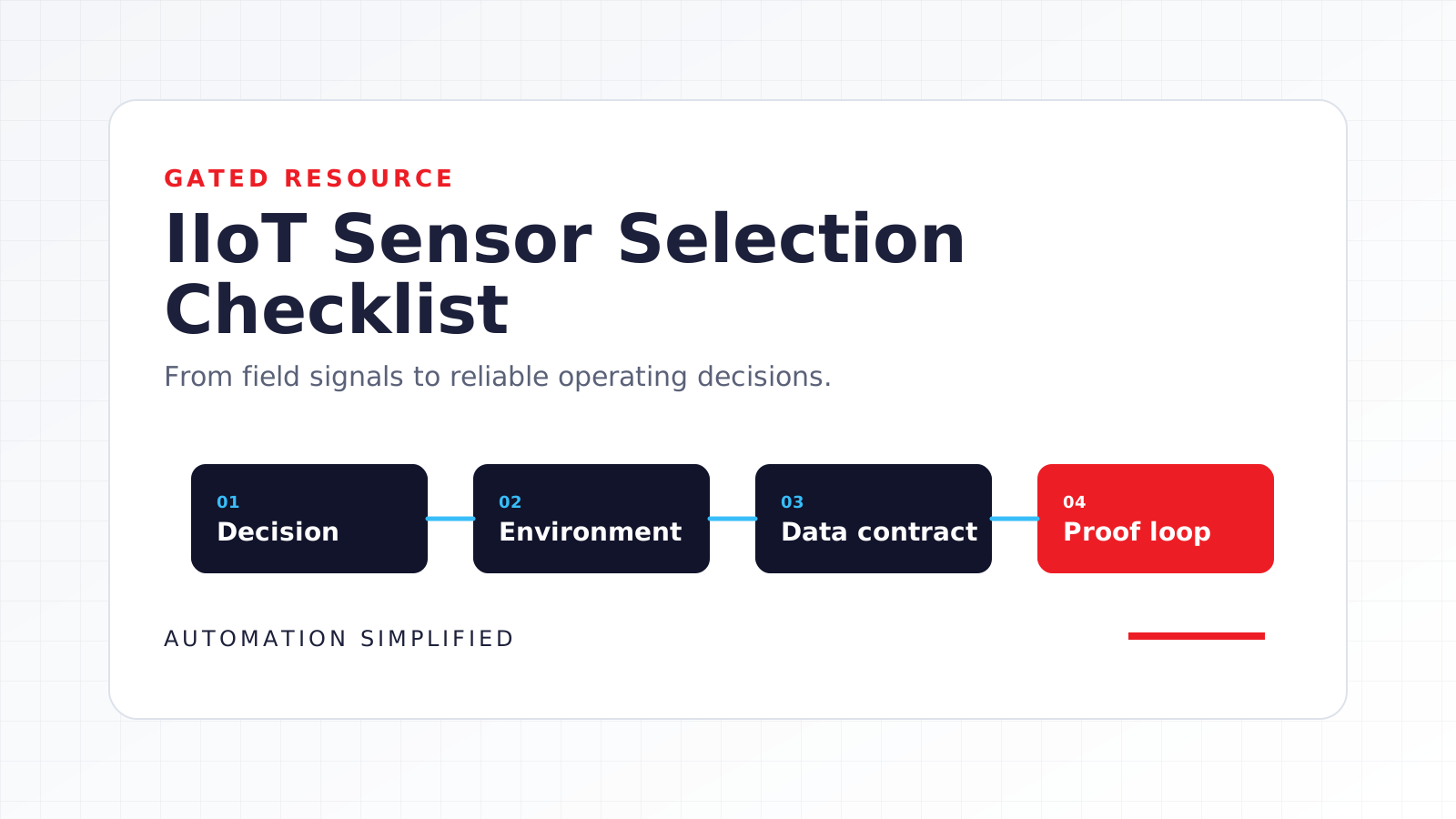 IIoT
IIoT A gated resource for selecting IIoT sensors, transducers, and switches that can survive the plant environment and support reliable operating decisions.
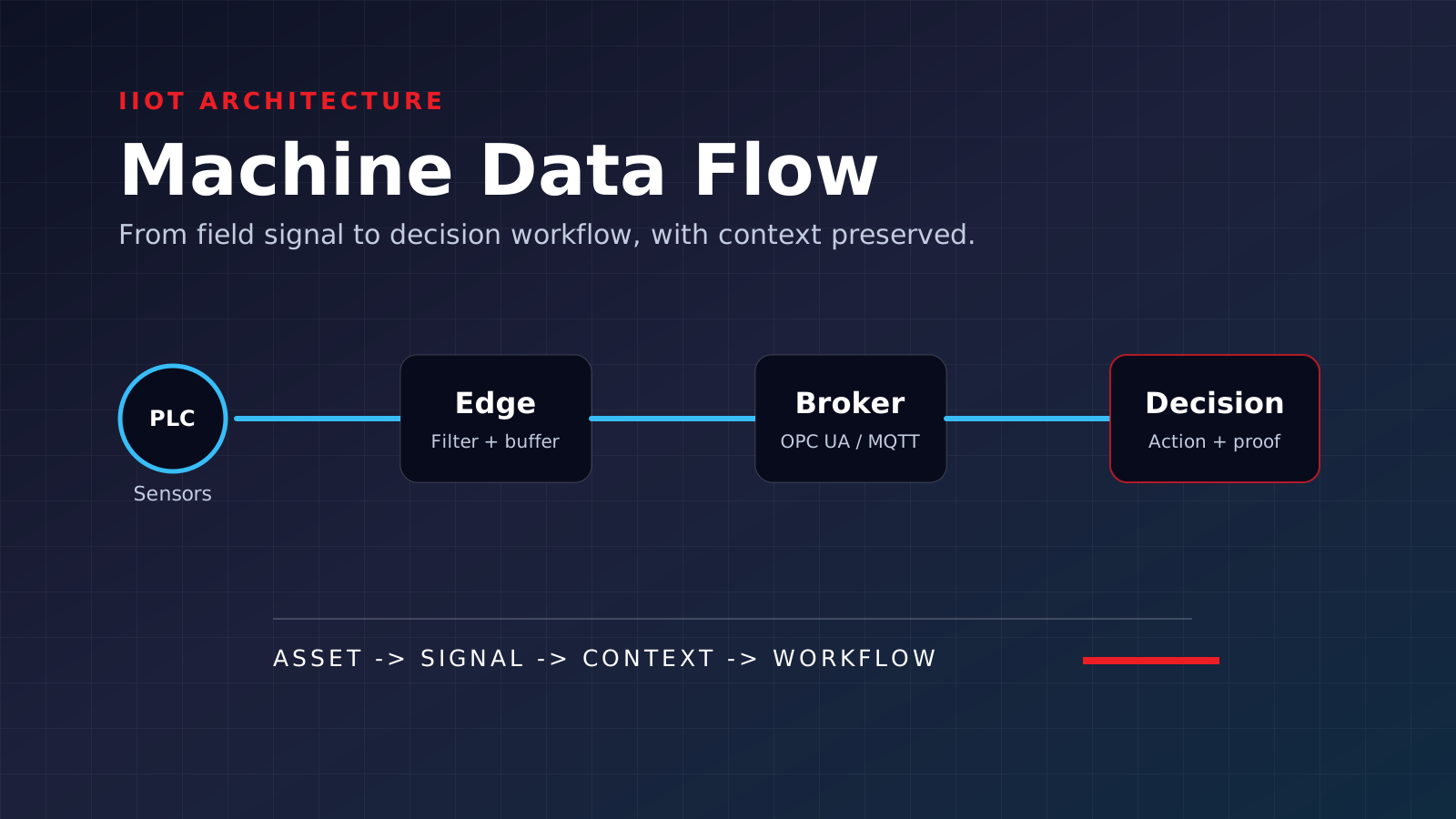 IIoT
IIoT A refined IIoT architecture guide for turning machine signals, PLC data, and sensor context into decisions that improve uptime, maintenance, energy, and production confidence.
These are the operating views worth clarifying when a plant wants to move from symptoms to evidence-backed action.
Captured with asset hierarchy, signal ownership, and the operating state that makes the reading meaningful.
Tied to a named decision owner and the action path the team can realistically follow.
Validated against existing PLC, historian, and maintenance evidence before new sensors are added.
Use a bounded pilot on one asset group before scaling monitoring across mills, kilns, fans, or drive trains.