Book a Consultation
HomeIndustriesPharma
Sector overview

Pharma

Automation, data-integrity, and human-review patterns for validation-sensitive pharmaceutical and life-science environments.

Operating context

Validated environments need careful boundaries and clean records

Pharmaceutical automation and data work must be explicit about system boundaries, review points, data lineage, and validation expectations. The decisive distinction is between validated GxP systems — where data integrity and qualification govern every change — and non-validated utilities, where standard IIoT patterns apply. Most useful first projects live in the second category while respecting the first.

GxP and non-GxP boundaries documented before any new gateway, dashboard, or model.
Records designed for ALCOA+ data integrity and 21 CFR Part 11 / EU Annex 11 audit expectations.
Human review, exception handling, and approval points designed upfront, not retrofitted.
SystemPharma
RecordPharma
ReviewPharma
QualityPharma
Operating problems

Where this sector starts

Focused problem framing with routes into the closest deep-dive sector and the matching solution blueprints.

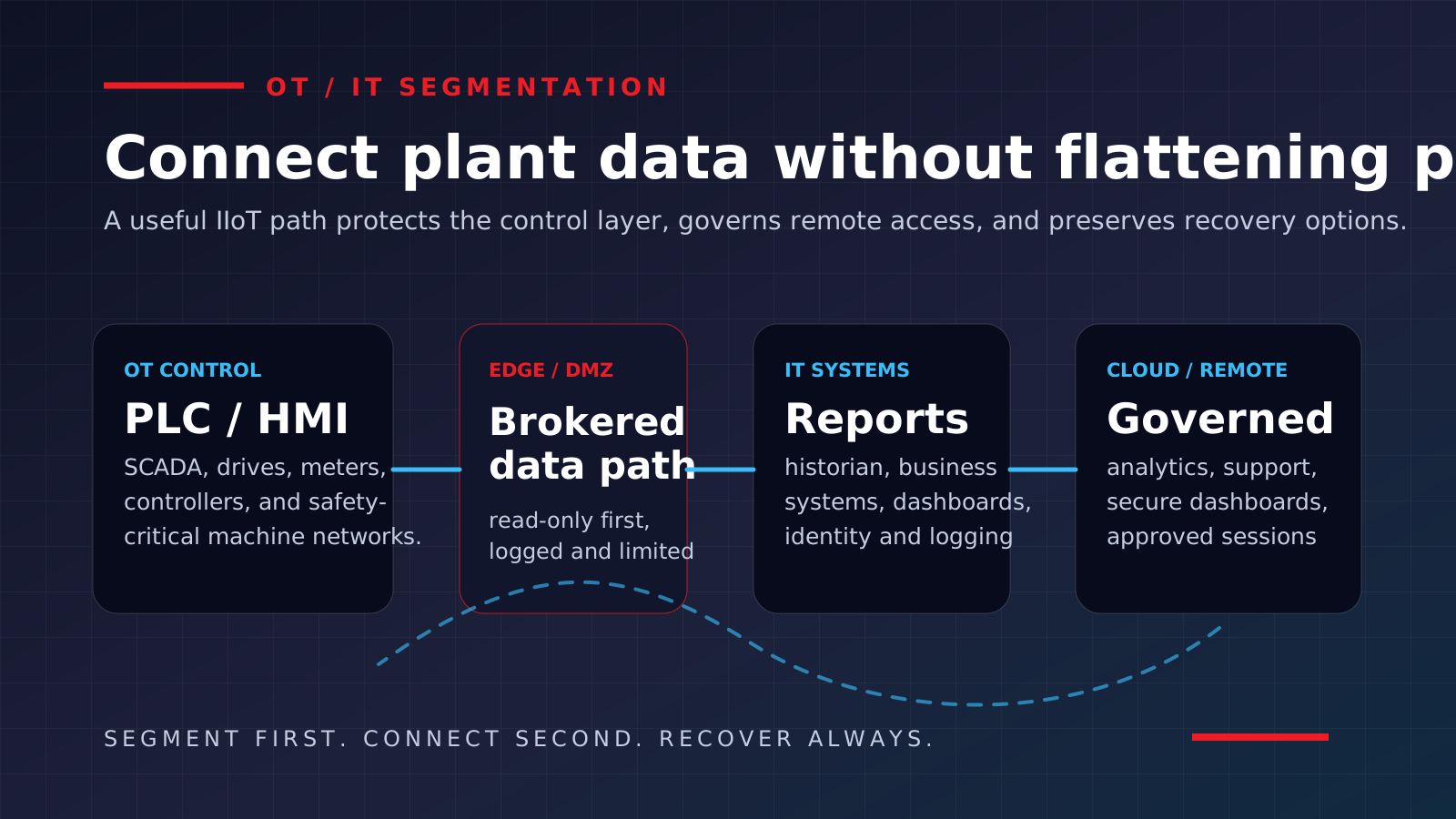
Validated vs non-validated system boundaries

New dashboards, gateways, or AI workflows must make GxP boundaries and review responsibilities explicit. Work that touches validated systems is treated under change control; utility and reliability monitoring is scoped where qualification is not at risk.

Industrial Data & IIoT ArchitectureOT Data Path Review

Data integrity and ALCOA+ records

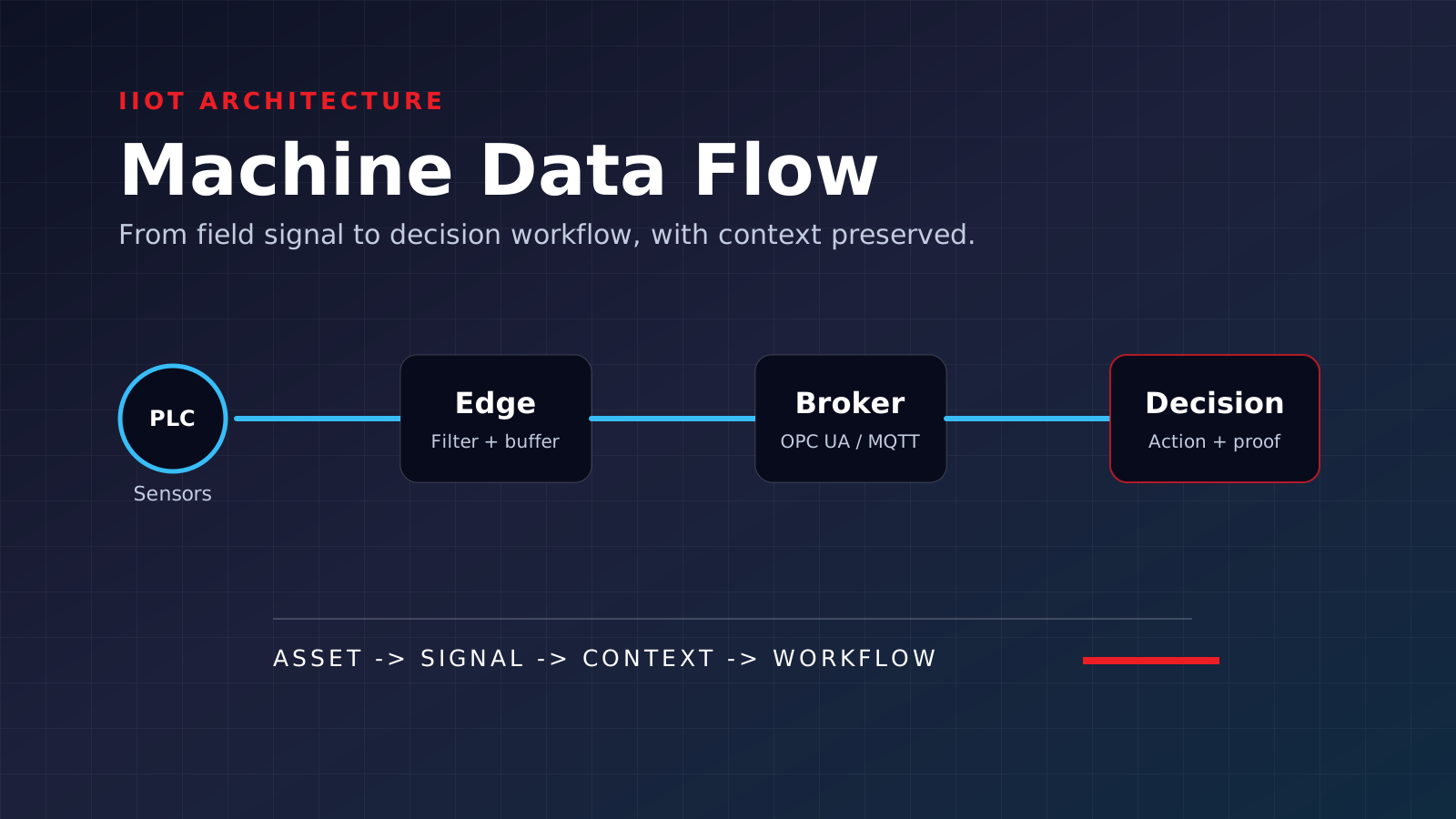
Signals should preserve source, timestamp, attribution, and action context so records are attributable, legible, contemporaneous, original, and accurate — without making unsupported compliance claims for a system that has not been validated.

Industrial Data & IIoT ArchitectureMachine Data Architecture Blueprint

Computerised-system change under GAMP 5

Control, HMI, and historian changes need categorisation, risk assessment, and traceability consistent with GAMP 5 so reliability improvements do not disturb the validated state.

Automation Reliability & Control HygieneOT Data Path Review

Governed decision support and exception review

AI-assisted prioritisation or document search must define what data can be used, who approves output, and how errors are handled — governed against the NIST AI RMF, with humans owning the regulated decision.

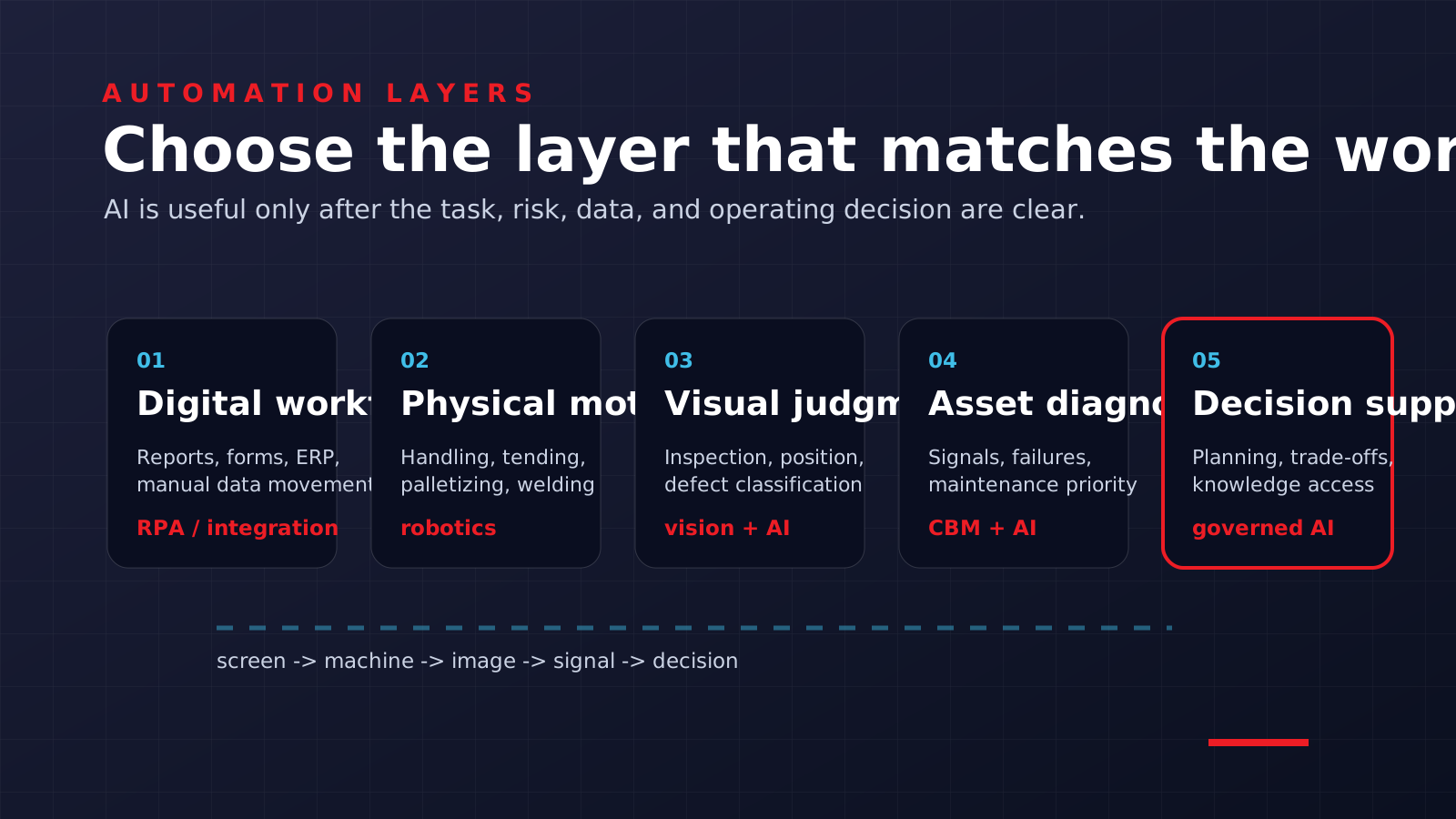
AI-Ready Decision SupportOT Data Path Review
Service focus

Implementation paths that fit this operating context

The service list is a starting point for discovery, not a claim that every plant needs every layer.

01

Automation Reliability & Control Hygiene

Stabilise control and HMI states inside validated boundaries, with change control that respects GAMP 5 categorisation and the existing qualification of the system.

02

Industrial Data & IIoT Architecture

Design data paths that preserve lineage, timestamp, and attribution to ALCOA+ and 21 CFR Part 11 / EU Annex 11 expectations, separating validated systems from non-validated utilities.

03

AI-Ready Decision Support

Scope decision-support and review workflows with explicit human approval and audit trails, governed against the NIST AI RMF — never as an unvalidated control claim.

Practical next step

Begin where qualification is not at risk

Strong first projects sit in utility, reliability, and visibility work that respects validated boundaries. We keep data-integrity and compliance language conservative and tied to the actual system state.

How we publish proof Frameworks, blueprints, and decision guides are public. Measured client outcomes are published only after verified baselines and approval.
First practical scope Choose one operating problem, one data path, one owner, and one review loop before scaling.
Discuss this sector

Ready to see what automation could do for your plant?

Discuss Your Project