
Industrial AI, Robotics, Vision, And RPA: Choosing The Right Automation Layer
A decision guide for industrial leaders comparing digital workflow automation, robotics, machine vision, condition intelligence, and governed industrial AI.

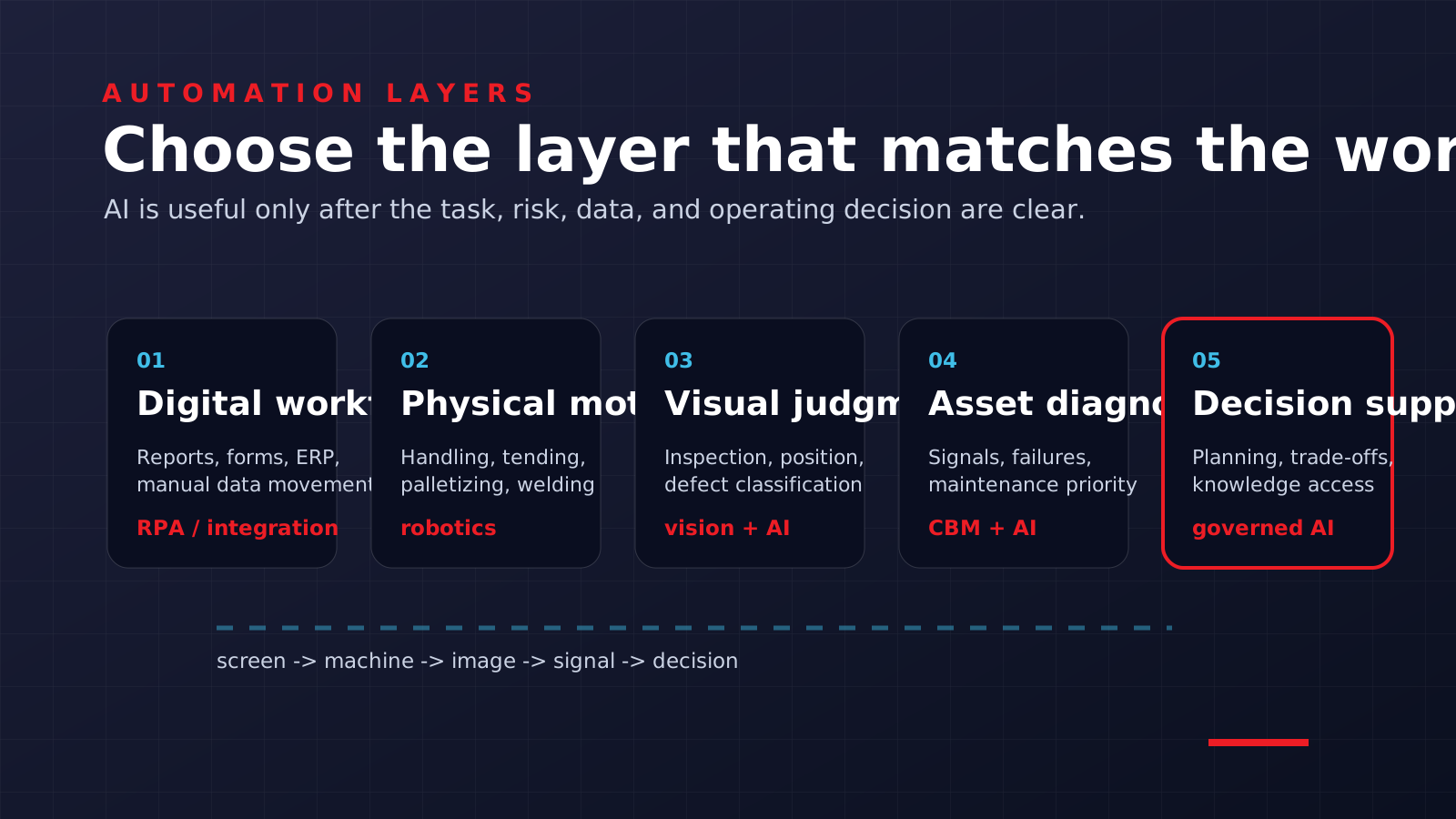
Industrial AI, robotics, machine vision, and RPA are often discussed as if they belong to one automation category. In a plant, that confusion is expensive.
They solve different forms of work. Some work happens on a screen. Some happens through physical motion. Some depends on visual judgment. Some depends on machine signals. Some depends on planning, trade-offs, and human approval.
The leadership question is not “Should we use AI?” The better question is: which kind of work is creating cost, delay, inconsistency, or risk, and what is the lowest-risk automation layer that can improve it?
Start with the work, not the tool
Use a simple classification before approving budget:
| Work type | Typical bottleneck | Better first layer |
|---|---|---|
| Digital workflow | Manual reporting, copy-paste, approvals, portal updates, spreadsheet consolidation | API integration, workflow automation, or RPA where integration is not practical |
| Physical movement | Handling, tending, palletizing, repetitive loading, ergonomic strain | Fixture improvement, robot, cobot, or mechanical automation |
| Visual inspection | Subjective checks, missed defects, inconsistent rejection, traceability gaps | Machine vision, lighting, reject handling, and possibly AI vision |
| Machine condition | Failures, abnormal trends, weak maintenance prioritization | Condition monitoring and IIoT first; AI only after signal trust is established |
| Operating judgment | Planning trade-offs, document search, root-cause review, decision overload | Governed industrial AI with human review and verification |
This protects the business from buying a fashionable tool for the wrong bottleneck.
A practical decision tree
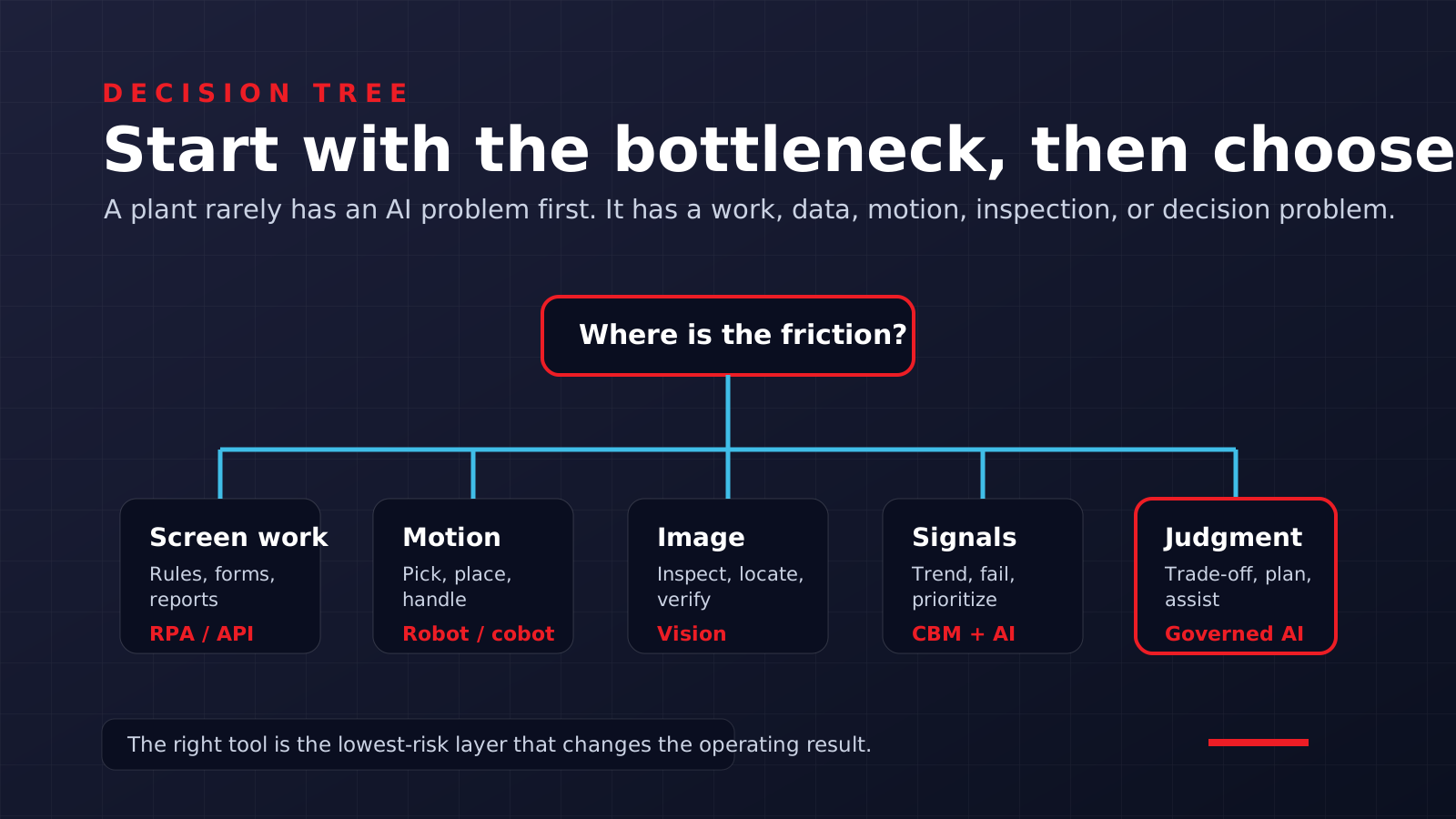
Where digital workflow automation fits
RPA has a place, but it should not dominate the industrial AI conversation. It is useful for office-style work around industrial operations:
- Consolidating routine production, purchase, inventory, or compliance reports.
- Moving data between legacy portals, spreadsheets, or systems that do not integrate cleanly.
- Matching structured documents such as invoices, dispatch notes, or work orders.
- Triggering reminders or approvals from predictable rules.
RPA is usually not the right layer for real-time machine control, safety, or high-consequence plant decisions. Where APIs or direct system integration are practical, they may be more robust than screen-level automation.
Where physical robotics fits
Robotics is strongest when the bottleneck is physical movement: pick and place, palletizing, machine tending, packaging, welding, material handling, inspection positioning, or repetitive ergonomic load.
A robot does not fix a poorly controlled process by itself. Robotics projects need attention to fixtures, safety, cycle time, payload, reach, floor layout, upstream variation, downstream flow, maintenance capability, and operator interaction.
Where machine vision fits
Machine vision supports presence checks, defect detection, code verification, dimensional inspection, position guidance, assembly verification, and reject confirmation.
The foundation is controlled imaging: lighting, camera position, lens selection, background, speed, trigger timing, and rejection handling. AI vision may help with variation, but it still depends on image quality, labelled examples, and a clear false-reject or false-accept policy.
Where industrial AI fits
Industrial AI is useful when patterns are too complex, too large, or too time-consuming for manual review, but the data is trustworthy enough to support a recommendation.
Examples include:
- Anomaly detection on asset signals.
- Maintenance prioritization from condition and operating context.
- Quality defect classification from images or process data.
- Root-cause suggestions from event history.
- Operator guidance from manuals, procedures, and troubleshooting notes.
- Energy optimization recommendations.
- Search across engineering documents and maintenance records.
AI should support decisions. It should not be treated as an uncontrolled replacement for safety, engineering judgment, or validated process control.
Choose by bottleneck, proof, and risk
| Industrial problem | Likely first layer | Proof method before scaling |
|---|---|---|
| Manual report preparation delays action | Integration or RPA | Hours saved, error reduction, reporting cycle time |
| Repeated manual handling constrains throughput | Fixture, robot, cobot, or mechanical automation | Cycle time, safety review, uptime, operator acceptance |
| Visual quality check is inconsistent | Machine vision, then AI vision if needed | False reject rate, false accept risk, traceability, containment effort |
| Bearing or motor failures surprise maintenance | Condition monitoring, then AI if patterns justify it | Earlier detection window, response time, avoided repeat failure |
| Downtime causes are unclear | PLC/SCADA data capture and event model | More precise reason codes, faster root-cause review |
| Troubleshooting knowledge is scattered | Governed AI assistant over approved documents | Answer quality, source traceability, expert review, usage boundaries |
The most valuable first project is usually the one with a clear bottleneck, usable data, an operating owner, and a measurable before/after method.
AI authority must match decision consequence
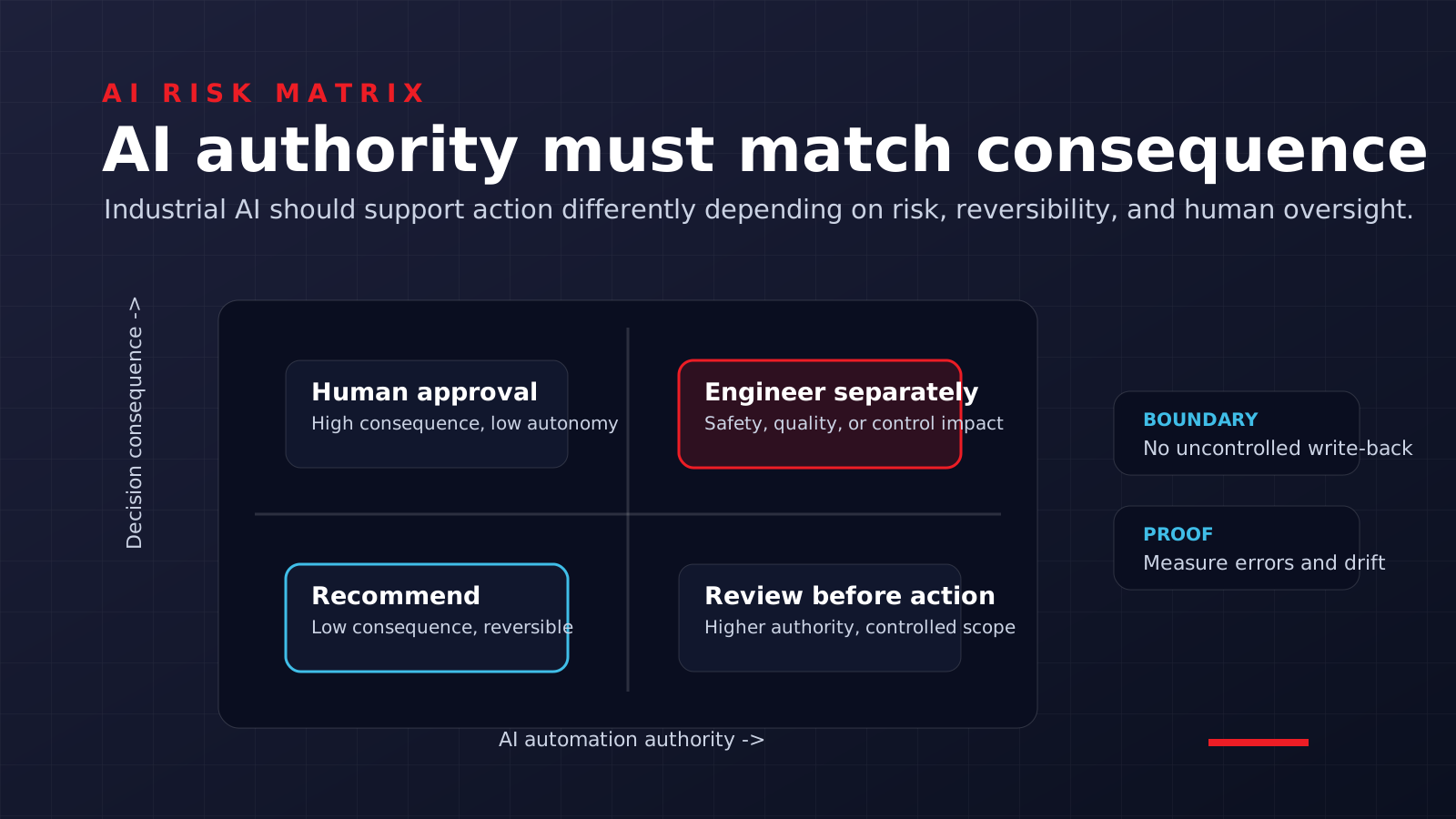
Use a stricter governance model when AI touches safety, quality release, customer commitments, production scheduling, maintenance decisions, or control behavior.
The NIST AI Risk Management Framework is a useful reference because it separates governance, mapping, measurement, and management of AI risk. For industrial companies, this matters because an AI output is not only a prediction. It can influence action.
A governed industrial AI workflow
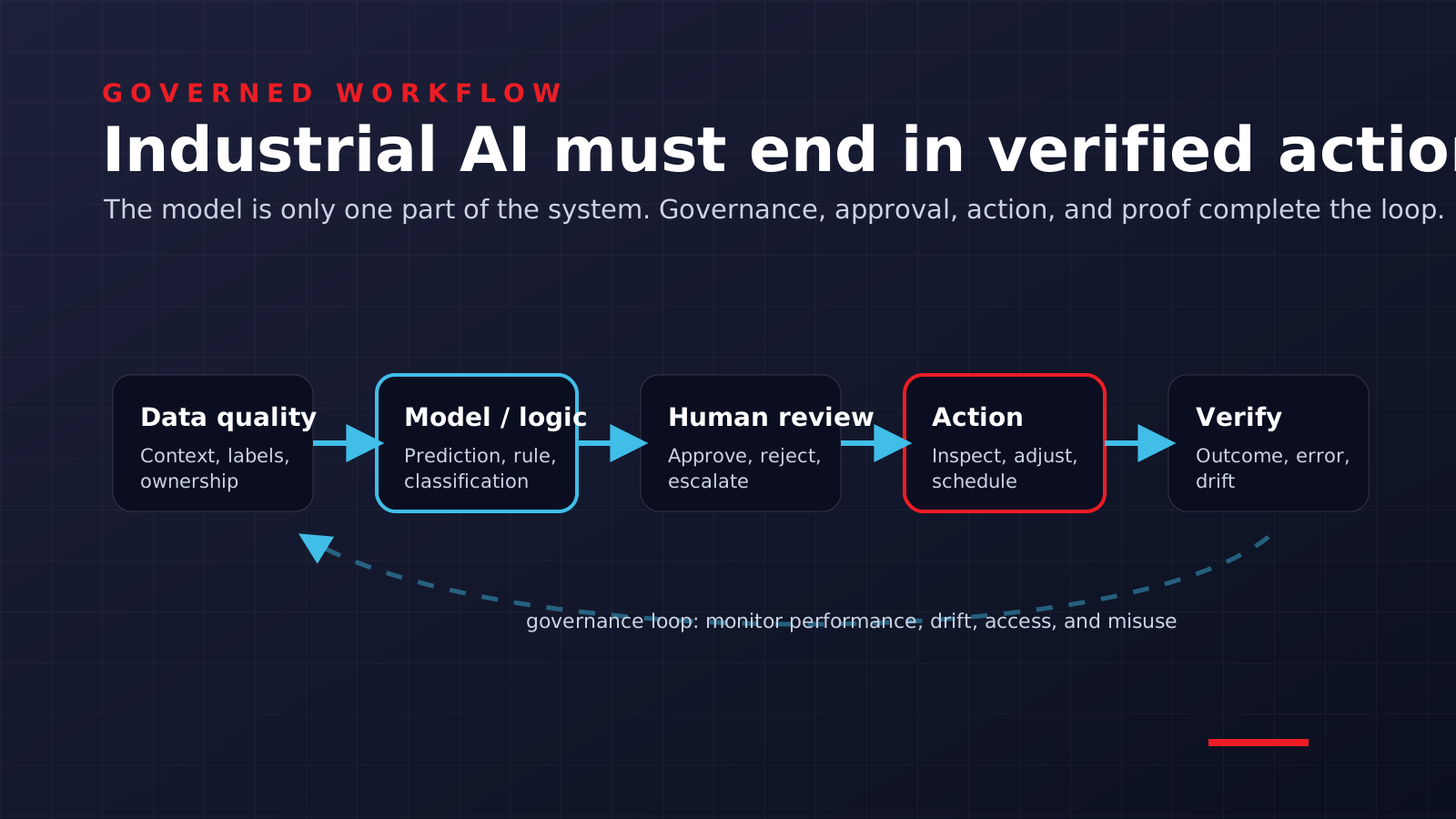
- 01 Define the decision
Clarify whether AI is supporting inspection, maintenance priority, document search, planning, quality review, or energy optimization.
- 02 Validate the data source
Check signal quality, labels, timestamps, context, ownership, and access boundaries before model work begins.
- 03 Set authority limits
Decide whether AI can recommend, rank, draft, alert, or only summarize. High-consequence decisions require human approval.
- 04 Connect to action
Route outputs to inspection, work order, quality hold, operator guidance, engineering review, or planning workflow.
- 05 Verify and govern
Track false alarms, missed events, drift, misuse, response time, and whether people trust the output.
Economic value model
Use a bottleneck-specific value model:
Digital workflow value =
hours saved per month
x fully loaded cost or opportunity value
- maintenance cost of automation
Vision value =
defects avoided
x cost per defect
+ inspection time saved
- false reject and rework costIndustrial AI value =
decision speed or failure-reduction value
- data preparation, governance, review, and monitoring costIf value cannot be tied to a decision, bottleneck, or risk reduction, wait.
The strongest AI project has data, ownership, action, and proof
Watchpoints before approving budget
- Using AI language for a problem that needs basic automation, integration, or data cleanup.
- Deploying a robot before stabilizing fixtures, flow, safety, and upstream variability.
- Training vision models before lighting, camera position, reject handling, and proof rules are controlled.
- Treating AI output as a decision instead of a recommendation with review and verification.
- Sending sensitive production, customer, or plant data into tools without governance and access boundaries.
The Industry Digits view
Industrial AI should not be sold as magic. It should be designed as a disciplined decision-support layer on top of clear processes, trustworthy data, and accountable human workflows.
For industrial businesses, the opportunity is not to make everything “AI enabled.” The opportunity is to improve the few decisions that shape uptime, quality, maintenance capacity, energy use, and competitive position.
The right first project is the one where the work is clear, the risk is bounded, the data is credible, and the output changes a real action.
Lokesh Chennuru writes Industry Digits field notes for industrial decision makers, focused on automation, IIoT, condition monitoring, predictive maintenance, and industrial AI.
Connect on LinkedInQuestions industrial leaders ask about this
What is the difference between RPA, robotics, and industrial AI?
RPA automates rule-based digital office tasks, robotics automates physical movement, machine vision automates inspection, and industrial AI interprets data, patterns, and documents. The bottleneck, whether a screen, a machine, an inspection, or a decision, selects the tool.
When should a plant use AI instead of simpler automation?
When patterns are too complex or time-consuming for manual review and the data is trustworthy enough to support recommendations. AI should support a decision, not cover for poor instrumentation.
How should industrial AI be governed?
With explicit boundaries on data, output access, human approval, error handling, and performance review. The NIST AI Risk Management Framework, organised as Govern, Map, Measure, and Manage, is a useful reference.
Ready to turn signals into a maintenance decision path?
Book a 30-minute consultation and we will map the fastest useful condition-monitoring or automation win.