
Connected asset visibility
Conveyors, scanners, drives, and handling systems need state and exception data before supervisors can separate asset faults from workflow delays.
Industrial Data & IIoT ArchitectureMachine Data Architecture Blueprint
Connected asset visibility, exception workflows, and practical data paths for intralogistics and material-flow operations.
Intralogistics systems — conveyors, sortation, AS/RS, and AMR fleets — need visibility into equipment state and workflow bottlenecks without forcing teams into a heavy application too early. The useful output is a clean separation of asset faults from flow delays, and a named owner for each exception.
Focused problem framing with routes into the closest deep-dive sector and the matching solution blueprints.
Conveyors, scanners, drives, and handling systems need state and exception data before supervisors can separate asset faults from workflow delays.
Drives, motors, and rotating handling assets in sortation and storage/retrieval stall a lane when they fail. Condition signals (ISO 17359) turn an unplanned stop into a planned intervention.
The useful output is a clear exception owner and response path, not another isolated screen. Exception data should route to the supervisor who can act.
Material-flow operations change vendors and add equipment often. Keeping event and state data on portable API and protocol boundaries protects visibility from lock-in.
The service list is a starting point for discovery, not a claim that every plant needs every layer.
Map conveyor, sortation, and AS/RS equipment events to workflow states using portable API and OPC UA boundaries, so asset faults separate cleanly from flow delays.
Apply condition signals to drives, gearmotors, and rotating handling assets (ISO 17359) where a single failure stalls an entire material-flow lane.
Turn exception data into a clear owner and response path — decision support for supervisors, not another isolated monitoring screen.
These articles support the public problem framing without presenting private plant results as case studies.
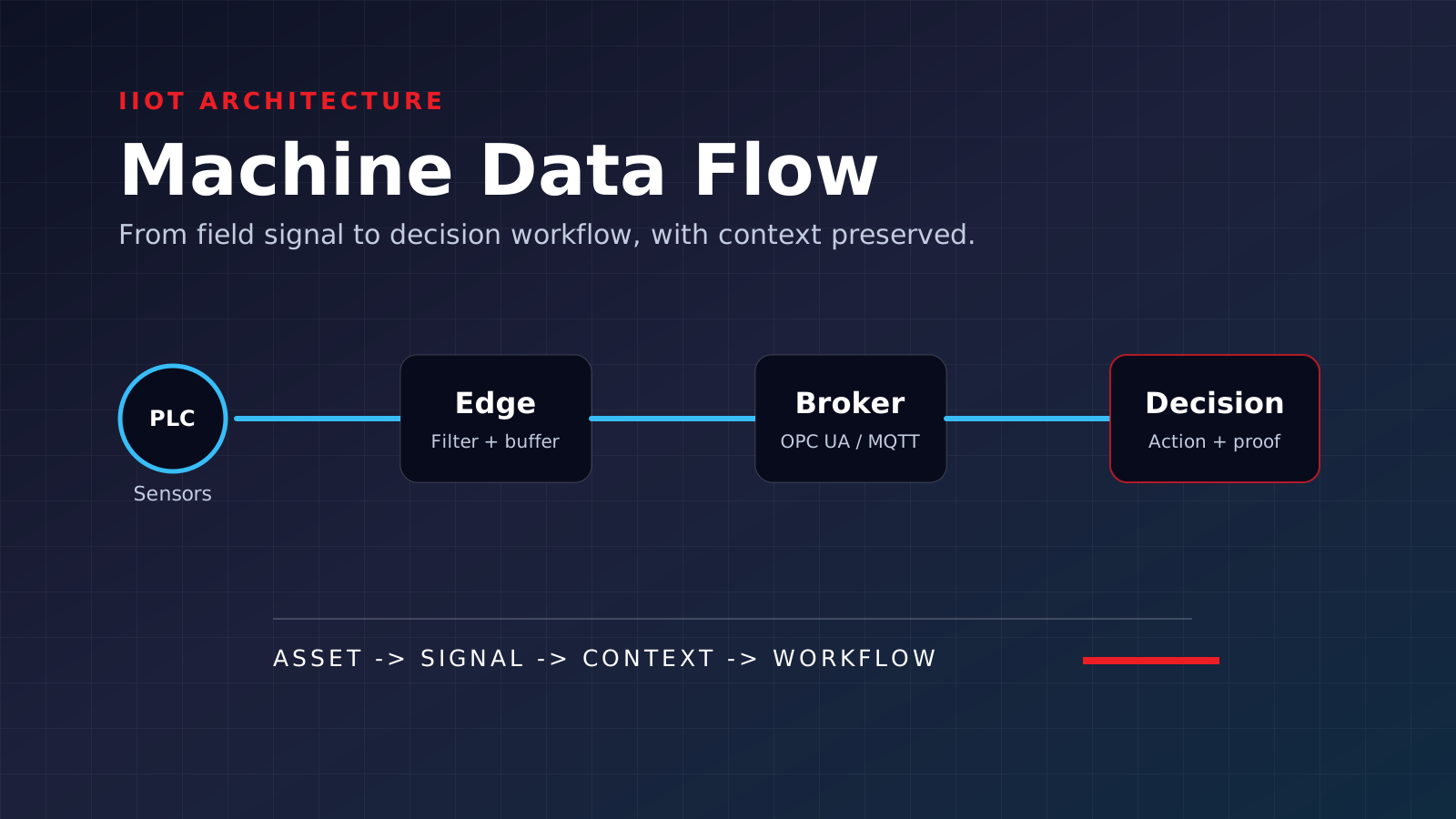 IIoT
IIoT A refined IIoT architecture guide for turning machine signals, PLC data, and sensor context into decisions that improve uptime, maintenance, energy, and production confidence.
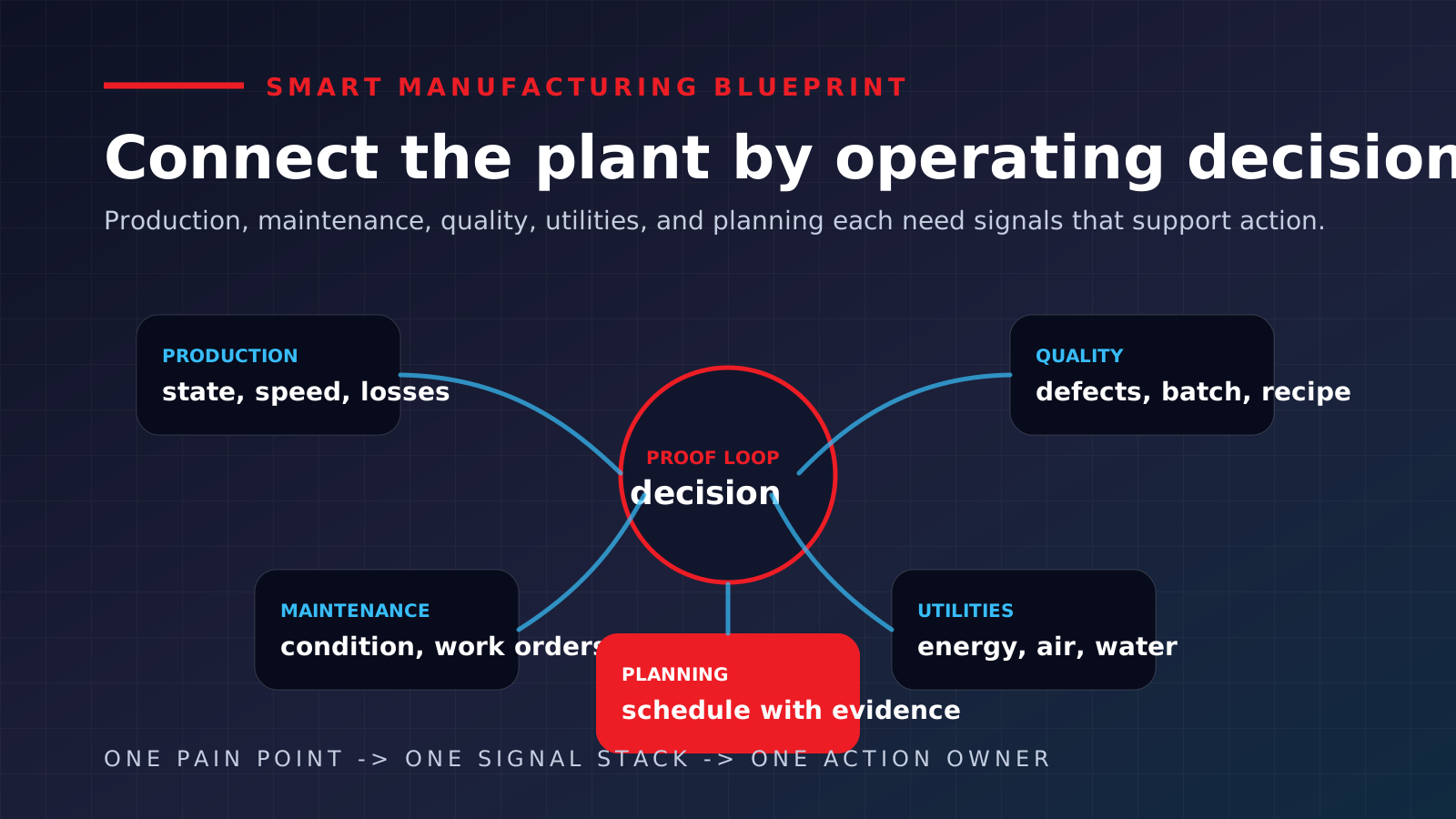 IIoT
IIoT A grounded smart manufacturing blueprint for connecting production, maintenance, quality, utilities, and planning without overclaiming transformation.
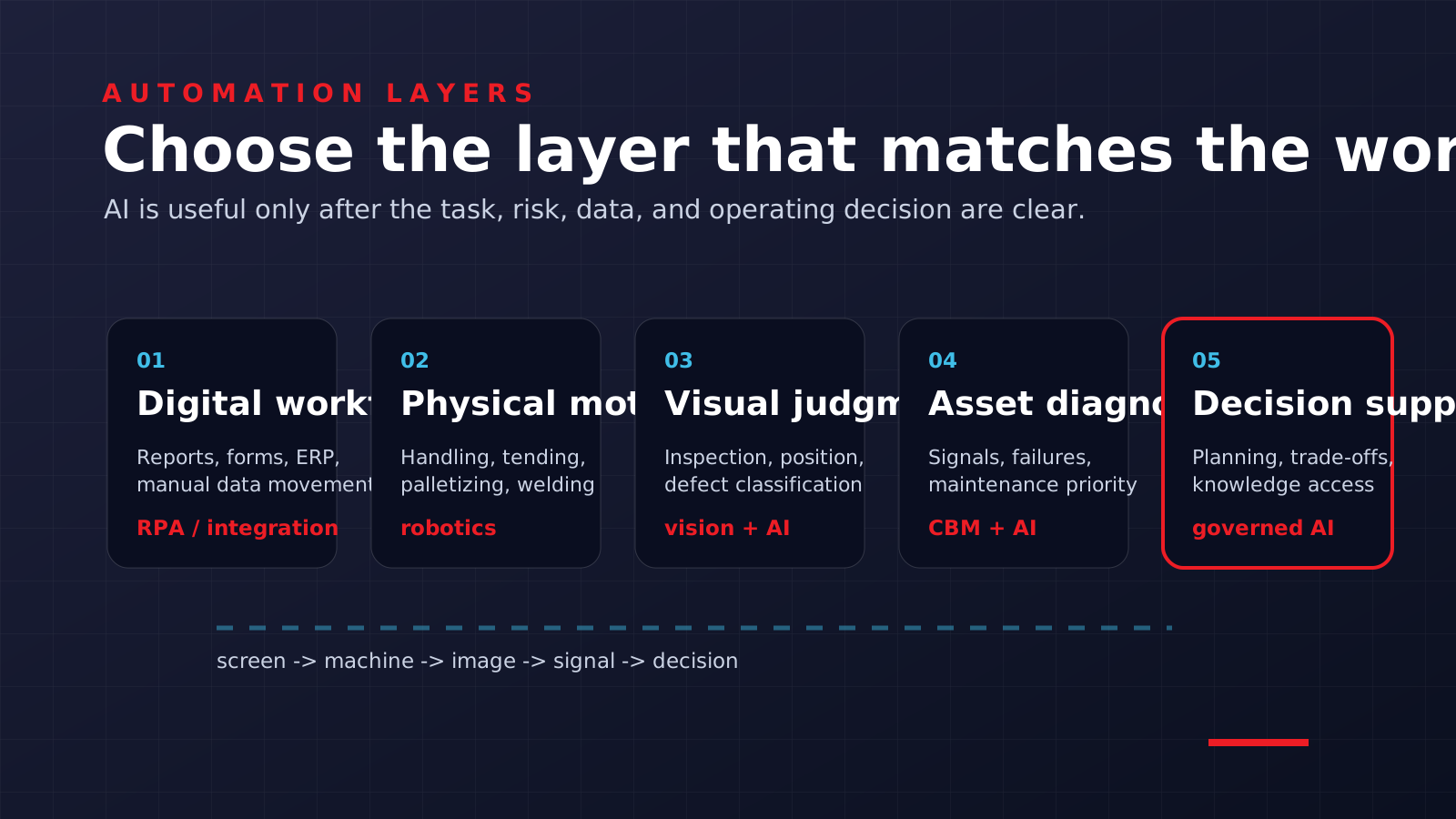 AI for Industry
 A decision guide for industrial leaders comparing digital workflow automation, robotics, machine vision, condition intelligence, and governed industrial AI.
Begin with one lane, one sortation zone, or one asset class — connected state and a clear exception owner — before expanding into a plant-wide application.