
Smart Manufacturing With IIoT: A Practical Blueprint Before You Call It Industry 4.0
A grounded smart manufacturing blueprint for connecting production, maintenance, quality, utilities, and planning without overclaiming transformation.

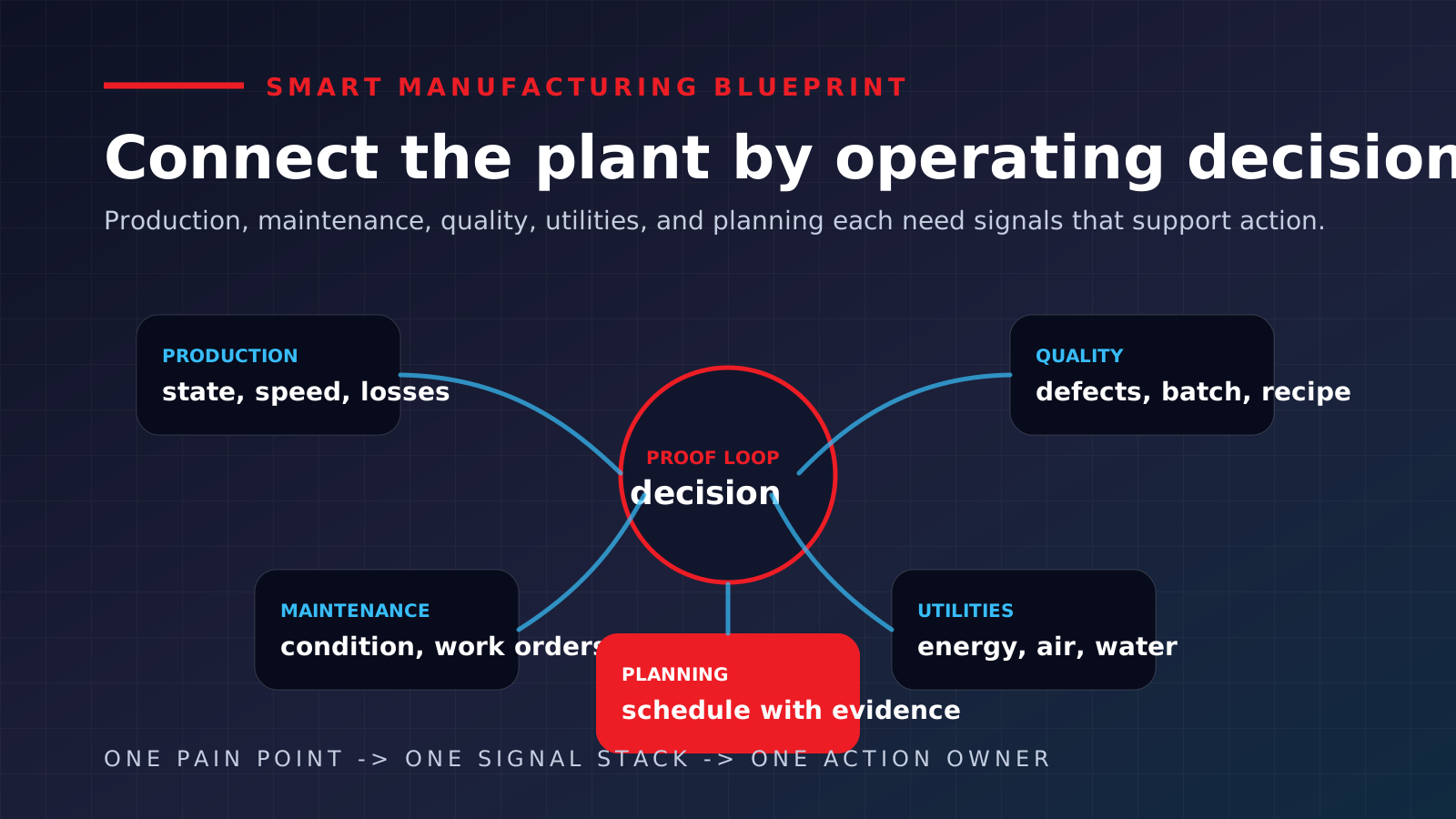
Smart manufacturing should not begin with a transformation slogan. It should begin with a problem that is expensive enough to matter and narrow enough to solve.
For owners and plant heads, smart manufacturing is attractive only when it creates control: fewer surprises, clearer priorities, better use of people and machines, and stronger readiness for customers who expect traceability, consistency, and speed.
For many MSME and mid-sized plants, the first smart manufacturing project is not a digital twin or full AI deployment. It is usually one of these:
- Reduce unplanned downtime on critical assets.
- Improve line visibility and downtime reason capture.
- Monitor energy or compressed-air losses.
- Connect quality data with production conditions.
- Improve maintenance planning using condition data.
- Make production and maintenance reviews evidence-based.
The question is not “How do we become Industry 4.0?” The question is “Which operating decision should become faster, clearer, or more reliable?”
What the decision maker should gain
This blueprint should help a plant leader answer four questions:
- Where is the plant losing money silently?
- Which existing data can expose that loss?
- Which team can act on the information?
- How will the business verify that the action worked?
Smart manufacturing becomes meaningful when it improves this loop.
The five operating areas
| Operating area | What gets measured | What decision improves |
|---|---|---|
| Production | speed, cycle time, downtime, output, reject count | where to remove repeat losses |
| Maintenance | vibration, temperature, current, run hours, alarms | when to inspect, repair, or replace |
| Quality | defects, batch, recipe, process conditions | why variation is happening |
| Utilities | energy, compressed air, steam, water, HVAC | where waste or overload exists |
| Planning | inventory, schedule, changeover, machine availability | how to schedule with fewer surprises |
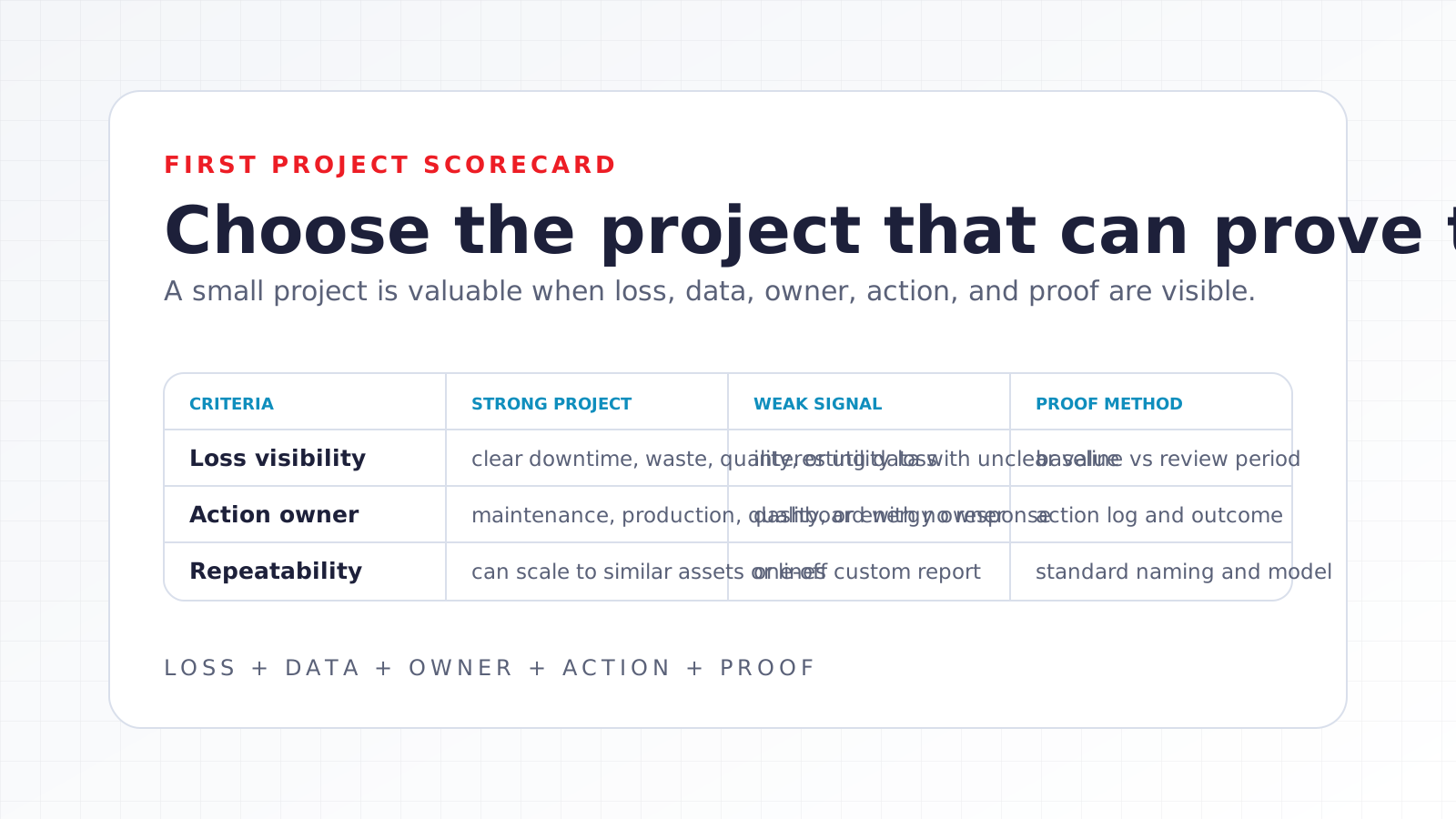
Choose a practical first project
Choose a machine or line where downtime, quality loss, or energy cost is visible to the business. Then define:
- The asset or line.
- The pain point.
- The measurable signals.
- The decision owner.
- The action workflow.
- The success measure.
- The review rhythm.
This is not a case study. It is a blueprint. Real savings, uptime, and ROI should only be published after verified measurement and client approval.
Economic value model
For the first project, estimate a conservative value range:
Annual value range =
loss events per year
x average loss per event
x realistic reduction range
For example, if a line has repeated unplanned stoppages, calculate the loss from production time, scrap, maintenance overtime, delayed dispatch, and urgent spare purchases. Then test whether the smart manufacturing project can reduce one part of that loss.
Do not assume the system pays for itself. Make it prove the loop.
Why ERP and dashboards are not enough
ERP, MES, SCADA, and dashboards are useful, but smart manufacturing depends on how well they are connected to plant reality.
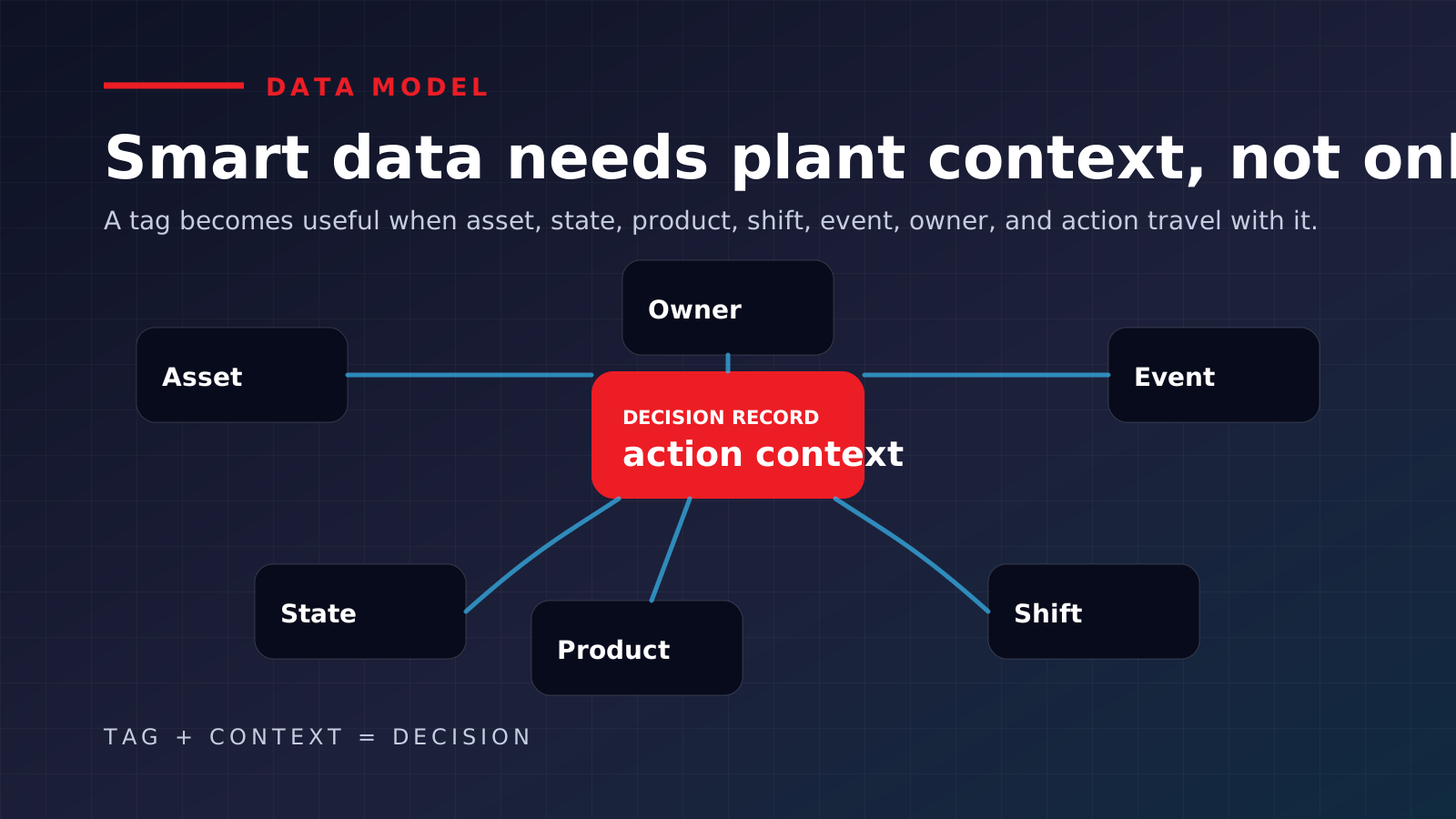
If downtime reasons are manually entered late, the data may be biased. If PLC states are undocumented, production reports may misclassify losses. If quality data is not connected to batch, recipe, speed, temperature, or operator state, root cause analysis stays weak.
Smart manufacturing needs a data model that understands assets, products, shifts, states, events, and decisions.
What to connect first
Start with signals that are:
- Already available or inexpensive to add.
- Tied to one high-value decision.
- Reliable enough to trust.
- Understandable by the team that will act.
- Safe to collect without weakening OT security.
Common first signals:
- Machine run and stop state.
- Downtime reason.
- Critical alarms.
- Motor current.
- Vibration and temperature.
- Pressure, flow, and level.
- Energy use.
- Reject counts.
- Batch or product ID.
Where AI belongs
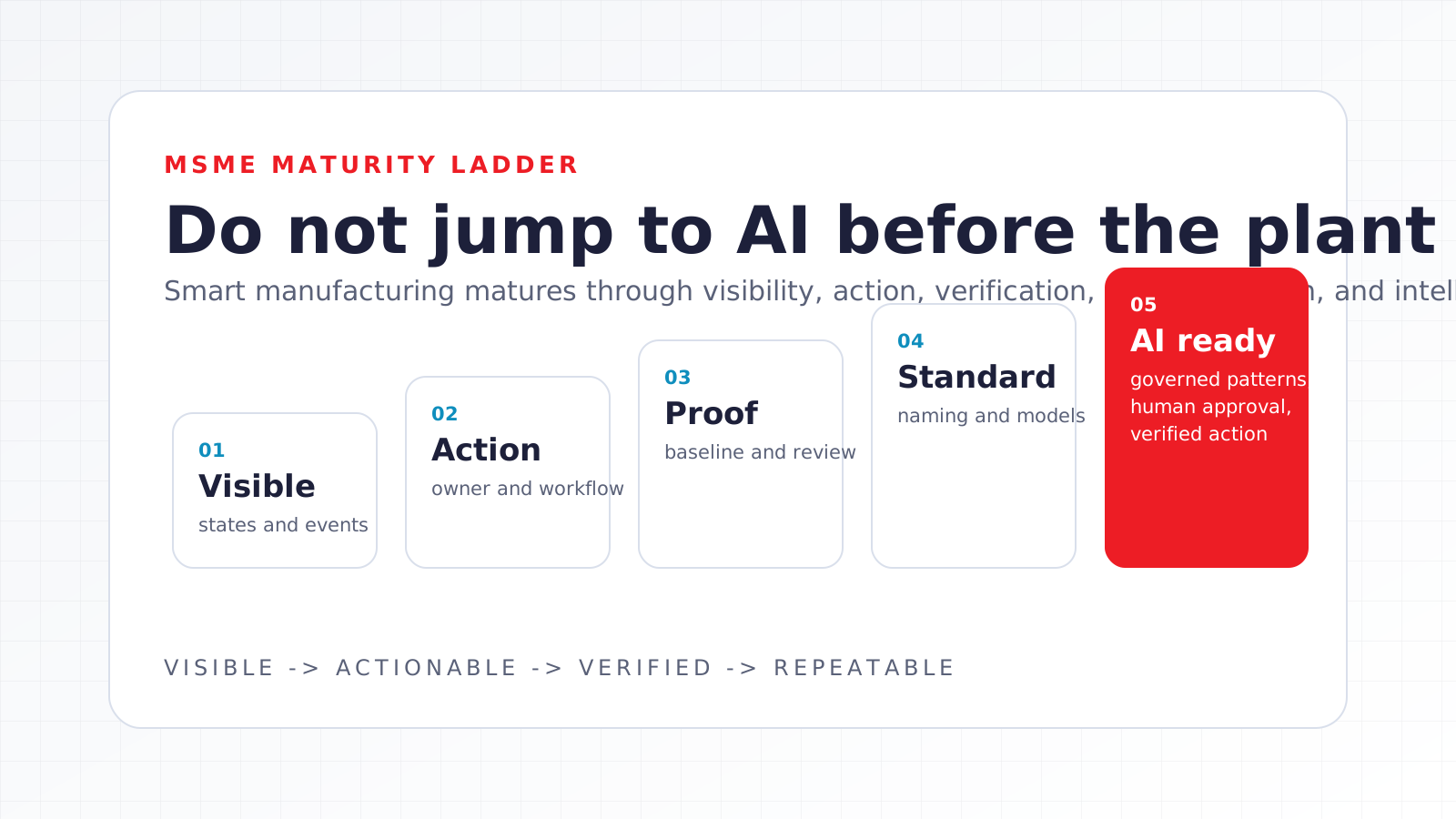
AI can help after the plant has enough reliable context. It may support anomaly detection, defect classification, maintenance prioritization, document search, root cause suggestions, or operator guidance.
But AI should not be used to cover poor instrumentation, unclear operating states, or missing maintenance discipline. If a team cannot explain what a signal means, an AI model will not make the signal trustworthy.
Implementation stages
- 01 Visibility
Connect one line or asset group. Show current state, trend, and event history clearly.
- 02 Action
Turn trends into maintenance, production, quality, or energy actions.
- 03 Verification
Measure whether the action changed downtime, quality loss, energy use, response time, or maintenance planning.
- 04 Scaling
Standardize naming, dashboards, data models, security, and review routines before adding more assets.
The Industry Digits view
Smart manufacturing is not a software purchase. It is an operating system for making better decisions from plant data.
For MSME leaders, the most credible path is practical:
Plants that build this capability early do not only reduce downtime. They become easier to improve. They can answer customer questions faster, investigate quality issues with evidence, train new supervisors faster, and scale improvement across lines with less reinvention.
That is the real competitive advantage: the plant learns faster than its problems repeat.
Lokesh Chennuru writes Industry Digits field notes for industrial decision makers, focused on automation, IIoT, condition monitoring, predictive maintenance, and industrial AI.
Connect on LinkedInQuestions industrial leaders ask about this
Where should smart manufacturing start?
With one expensive, narrow problem, such as unplanned downtime on a critical asset, weak line visibility, energy loss, or quality that is not linked to condition, proven through one measure, act, and verify loop before scaling.
What are the operating areas of smart manufacturing?
Production, maintenance, quality, utilities, and planning. Connecting all five at once creates complexity, so proving one area and expanding it is the more credible path.
Do I need AI for smart manufacturing?
Not first. AI helps after reliable context exists, and it cannot compensate for poor instrumentation, unclear operating states, or missing maintenance discipline.
Ready to turn signals into a maintenance decision path?
Book a 30-minute consultation and we will map the fastest useful condition-monitoring or automation win.