
Power Generation Automation And IIoT: Reliability, Telemetry, And Maintenance Decisions
A practical reliability guide for power generation and energy assets where automation, IIoT telemetry, and condition monitoring must protect continuity.

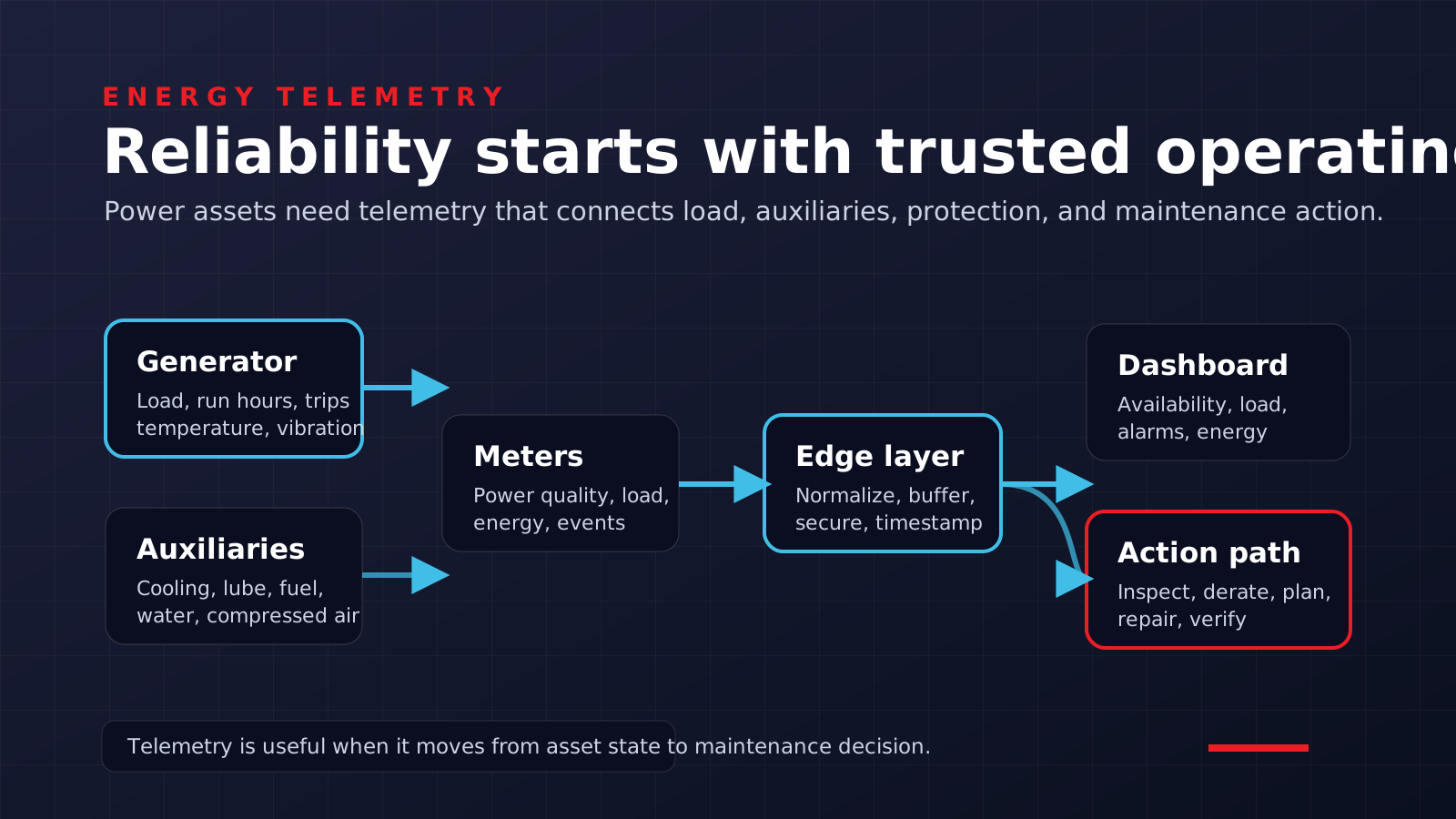
For power generation and energy assets, the cost of weak visibility is rarely confined to one machine. A generator trip, cooling-system fault, lubrication issue, power-quality disturbance, or auxiliary-system failure can move quickly into production loss, restart cost, dispatch risk, and customer pressure.
Automation and IIoT create value when they reduce that surprise. The goal is not to collect every electrical and mechanical signal. The goal is to see risk early enough to act with confidence.
The context is becoming more demanding. The IEA’s Electricity 2026 report forecasts global electricity demand to grow at an average annual rate of 3.6% from 2026 to 2030, supported by industry, electric vehicles, air conditioning, and data centres. For industrial companies, this makes energy reliability and energy intelligence more strategic, not less.
What energy leaders should evaluate first
The strongest first question is not “Which dashboard should we buy?” It is: which energy or power asset creates the highest business impact when it is unavailable, unstable, derated, or poorly understood?
| Operating concern | Telemetry or automation focus | Decision value |
|---|---|---|
| Unplanned generator or utility trip | Run state, load, trip history, alarms, protection events, restart context | Faster diagnosis and clearer restart or inspection decision |
| Critical auxiliary failure | Cooling, lubrication, fuel, water, hydraulic, HVAC, compressed-air, or pump condition | Earlier intervention before the primary asset is affected |
| Power-quality disturbance | Voltage, current, imbalance, event logs, harmonics, demand, and line-side context | Link electrical disturbance to equipment behavior and production events |
| High or unexplained energy cost | Metering, load profile, abnormal consumption, operating schedule, and process context | Identify recurring waste, peaks, and abnormal operating states |
| Maintenance overload | Criticality ranking, condition trends, alarm quality, and response ownership | Prioritize inspection where risk and consequence are highest |
Continuity is the economic value. Visibility matters only when it changes the action path.
Build telemetry around the decision path
Power and energy assets often include PLCs, generator controllers, protection relays, SCADA systems, meters, drives, motor control centres, RTUs, and gateways. The data may already exist, but it may not be organized for maintenance or operations.
Before adding analytics, confirm the foundation:
- Asset names, tag names, and operating states are consistent.
- Time synchronization is reliable enough for event analysis.
- Alarms distinguish urgent action from routine status.
- Critical auxiliary systems are visible, not only the main generator or feeder.
- Network segmentation and access rules match the OT risk profile.
- Backups, drawings, relay settings, and controller documentation are available.
NIST SP 800-82 Rev. 3 is a useful reference for OT security when industrial systems become more connected. Connectivity should improve operating control, not introduce unmanaged exposure.
Where IIoT creates practical power-asset value
Generator and motor health
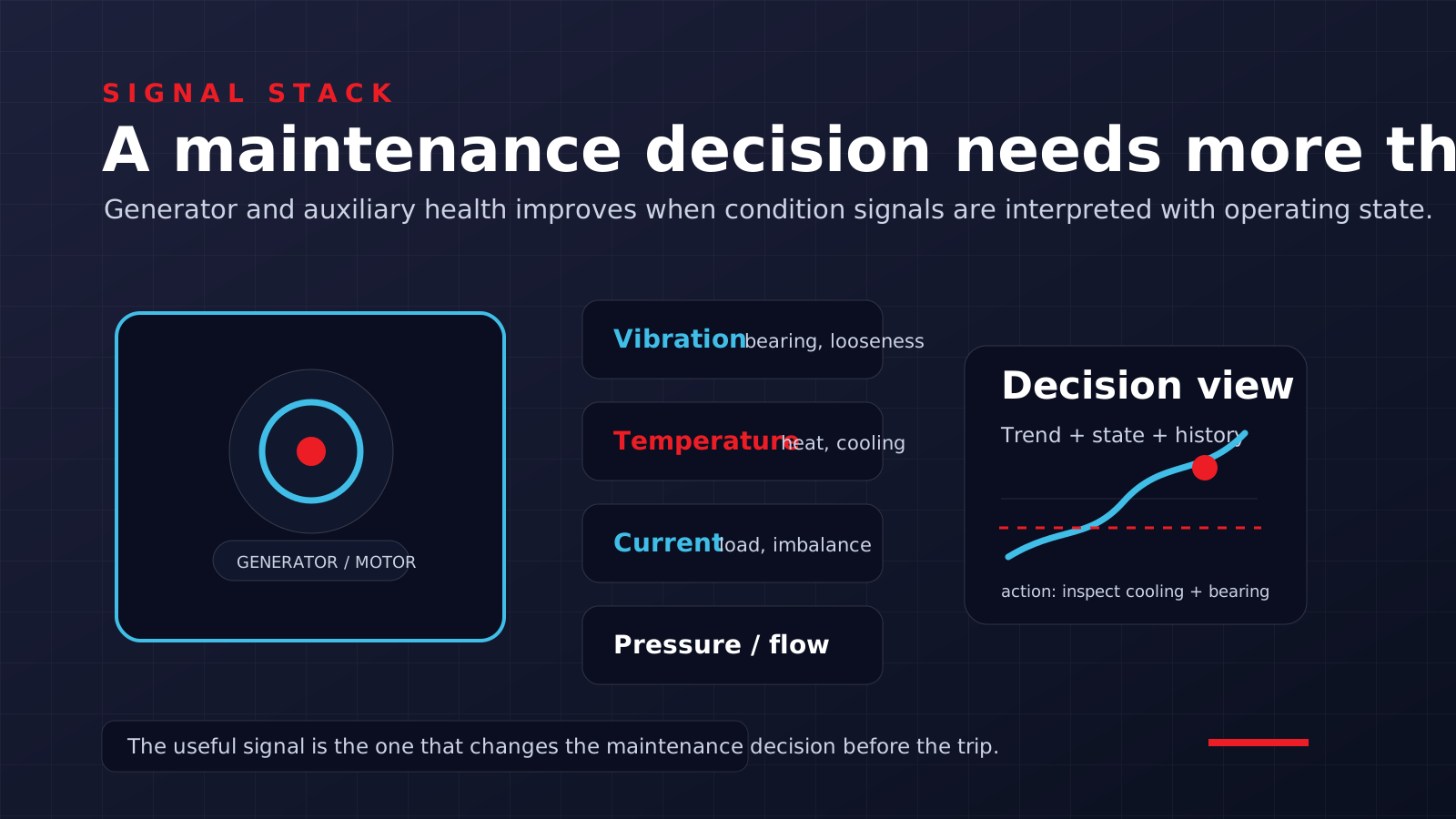
Capture run hours, load, winding temperature, bearing temperature, vibration, current, voltage, starts, stops, and trip history. The objective is not trend decoration. It is inspection prioritization.
Auxiliary system monitoring
Cooling, lubrication, fuel, water, hydraulic, compressed-air, and HVAC systems often create reliability risk before the main asset fails. If the auxiliary fails, the primary asset may only appear to be the root cause.
Power quality and load visibility
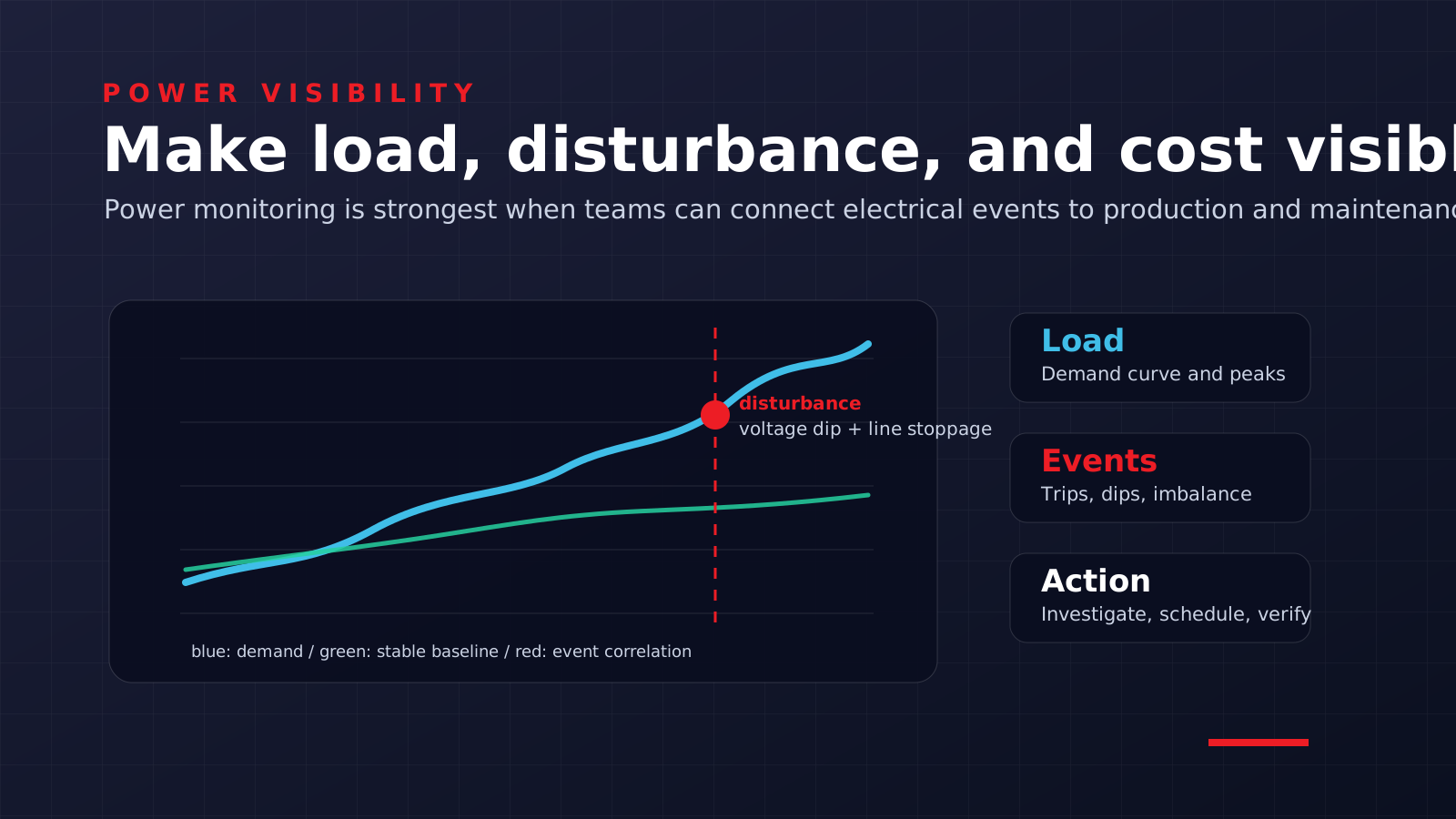
Power-quality issues can affect drives, instrumentation, controls, motors, and production assets. Event logs and meter data help the plant distinguish a production issue from an electrical supply, load, or distribution issue.
Renewable, storage, and distributed assets
Solar, storage, and distributed energy systems need visibility into inverter status, output, alarms, temperature, weather/site context, and maintenance events. For many industrial companies, the value is operational clarity and maintenance planning, not only generation reporting.
Predictive maintenance
Predictive maintenance should begin with failure modes. For rotating equipment, vibration, temperature, current, lubrication, and operating state may matter. For electrical assets, thermal history, load, trip logs, imbalance, and power-quality events may be more useful.
Choose the first asset with a criticality matrix
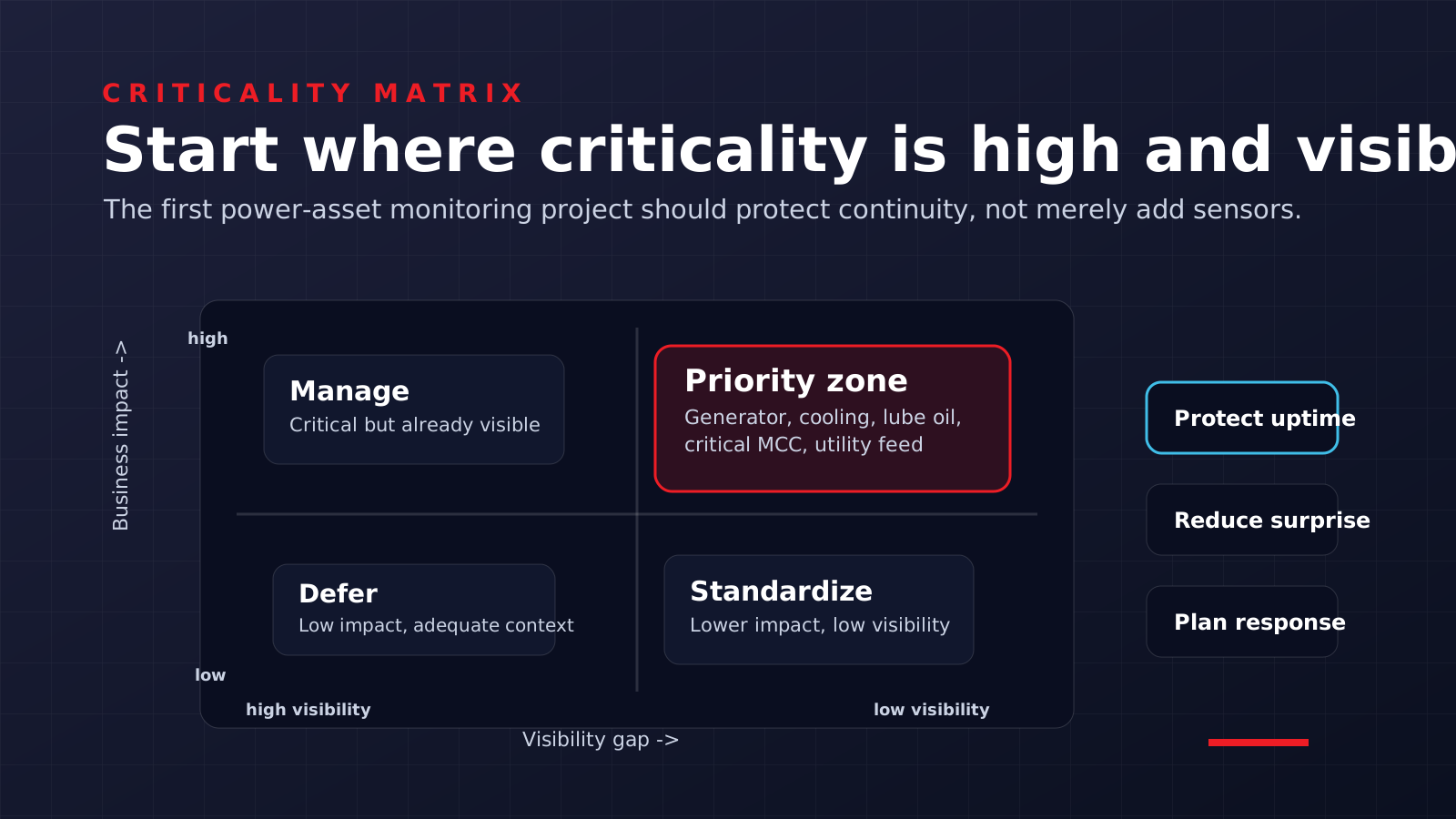
Not every energy asset deserves the same monitoring investment. The first project should sit where business impact is high and visibility is low.
| Asset class | Useful first signals | Actionable decision |
|---|---|---|
| Generator or turbine auxiliary motor | Current, vibration, bearing temperature, run hours, trip history | Inspect before shutdown risk increases |
| Cooling or lubrication system | Flow, pressure, temperature, pump current, valve state | Correct auxiliary degradation before the primary asset trips |
| MCC or critical feeder | Load, imbalance, breaker status, thermal inspection records, event logs | Investigate abnormal load or protection events |
| Inverter or distributed asset | Output, availability, alarms, temperature, site condition | Prioritize maintenance and verify expected generation |
| Compressed air or utility support | Pressure, flow, current, duty cycle, leak indicators | Reduce waste and prevent production-side disruptions |
Economic value model
Power-asset projects should account for both downtime and operating cost:
Trip impact =
lost production value during outage
+ restart cost
+ maintenance overtime
+ quality, dispatch, or customer impact where applicable
Energy opportunity =
measured abnormal consumption
x operating hours
x tariff or fuel costThis keeps automation and IIoT tied to economic consequences instead of telemetry completeness.
Estimate the value exposed by one critical energy asset
Use this as a planning estimate, not a published ROI claim. Replace default values with plant-specific contribution margin, downtime history, and implementation cost during discovery.
Estimated annual value at risk before improvement.
This calculator uses values entered by the reader. It is not a case-study result, savings guarantee, or financial advice.
The calculator is a planning estimate, not a customer result or savings guarantee. Replace the default values with plant-specific production value, outage history, restart cost, tariff or fuel cost, and implementation scope.
A practical implementation sequence
- 01 Rank asset criticality
Score safety, production, quality, energy, and downtime impact. Start where consequence is high and current visibility is weak.
- 02 Map existing data
Review controller, relay, meter, drive, SCADA, and maintenance records before buying new sensors.
- 03 Design a secure data path
Move trusted data through a segmented edge or historian architecture that preserves timestamps and ownership.
- 04 Define decision rules
Agree what happens after a trend changes: inspect, derate, schedule, check cooling, review power quality, or escalate.
- 05 Verify with evidence
Measure repeat trips, diagnosis time, maintenance response, energy waste, and action closure before claiming value.
Watchpoints before approving budget
- Monitoring the main generator while ignoring the auxiliary system that trips it.
- Collecting meter data without connecting events to production or maintenance context.
- Treating energy dashboards as reliability systems without action ownership.
- Adding remote access before OT security, segmentation, and credential governance are clear.
- Publishing savings or availability claims without a verified baseline and measurement method.
The Industry Digits view
Energy and power automation should make reliability visible. For most industrial teams, the first win is not a large AI system. It is trusted telemetry, clear alarm context, and a maintenance workflow that acts before a fault becomes a shutdown.
The right first project is often a critical auxiliary, not the most visible asset. Cooling, lubrication, fuel, water, compressed air, and electrical distribution problems can create failure chains that look like generator, production, or quality problems downstream.
Good power-asset telemetry helps the plant answer a simple but valuable question: what should we inspect or change before the next trip?
Lokesh Chennuru writes Industry Digits field notes for industrial decision makers, focused on automation, IIoT, condition monitoring, predictive maintenance, and industrial AI.
Connect on LinkedInQuestions industrial leaders ask about this
Where does IIoT add value in power generation?
In generator and motor health, auxiliary-system monitoring such as cooling, lubrication, fuel, and hydraulics, power-quality and load visibility, and inspection prioritisation. The goal is to see risk early enough to act.
How should energy-asset monitoring be prioritised?
By criticality and visibility: start where impact on safety, production, or downtime is high and current visibility is low, confirming tag naming, time synchronisation, and backups before adding analytics.
What standards apply to energy-asset condition monitoring?
ISO 17359 frames condition monitoring and ISO 20816 covers vibration evaluation. For grid-tied and substation assets, IEC 61850 and IEEE power-quality definitions are commonly relevant.
Ready to turn signals into a maintenance decision path?
Book a 30-minute consultation and we will map the fastest useful condition-monitoring or automation win.